Space Tech’s Next Frontier: 3 U.S. Companies Leading Satellite Internet Expansion in 2026

Advertisements
By 2026, satellite internet expansion, spearheaded by key U.S. companies, promises to revolutionize global connectivity, bringing high-speed access to previously unserved and underserved regions worldwide.
The dawn of a new era in global connectivity is upon us, with Space Tech’s Next Frontier: 3 U.S. Companies Leading Satellite Internet Expansion in 2026 at the forefront. Imagine a world where geographical barriers no longer dictate access to information and opportunities. This vision is rapidly becoming a reality, driven by innovative American enterprises pushing the boundaries of satellite technology.
Advertisements
The Global Race for Ubiquitous Connectivity
The pursuit of truly ubiquitous internet access is one of the defining technological challenges of our time. While terrestrial infrastructure has made significant strides, vast swathes of the globe remain underserved or entirely unconnected. This digital divide impacts everything from education and healthcare to economic development and emergency response. Satellite internet, once a niche solution, is now emerging as the most viable path to bridging this gap on a global scale.
The promise of satellite internet lies in its ability to bypass the need for extensive ground infrastructure, offering a direct link from space to virtually any location on Earth. This capability is particularly transformative for remote rural areas, disaster-stricken regions, and maritime or aeronautical operations. The ongoing expansion is not merely about providing internet; it’s about fostering global equity and unlocking human potential, ensuring that no community is left behind in the digital age.
Addressing the Digital Divide
- Remote Access: Bringing high-speed internet to isolated communities far from fiber optic networks.
- Emergency Resilience: Providing critical communication links during natural disasters when ground infrastructure fails.
- Economic Opportunities: Enabling e-commerce, remote work, and digital education in developing regions.
- Global Integration: Connecting ships, aircraft, and remote scientific outposts to the global network.
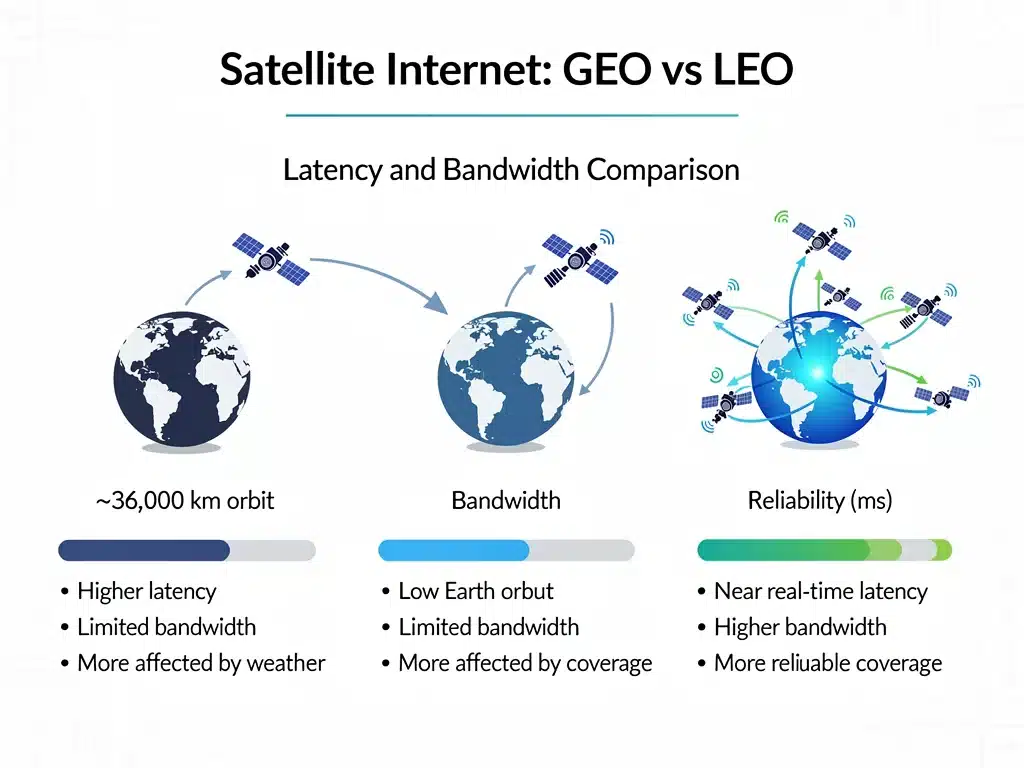
The technological advancements in satellite design, launch capabilities, and ground terminal efficiency have converged to make this vision economically feasible and technically robust. Companies are no longer launching single, massive geostationary satellites but rather constellations of thousands of smaller, more agile satellites into low Earth orbit (LEO). This shift is crucial for reducing latency and increasing bandwidth, making satellite internet a competitive alternative to traditional broadband.
The global race is characterized by intense innovation and significant investment, with U.S. companies often leading the charge. Their strategic vision and technological prowess are setting the pace for this transformative industry. The stakes are high, not just for corporate dominance but for the fundamental redefinition of how the world communicates and connects. This concerted effort towards universal connectivity is a testament to the power of human ingenuity, aiming to create a more interconnected and informed planet.
Starlink: SpaceX’s Ambitious Constellation
When discussing satellite internet expansion, it’s impossible to overlook Starlink, a division of Elon Musk’s SpaceX. Starlink has rapidly become a household name, synonymous with the new wave of low Earth orbit (LEO) satellite internet services. Their ambitious goal is to provide high-speed, low-latency internet globally, particularly targeting underserved areas where traditional broadband is either unavailable or unreliable. By 2026, Starlink is projected to have significantly expanded its operational footprint and subscriber base, solidifying its position as a market leader.
Starlink’s approach involves launching thousands of small, mass-produced satellites into LEO, orbiting at an altitude of approximately 550 kilometers. This relatively low altitude is key to achieving low latency, a critical factor for applications like online gaming, video conferencing, and other real-time digital interactions. The sheer number of satellites ensures continuous coverage and increased capacity, allowing for a robust and resilient network. Their rapid deployment strategy, leveraging SpaceX’s reusable Falcon 9 rockets, has given them a significant head start in the LEO constellation race.
Technological Edge and Market Penetration
- Massive Constellation: Thousands of LEO satellites for global coverage and redundancy.
- Low Latency: Closer proximity to Earth reduces signal delay significantly compared to GEO satellites.
- User-Friendly Terminals: Easy-to-install ‘Dishy McFlatface’ terminals simplify customer setup.
- Rapid Deployment: Leveraging SpaceX’s launch capabilities for swift satellite deployment.
The company’s initial focus was on residential customers in rural and remote areas of the United States, Canada, and parts of Europe and Australia. More recently, Starlink has expanded into business services, maritime solutions, and even aviation, demonstrating the versatility of its technology. The continuous iteration of their satellite design, including features like inter-satellite laser links, further enhances network efficiency and reduces reliance on ground stations, allowing for true global coverage even over oceans and polar regions.

Despite challenges such as satellite debris concerns and the sheer financial investment required, Starlink’s aggressive expansion strategy and proven technical capabilities position it as a pivotal player in shaping the future of global internet access. Their commitment to innovation and their ability to execute on a grand scale mean that by 2026, Starlink will likely be connecting millions more users, profoundly impacting digital inclusion worldwide. The ongoing evolution of their service offerings and technological enhancements will be critical to maintaining their competitive edge and achieving their long-term vision of a globally connected society.
Project Kuiper: Amazon’s Entry into Satellite Internet
Amazon, a behemoth in e-commerce and cloud computing, is making a formidable entry into the satellite internet expansion arena with Project Kuiper. This initiative aims to deploy a constellation of over 3,200 LEO satellites to provide broadband internet access to tens of millions of customers worldwide, particularly those in unserved and underserved communities. Amazon’s deep pockets and extensive experience in large-scale infrastructure projects suggest that Project Kuiper will be a significant force in the satellite internet landscape by 2026.
Project Kuiper differentiates itself through Amazon’s integrated ecosystem. Leveraging Amazon Web Services (AWS) for ground infrastructure and network operations, Kuiper is poised to offer a highly reliable and scalable service. This integration could provide a seamless experience for users, from connection to cloud services, potentially attracting a wide range of enterprise and consumer clients. The company’s strategy includes designing and manufacturing its own custom low-cost customer terminals, which are crucial for making the service accessible and affordable to a broader market.
Amazon’s Strategic Advantages
- AWS Integration: Leveraging Amazon’s cloud infrastructure for robust ground operations.
- Custom Hardware: Developing proprietary, cost-effective customer terminals.
- Extensive Resources: Backed by Amazon’s substantial financial and logistical capabilities.
- Global Reach: Aiming for comprehensive coverage to complement Amazon’s global services.
Amazon has already secured significant launch capacity, including agreements with United Launch Alliance (ULA), Arianespace, and its own Blue Origin, ensuring the timely deployment of its vast constellation. This multi-launch provider strategy mitigates risks and provides flexibility in its deployment schedule. The company’s commitment to innovation is evident in its investment in advanced satellite technology, focusing on efficiency, security, and scalability to meet future demands.
By 2026, Project Kuiper is expected to be well into its deployment phase, with a substantial portion of its constellation in orbit and commercial services expanding rapidly. Amazon’s entry into satellite internet is not just about connectivity; it’s about extending its digital empire and ensuring that its services are accessible to anyone, anywhere. The competition with existing players like Starlink will undoubtedly drive further innovation and potentially lead to more affordable and higher-quality services for end-users, ultimately benefiting the global population seeking reliable internet access.
OneWeb: A Collaborative Approach to Connectivity
OneWeb, a company with a strong focus on enterprise, government, and aviation markets, represents a collaborative and globally-minded approach to satellite internet expansion. Unlike some competitors, OneWeb has actively forged partnerships with telecommunications providers and governments worldwide, aiming to integrate its LEO satellite network seamlessly with existing terrestrial infrastructure. This strategy positions OneWeb as a key enabler for a hybrid connectivity future, where satellite and ground networks work in tandem to deliver robust services.
OneWeb’s constellation design involves approximately 648 satellites operating in LEO, providing high-speed, low-latency internet. While smaller in number than some rival constellations, OneWeb emphasizes strategic placement and robust satellite design to achieve effective global coverage. Their focus on B2B and B2G markets means tailoring solutions for specific industry needs, such as backhaul for mobile networks, secure government communications, and high-bandwidth connectivity for remote operations. This targeted approach allows them to address critical connectivity gaps for specific high-value users.
Partnerships and Niche Markets
- Strategic Partnerships: Collaborating with telcos and governments for integrated solutions.
- Enterprise Focus: Tailoring services for business-to-business and government clients.
- Global Gateways: Establishing ground stations in various countries for robust connectivity.
- Hybrid Network Vision: Seamless integration with existing terrestrial infrastructure.
The company has overcome significant financial hurdles, emerging from bankruptcy with strong backing from the UK government and Bharti Global, demonstrating the strategic importance placed on its mission. This renewed financial stability has allowed OneWeb to accelerate its launch schedule and expand its ground infrastructure. By 2026, OneWeb is anticipated to have completed its initial constellation deployment and be offering commercial services across a substantial portion of the globe, with a strong presence in regions where its partners operate.
OneWeb’s collaborative model and focus on specific market segments differentiate it from its competitors. Rather than competing directly for every individual consumer, OneWeb aims to empower existing service providers and organizations with enhanced connectivity options. This synergy is crucial for accelerating global digital transformation, especially in areas where traditional terrestrial networks struggle to reach. Their commitment to working with diverse stakeholders underscores a vision of shared progress in the quest for universal internet access.
Technological Advancements Driving Expansion
The rapid satellite internet expansion by these U.S. companies is not simply a matter of launching more satellites; it’s fundamentally driven by a confluence of groundbreaking technological advancements. These innovations span satellite design, propulsion systems, launch capabilities, and ground infrastructure, collectively making LEO satellite internet a viable and increasingly competitive option. Understanding these underlying technologies is crucial to appreciating the scale and ambition of these projects.
Miniaturization and mass production techniques have dramatically reduced the cost and size of individual satellites, enabling the deployment of large constellations instead of single, monolithic spacecraft. Furthermore, sophisticated onboard processing and inter-satellite laser links allow satellites to communicate directly with each other, creating a mesh network in space. This reduces reliance on ground stations and minimizes data hops, leading to lower latency and higher overall network efficiency. The transition from bent-pipe architecture to more intelligent, interconnected satellites is a game-changer.
Key Innovations Fueling Growth
- Miniaturized Satellites: Smaller, lighter, and cheaper to produce and launch.
- Inter-Satellite Links: Laser communication between satellites for faster data routing.
- Phased Array Antennas: Advanced ground terminals that can track multiple satellites simultaneously.
- Reusable Rockets: Significantly reducing launch costs, enabling rapid constellation deployment.
On the ground, advances in user terminal technology are equally critical. Phased array antennas, like Starlink’s ‘Dishy,’ are capable of electronically tracking satellites as they move across the sky, maintaining a stable connection without physical realignment. These terminals are becoming more compact, energy-efficient, and affordable, making the service accessible to a broader consumer base. The ongoing development of these terminals aims to further reduce their cost and size, making them even more pervasive.
The synergy between these space-based and ground-based innovations creates a powerful engine for growth. Coupled with the decreasing cost of rocket launches, largely due to the advent of reusable rockets, the capital expenditure for deploying and maintaining these massive constellations is becoming more manageable. These technological leaps are not just incremental improvements; they represent a paradigm shift in how we conceive and deliver global internet services, paving the way for unprecedented levels of connectivity and digital inclusion by 2026 and beyond.
Challenges and Regulatory Landscape
While the promise of satellite internet expansion is immense, these U.S. companies, and indeed the entire industry, face significant challenges, particularly in the regulatory landscape and environmental impact. The sheer number of satellites planned for deployment raises concerns about orbital debris, spectrum interference, and light pollution, all of which require careful management and international cooperation. Regulators worldwide are grappling with how to best govern this rapidly evolving domain to ensure sustainable and equitable access to space and its resources.
Orbital debris is a growing concern. Each satellite launch adds to the existing clutter in low Earth orbit, increasing the risk of collisions that could generate even more debris, potentially making certain orbits unusable in the future. Companies are investing in technologies for deorbiting satellites at the end of their lifespan and designing their spacecraft to minimize debris generation. However, the long-term management of tens of thousands of active and defunct satellites remains a complex issue requiring international consensus and enforceable regulations.
Navigating the Complexities
- Orbital Debris: Mitigating risk from increasing satellite numbers and potential collisions.
- Spectrum Allocation: Ensuring fair and efficient use of limited radio frequency bands.
- Light Pollution: Addressing concerns from astronomers about satellite constellation visibility.
- International Regulations: Harmonizing diverse national and international space laws.
Spectrum allocation is another critical challenge. Satellite internet systems rely on specific radio frequencies, and ensuring that these are allocated efficiently and without interference from other services or competing satellite constellations is paramount. Regulatory bodies like the International Telecommunication Union (ITU) play a crucial role in coordinating spectrum use, but the rapid pace of development often outstrips the speed of regulatory frameworks. This creates a dynamic environment where companies must innovate while also navigating evolving compliance requirements.
Furthermore, the geopolitical implications of global satellite internet networks are considerable. Governments are keen to ensure national security and data sovereignty, leading to varying regulatory demands across different countries. Companies like Starlink, Project Kuiper, and OneWeb must engage in complex negotiations and adapt their services to meet diverse national requirements. Successfully addressing these multifaceted challenges will be crucial for the sustained growth and widespread adoption of satellite internet, ensuring that its expansion benefits humanity without compromising the long-term viability of space exploration or environmental stewardship.
Impact on Global Connectivity and Future Prospects
The profound impact of satellite internet expansion by U.S. companies like Starlink, Project Kuiper, and OneWeb by 2026 cannot be overstated. These initiatives are not just about faster internet; they represent a fundamental shift in how the world connects, learns, and conducts business. The democratization of high-speed internet access promises to unlock unprecedented economic and social opportunities, particularly for the billions of people currently living without reliable connectivity.
The ability to access education, healthcare, and financial services online will transform communities, fostering innovation and reducing inequalities. Remote work, telemedicine, and online learning will become accessible in areas where they were previously impossible, leading to a more inclusive global society. Furthermore, the enhanced connectivity will support emerging technologies such as the Internet of Things (IoT), autonomous vehicles, and advanced agricultural monitoring, enabling smarter infrastructure and more efficient resource management across industries.
Transformative Outcomes
- Bridging the Digital Divide: Connecting remote and underserved populations.
- Economic Empowerment: Enabling new businesses and remote employment opportunities.
- Enhanced Education: Providing online learning resources to students globally.
- Disaster Resilience: Offering reliable communication during emergencies.
Looking beyond 2026, the continued evolution of satellite internet technology promises even greater capabilities. We can anticipate even higher bandwidth, lower latency, and more specialized services tailored to diverse industrial and governmental needs. The competition among these leading U.S. companies will drive continuous innovation, pushing the boundaries of what’s possible in space communications. This competitive environment is likely to lead to more affordable services and a wider array of options for consumers and enterprises alike.
However, the future also holds challenges, including the need for ongoing international cooperation to manage orbital resources and address environmental concerns. The long-term success of these ventures hinges not only on technological prowess but also on responsible stewardship of space and collaborative efforts to ensure global benefit. Ultimately, the expansion of satellite internet by these pioneering U.S. companies is set to redefine our interconnected world, fostering a more equitable and digitally empowered future for generations to come.
| Key Company | Focus and Impact by 2026 |
|---|---|
| Starlink (SpaceX) | Leading LEO constellation, aiming for broad consumer and enterprise market penetration in remote areas. |
| Project Kuiper (Amazon) | Leveraging AWS for integrated services, targeting global underserved communities with custom hardware. |
| OneWeb | Collaborative approach focused on B2B/B2G markets, integrating with existing telecom infrastructure. |
| Overall Impact | Driving global digital inclusion, fostering economic growth, and enabling new technological applications worldwide. |
Frequently Asked Questions About Satellite Internet Expansion
LEO satellite internet utilizes a constellation of satellites orbiting much closer to Earth than traditional geostationary satellites. This proximity significantly reduces signal travel time, leading to lower latency and faster response times, making the internet experience more akin to terrestrial broadband.
By 2026, satellite internet will drastically transform rural areas by providing high-speed, reliable broadband where traditional infrastructure is impractical or too expensive. This will enable better access to education, telemedicine, remote work opportunities, and digital commerce, bridging the existing digital divide.
Key challenges include managing orbital debris, ensuring fair spectrum allocation to prevent interference, addressing light pollution concerns from astronomers, and navigating complex international regulations to ensure global compliance and sustainable space operations. High initial investment is also a factor.
For many users, especially in areas unserved by fiber optics, LEO satellite internet is a highly viable alternative. While fiber typically offers superior speeds and latency in densely populated areas, satellite internet provides essential, high-quality connectivity where fiber is not feasible, offering competitive performance for most daily uses.
U.S. companies like Starlink, Project Kuiper, and OneWeb each bring unique strengths. Starlink leads in constellation size and consumer focus, Kuiper leverages Amazon’s ecosystem and resources, while OneWeb emphasizes B2B/B2G partnerships. Their diverse strategies collectively drive significant global satellite internet expansion.
Conclusion
The landscape of global connectivity is undergoing a profound transformation, with satellite internet expansion led by U.S. companies defining its next frontier. By 2026, the ambitious efforts of Starlink, Project Kuiper, and OneWeb are set to reshape access to information and opportunities for billions worldwide. These companies are not merely launching satellites; they are building the infrastructure for a more interconnected future, driving economic growth, fostering digital inclusion, and enabling critical services in previously unreached regions. While challenges remain, particularly in regulatory coordination and environmental stewardship, the relentless pace of innovation and strategic investment underscores a clear trajectory towards a globally connected planet, where geographical location is no longer a barrier to digital participation.
