Robotic Assistants: 40% of Customer Service by 2026?
Advertisements
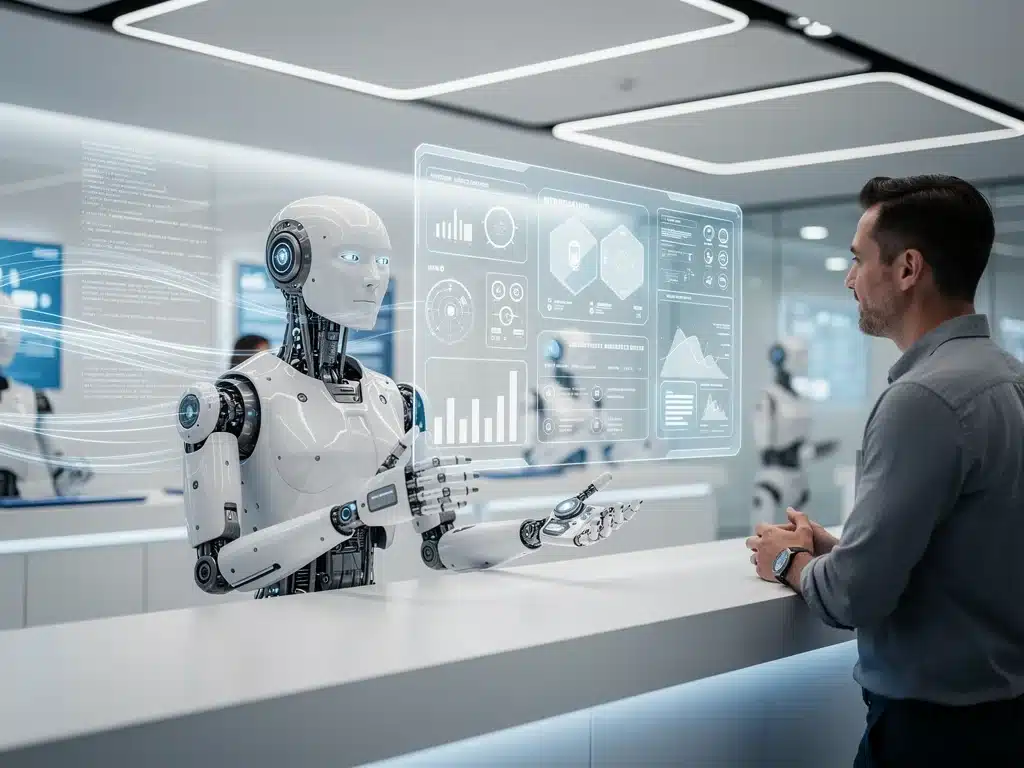
By late 2026, robotic assistants are projected to manage 40% of customer service inquiries, revolutionizing how businesses interact with their clientele and shaping the landscape of support operations.
Did You Know: Robotic assistants are projected to handle 40% of customer service inquiries by late 2026? This astonishing statistic points to a rapid and profound transformation in how businesses interact with their customers, signaling a future where artificial intelligence and automation play a pivotal role in daily operations. The implications are vast, touching upon efficiency, employment, and the very nature of customer engagement.
Advertisements
The Dawn of Automated Customer Service
The landscape of customer service is undergoing a monumental shift, driven by advancements in artificial intelligence and automation. What was once the exclusive domain of human agents is increasingly being augmented, and in some cases, replaced by sophisticated robotic assistants. This evolution isn’t just about cutting costs; it’s about enhancing efficiency, providing instant support, and scaling operations in ways previously unimaginable.
The projection that robotic customer service will handle 40% of inquiries by late 2026 is not merely a forecast but a reflection of current trends and technological capabilities. Companies are investing heavily in AI-powered chatbots, virtual assistants, and automated response systems to streamline their support channels. These tools are becoming increasingly adept at understanding complex queries, providing accurate information, and even resolving issues without human intervention.
Understanding the Driving Forces
- Scalability: Robots can handle an unlimited number of inquiries simultaneously, eliminating wait times during peak periods.
- 24/7 Availability: Automated systems never sleep, offering continuous support regardless of time zones or holidays.
- Consistency: AI ensures uniform responses and adherence to company policies, reducing human error.
- Data Analysis: Robotic assistants can collect and analyze vast amounts of customer data, providing insights for service improvement.
The integration of these technologies is not without its challenges, yet the benefits often outweigh the hurdles, pushing businesses towards a more automated future. This paradigm shift demands a re-evaluation of traditional customer service models and a proactive approach to embracing innovation.
Technological Evolution: From Chatbots to AI-Powered Assistants
The journey of automated customer service began with rudimentary chatbots, often limited to predefined scripts and simple keyword recognition. Today, the technology has evolved dramatically, giving rise to highly intelligent AI-powered assistants capable of natural language processing (NLP), machine learning (ML), and even emotional intelligence interpretation. This leap in capability is what makes the 40% projection a tangible reality.
Modern robotic assistants can understand nuances in human language, learn from past interactions, and adapt their responses to provide a more personalized and effective experience. They are no longer just answering FAQs; they are troubleshooting complex problems, guiding users through processes, and even initiating transactions. This sophistication is blurring the lines between human and machine interaction.
Key Capabilities of Advanced Robotic Assistants
The current generation of AI assistants boasts impressive features:
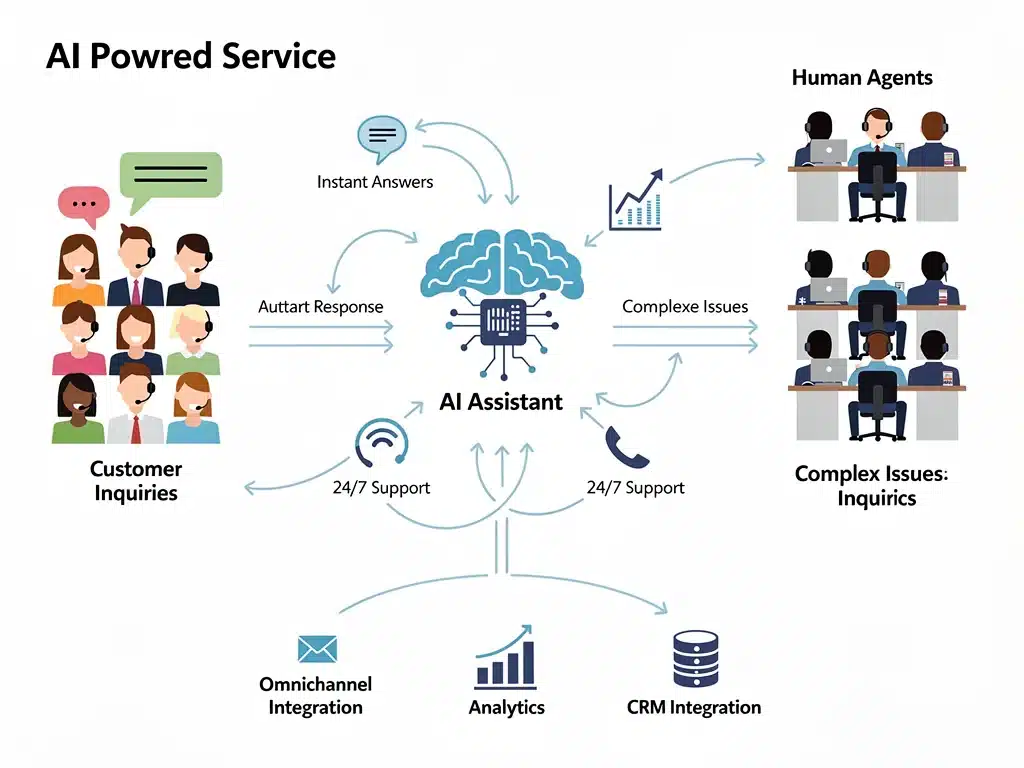
- Natural Language Understanding (NLU): The ability to comprehend the intent and context of customer queries, not just keywords.
- Contextual Memory: Remembering past interactions within a single conversation to provide more relevant responses.
- Integration with CRM Systems: Accessing customer history and preferences to offer personalized support.
- Sentiment Analysis: Detecting customer emotions to tailor responses and escalate difficult cases to human agents when necessary.
These capabilities enable robotic assistants to handle a significant portion of routine inquiries, freeing up human agents to focus on more complex, sensitive, or high-value interactions. The continuous development in these areas promises even more advanced functionalities in the near future, further solidifying their role in customer service.
The Impact on Human Customer Service Roles
The rise of robotic assistants inevitably sparks questions about the future of human customer service agents. While some fear widespread job displacement, the more nuanced reality suggests a transformation of roles rather than outright elimination. Human agents will likely shift towards more specialized, empathetic, and strategic functions, working alongside their AI counterparts.
Instead of handling repetitive queries, human agents will focus on complex problem-solving, emotional support, and building deeper customer relationships. They will become the escalation point for AI when a situation requires a level of understanding, creativity, or empathy that machines cannot yet replicate. This collaborative model, often referred to as ‘human-in-the-loop’ or ‘augmented intelligence,’ is becoming increasingly prevalent.
Reskilling and Upskilling the Workforce
To thrive in this evolving environment, the customer service workforce will need to adapt. Reskilling and upskilling initiatives will become crucial, focusing on areas where human capabilities remain superior:
- Emotional Intelligence: Understanding and responding to complex human emotions.
- Problem-Solving: Tackling unique, non-standard issues that AI cannot easily process.
- Interpersonal Communication: Building rapport and trust with customers.
- Technical Proficiency: Understanding how to work with and manage AI tools.
This shift represents an opportunity for human agents to engage in more fulfilling and impactful work, moving away from monotonous tasks. The synergy between human and robotic assistants can lead to a more effective and satisfying customer experience overall.
Benefits for Businesses: Efficiency, Cost Savings, and Customer Satisfaction
For businesses, the adoption of robotic assistants in customer service offers a compelling array of benefits that extend beyond mere operational efficiency. The strategic implementation of AI can lead to significant cost savings, improved customer satisfaction, and a more competitive market position. The ability to handle 40% of inquiries with automation translates directly into tangible advantages.
Reduced operational costs stem from lower staffing requirements for routine tasks, decreased training overheads, and optimized resource allocation. Moreover, the 24/7 availability and instant response times provided by AI significantly boost customer satisfaction, as customers no longer face long wait times or limited service hours. This immediate gratification is a critical factor in today’s fast-paced digital world.
Tangible Business Advantages
The benefits are multi-faceted and impact various aspects of a business:
- Reduced Average Handling Time (AHT): AI can resolve simple queries almost instantly, drastically cutting down resolution times.
- Lower Operational Costs: Automation reduces the need for extensive human agent teams for basic support.
- Improved Customer Loyalty: Consistent, fast, and accurate service fosters trust and repeat business.
- Enhanced Data Insights: AI systems collect valuable data on customer interactions, informing business strategies.
By leveraging robotic assistants, companies can reallocate resources, focus on innovation, and build stronger relationships with their clientele, ultimately driving growth and profitability. The investment in AI is increasingly seen not just as an expense, but as a strategic imperative for future success.
Challenges and Ethical Considerations in AI Customer Service
While the benefits of robotic assistants are substantial, their widespread adoption also presents a unique set of challenges and ethical considerations that must be carefully addressed. Achieving the projected 40% inquiry handling by 2026 requires navigating issues related to data privacy, algorithmic bias, and the potential for impersonal interactions. Businesses must strive for a balance between automation and maintaining a human touch.
Data privacy is paramount, as AI systems often process sensitive customer information. Ensuring robust security measures and transparent data handling policies is critical to building trust. Algorithmic bias, where AI systems inadvertently perpetuate or amplify existing societal biases, also poses a significant ethical dilemma, requiring careful design and continuous monitoring of AI models. Furthermore, over-reliance on automation can lead to a perceived lack of empathy, potentially alienating customers who prefer human interaction for complex or emotionally charged issues.

Navigating the Complexities
Addressing these challenges requires a thoughtful and proactive approach:
- Data Security and Privacy: Implementing stringent encryption, access controls, and compliance with regulations like GDPR and CCPA.
- Bias Mitigation: Regularly auditing AI algorithms for fairness and training them with diverse, unbiased datasets.
- Human Escalation Paths: Ensuring easy and clear pathways for customers to connect with a human agent when needed.
- Transparency: Clearly communicating when a customer is interacting with an AI versus a human agent.
Successfully integrating robotic assistants means not just deploying technology, but also establishing strong ethical frameworks and operational guidelines. This ensures that the benefits of automation are realized without compromising customer trust or ethical responsibilities.
The Future Landscape: Hybrid Models and Continuous Innovation
Looking towards late 2026 and beyond, the future of customer service is likely to be defined by sophisticated hybrid models where human and robotic assistants work in seamless collaboration. The 40% projection isn’t an endpoint but a milestone on a journey towards increasingly intelligent and integrated support systems. Continuous innovation in AI, machine learning, and human-computer interaction will further refine these models, making customer service more efficient, personalized, and proactive.
Expect to see AI not just responding to inquiries, but anticipating customer needs, offering proactive solutions, and even predicting potential issues before they arise. The emphasis will be on creating an effortless customer journey, where interactions are smooth, resolutions are swift, and satisfaction is consistently high. This forward-looking approach will drive the next wave of developments in the customer service sector.
Emerging Trends and Next-Gen AI
Several trends are shaping the future of robotic customer service:
- Proactive Service: AI systems identifying potential issues and reaching out to customers before they experience problems.
- Hyper-Personalization: AI leveraging vast data to offer tailored recommendations and support, making each interaction unique.
- Voice AI and Conversational Interfaces: More natural and intuitive voice-activated assistants becoming mainstream.
- Emotional AI: Enhanced capabilities for AI to detect and respond appropriately to human emotions, improving empathy in interactions.
The evolution of robotic assistants will continue to push the boundaries of what’s possible in customer support, creating dynamic and responsive ecosystems that cater to the ever-increasing expectations of modern consumers. The journey is ongoing, promising an exciting and transformative future for customer service.
| Key Aspect | Brief Description |
|---|---|
| 40% Projection | Robotic assistants are expected to handle 40% of customer service inquiries by late 2026. |
| Technological Evolution | Advancements from simple chatbots to sophisticated AI with NLP and ML capabilities. |
| Impact on Human Roles | Shift from routine tasks to complex problem-solving and empathetic interactions for human agents. |
| Business Benefits | Increased efficiency, cost savings, 24/7 availability, and improved customer satisfaction. |
Frequently Asked Questions About Robotic Customer Service
Robotic assistants in customer service are AI-powered software or virtual agents designed to interact with customers, answer questions, and resolve issues, often through chatbots, voice assistants, or automated systems. They leverage natural language processing and machine learning to understand and respond to inquiries efficiently.
This projection is based on the rapid advancement of AI technologies, enabling robots to handle an increasing volume of routine, repetitive, and even moderately complex customer queries. Businesses are investing in these technologies for scalability, 24/7 availability, and consistent service delivery, driving their expanded role.
While some roles may be redefined, it’s more likely that human jobs will transform rather than disappear. Agents will shift to handling more complex, empathetic, and strategic interactions, collaborating with AI to provide a superior overall customer experience. Reskilling will be key for the workforce.
Companies benefit from increased operational efficiency, significant cost savings, 24/7 customer support, and improved customer satisfaction due to faster response times and consistent service. AI also provides valuable data insights to enhance service strategies and overall business performance.
Key concerns include data privacy and security, algorithmic bias that could lead to unfair outcomes, and the potential for impersonal interactions. Companies must prioritize transparent data handling, fair AI design, and maintain clear human escalation paths to address these ethical challenges effectively.
Conclusion: Embracing an Automated Future
The projection that robotic assistants will handle 40% of customer service inquiries by late 2026 is a clear indicator of the profound technological revolution underway. This shift promises not only unprecedented levels of efficiency and cost savings for businesses but also an evolution in the nature of customer interactions. While challenges around ethics and data privacy persist, the continuous innovation in AI and machine learning suggests a future where human ingenuity and artificial intelligence converge to create a more responsive, personalized, and effective customer service landscape. Businesses that proactively embrace this transformation, focusing on hybrid models and continuous upskilling of their human workforce, will be best positioned to thrive in this exciting new era.
