AI adoption soars: 1 in 4 US adults use AI daily

Advertisements
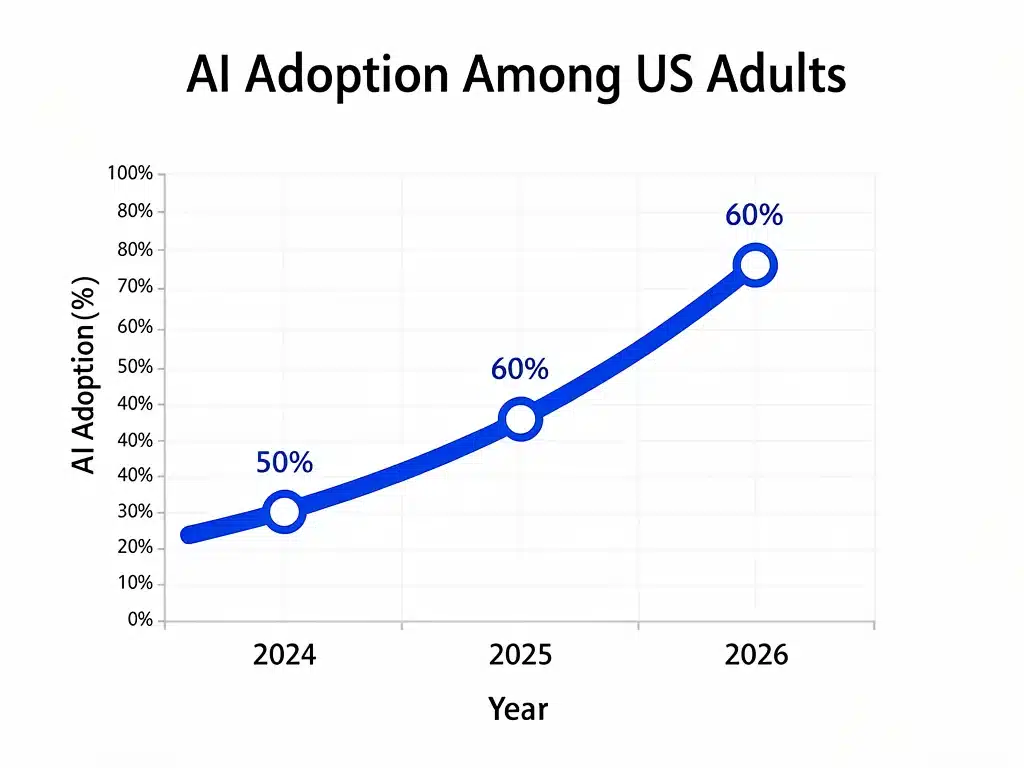
Nearly one in four US adults now integrate AI-powered tools into their daily routines, marking a substantial increase from just one in ten in 2024, reflecting a rapid shift in technology adoption.
The landscape of technology in American households is undergoing a profound transformation. What was once a niche, futuristic concept is now a daily reality for millions. Indeed, it has been uncovered: nearly 1 in 4 US adults now utilize AI-powered tools for daily tasks, up from 1 in 10 in 2024. This remarkable surge signifies a pivotal moment in how we live, work, and interact with the digital world, prompting a closer look at the forces driving this rapid integration.
Advertisements
The accelerating pace of AI integration in American lives
Artificial intelligence, once confined to science fiction and specialized labs, has permeated the fabric of American daily life at an astonishing rate. The transition from a nascent technology to a widespread utility has been swift, catching many by surprise. This exponential growth isn’t just a statistical anomaly; it represents a fundamental shift in how individuals approach problem-solving, information gathering, and even entertainment.
The convenience and efficiency offered by AI tools are undeniable, making them increasingly indispensable. From personalized recommendations to automating routine chores, AI is quietly revolutionizing mundane aspects of our existence. This widespread acceptance points to a future where AI is not just an add-on but an intrinsic part of our technological ecosystem.
Understanding the drivers behind AI’s rapid adoption
Several key factors contribute to the accelerated adoption of AI among US adults. Enhanced accessibility, user-friendly interfaces, and the proliferation of AI-powered features in everyday devices have played significant roles. Companies are also investing heavily in making AI more intuitive and beneficial for the average consumer, lowering the barrier to entry.
- Improved accessibility: AI tools are now readily available on smartphones, web browsers, and smart devices, making them easy to discover and use.
- User-friendly interfaces: Developers are prioritizing intuitive designs, ensuring that even non-technical users can leverage AI effectively.
- Perceived value: Users increasingly recognize the practical benefits of AI, such as saving time, enhancing productivity, and providing tailored experiences.
- Media exposure: Constant media coverage and public discourse surrounding AI have raised awareness and curiosity, encouraging experimentation.
The ease with which these tools can be integrated into existing digital workflows is also a major draw. Many AI applications seamlessly connect with other platforms, creating a cohesive and efficient user experience. This interconnectedness fosters a sense of natural progression rather than a drastic change, encouraging more individuals to embrace the technology.
From niche to mainstream: how AI became a household staple
The journey of AI from a specialized domain to a common household staple is a compelling narrative of technological evolution and market adaptation. Initially, AI was perceived as a complex technology primarily for experts or large corporations. However, strategic development and marketing have successfully repositioned AI as a tool for everyone.
This mainstreaming is evident in the diverse range of applications now available. AI isn’t just about complex algorithms; it’s about smart assistants, personalized content feeds, and intelligent search functions that enhance daily interactions. The shift signifies a broader societal acceptance and reliance on automated intelligence to navigate an increasingly complex world.
Everyday AI: common tools and their impact
Many US adults are using AI without even realizing it, as the technology is often embedded within familiar applications and services. Voice assistants like Alexa and Google Assistant, recommendation engines on streaming platforms, and predictive text on keyboards are all examples of AI at work. These subtle integrations have normalized AI, making it less intimidating.
- Smart assistants: Voice-activated devices that manage schedules, play music, and control smart home devices.
- Recommendation algorithms: Powering content suggestions on Netflix, Spotify, and Amazon, tailoring experiences to individual preferences.
- Generative AI: Tools like ChatGPT and DALL-E, used for writing, brainstorming, and artistic creation, gaining traction for both personal and professional use.
- Navigation apps: Utilizing AI to provide real-time traffic updates and optimize routes, saving commuters time and fuel.
The impact of these tools extends beyond mere convenience. They are reshaping how information is consumed, how decisions are made, and how tasks are prioritized. The ability of AI to learn and adapt to individual patterns makes these tools incredibly powerful, offering a level of personalization that traditional technologies could not match. This personalization fosters a deeper connection between the user and the technology, solidifying its place in daily routines.
Demographic insights into AI users: who is adopting AI?
While AI adoption is surging across the board, specific demographic groups are leading the charge, and understanding these patterns provides valuable insights into the future trajectory of the technology. Younger generations, particularly millennials and Gen Z, appear to be early and enthusiastic adopters, often integrating AI seamlessly into their digital-native lifestyles.
However, the data also indicates a broadening appeal, with older demographics gradually increasing their engagement with AI tools. This suggests that the benefits of AI are becoming universally recognized, transcending age-related technological barriers. Factors like education level, income, and geographic location also play a role in the nuances of AI adoption.
Age and generation: a key differentiator
Younger adults are more likely to be early adopters of new technologies, and AI is no exception. They grew up with the internet and smartphones, making them more comfortable with digital tools and quick to embrace innovations. For them, AI is often an extension of the digital services they already use.
- Gen Z and Millennials: High usage rates, often incorporating AI into social media, education, and entertainment.
- Gen X: Growing adoption, particularly for productivity tools and smart home devices.
- Baby Boomers: Increasing interest, especially in AI-powered health monitoring and communication tools.
The accessibility of AI through familiar platforms also helps bridge the generational gap. When AI is embedded in popular apps or devices, it becomes less intimidating for those who might be less tech-savvy. This gradual introduction allows older demographics to experience the benefits of AI without feeling overwhelmed by complex new systems, fostering a more inclusive adoption curve.
The impact of AI on productivity and daily efficiency
One of the most significant arguments for the widespread adoption of AI is its capacity to enhance productivity and streamline daily tasks. For many US adults, AI tools are no longer just novelties but essential instruments that free up time, reduce cognitive load, and improve the quality of their output. This efficiency dividend is a powerful motivator for continued and expanded usage.
Whether in personal or professional contexts, AI is proving its worth by automating repetitive actions, providing instant access to information, and offering intelligent support for complex decision-making. The cumulative effect of these small efficiencies can lead to substantial gains in overall productivity, transforming how individuals manage their time and resources.
AI as a personal assistant: managing tasks and information
AI-powered personal assistants are at the forefront of this productivity revolution. These tools can schedule appointments, set reminders, answer questions, and even draft communications, effectively acting as a digital confidante. Their ability to learn and anticipate user needs makes them increasingly effective over time.
Beyond personal organization, AI also plays a crucial role in information management. It can quickly sift through vast amounts of data, summarize lengthy documents, and identify key insights, tasks that would be prohibitively time-consuming for humans. This capability is invaluable in both academic and professional settings, allowing users to focus on higher-level analysis and creative work.
The rise of generative AI tools, such as advanced language models, further exemplifies this trend. These tools can assist with content creation, from drafting emails to generating marketing copy, significantly reducing the time spent on writing and brainstorming. For many, this means more time dedicated to strategic thinking and less on administrative burdens, leading to a more fulfilling and productive daily experience.
Challenges and considerations in the age of widespread AI
While the benefits of widespread AI adoption are clear, it also brings forth a host of challenges and ethical considerations that demand careful attention. The rapid integration of AI into daily life necessitates a thorough examination of issues such as data privacy, algorithmic bias, job displacement, and the potential for misuse. Addressing these concerns is crucial for ensuring that AI’s evolution remains beneficial and equitable for all.
Ignoring these challenges could lead to unintended consequences, eroding public trust and hindering the positive potential of AI. Open dialogue, robust regulation, and continuous education are essential components of navigating this new technological landscape responsibly. The goal must be to harness AI’s power while mitigating its risks effectively.
Navigating privacy concerns and data security
As AI tools become more integrated into our personal lives, the amount of data they collect and process increases dramatically. This raises significant privacy concerns. Users are often unaware of how their data is being used, stored, or shared, leading to potential vulnerabilities. Ensuring robust data security measures and transparent data handling policies is paramount.
- Data collection: AI systems often require vast amounts of personal data to function effectively, from voice commands to browsing history.
- Consent and transparency: Users need clear information about what data is collected and how it’s utilized, with options for informed consent.
- Security breaches: The centralized nature of data collection for AI systems can make them attractive targets for cyberattacks.
- Algorithmic bias: AI models can perpetuate or even amplify existing societal biases if not carefully designed and monitored, leading to unfair or discriminatory outcomes.
Furthermore, the issue of algorithmic bias is a pressing ethical concern. AI systems are trained on existing data, which often reflects historical biases present in society. If not properly addressed, these biases can be inadvertently incorporated into AI decision-making, leading to discriminatory outcomes in areas like hiring, lending, or even criminal justice. Developers and policymakers must work together to ensure AI systems are fair, transparent, and accountable. Continuous monitoring and auditing of AI algorithms are necessary to identify and rectify any emerging biases, ensuring that AI serves all segments of society equitably.

The future outlook: sustained growth and evolving AI landscape
The current surge in AI adoption is likely just the beginning. The future outlook for AI integration into daily tasks suggests sustained growth, driven by continuous technological advancements and increasing user familiarity. As AI becomes more sophisticated and accessible, its applications will broaden, touching even more aspects of our lives in ways we are only beginning to imagine.
The evolving AI landscape will likely feature more personalized, proactive, and seamlessly integrated tools. We can anticipate AI moving beyond reactive responses to actively anticipate needs and offer solutions before users even articulate them. This proactive intelligence will redefine convenience and efficiency, pushing the boundaries of what technology can achieve.
Emerging AI trends and their potential impact
Several emerging trends are poised to shape the next wave of AI adoption. Advancements in explainable AI (XAI) will make AI systems more transparent, fostering greater trust among users. The development of ethical AI frameworks will also play a crucial role in ensuring responsible innovation.
- Personalized AI tutors: AI will offer highly customized learning experiences, adapting to individual student paces and styles.
- Proactive health monitoring: Wearable devices powered by AI will provide real-time health insights and predictive analytics, aiding in preventive care.
- Enhanced creative tools: AI will become an even more powerful co-creator for artists, writers, and designers, pushing the boundaries of human-machine collaboration.
- Smart city management: AI will optimize urban infrastructure, from traffic flow to energy consumption, leading to more sustainable and efficient cities.
The convergence of AI with other cutting-edge technologies, such as the Internet of Things (IoT) and augmented reality (AR), will create new paradigms of interaction. Imagine AI-powered AR glasses that provide real-time information about your surroundings or IoT devices in your home that anticipate your needs based on learned patterns. These integrations promise a future where AI is not just a tool but an invisible, intelligent layer that enhances every aspect of our environment. The continuous refinement of AI algorithms, coupled with increased computational power, will unlock even more complex and beneficial applications, ensuring that AI remains at the forefront of technological innovation and societal transformation.
| Key Point | Brief Description |
|---|---|
| Rapid Adoption Surge | Nearly 1 in 4 US adults now use AI daily, up from 1 in 10 in 2024, showing significant growth. |
| Mainstream Integration | AI is moving from niche applications to everyday household tools like smart assistants and recommendation engines. |
| Productivity Boost | AI tools enhance efficiency by automating tasks, managing information, and assisting with content creation. |
| Future Growth & Challenges | Anticipated sustained growth with new trends, alongside critical challenges in privacy and bias. |
Frequently asked questions about AI adoption
An AI-powered tool includes any software or device that uses artificial intelligence to perform tasks, learn from data, or make decisions. Common examples are voice assistants (Siri, Alexa), recommendation engines (Netflix, Spotify), generative AI (ChatGPT), and smart home devices that adapt to user behavior.
The dramatic increase is driven by several factors: enhanced accessibility through everyday devices, more user-friendly interfaces, increased public awareness, and the clear productivity and convenience benefits offered by AI tools. Developers have made AI more intuitive and integrated.
Yes, significant risks exist, including concerns around data privacy, the potential for algorithmic bias leading to unfair outcomes, and job displacement in certain sectors. Ethical considerations and robust regulatory frameworks are crucial to mitigate these potential negative impacts of widespread AI use.
Users should review privacy policies, adjust privacy settings, and be selective about the data they share. Opting for reputable providers with strong security measures and being cautious about granting excessive permissions can help protect personal information. Regular updates and awareness are also vital.
The future points to continued growth, with AI becoming even more personalized, proactive, and seamlessly integrated into our environments. Emerging trends like explainable AI and ethical AI frameworks will ensure responsible development, leading to more intuitive and beneficial applications across various aspects of daily life.
Conclusion
The rapid integration of AI into the daily lives of US adults marks a significant technological shift, transforming everything from personal productivity to entertainment. With nearly one in four Americans now utilizing AI tools regularly, up from a mere one in ten in 2024, it’s clear that artificial intelligence is no longer a futuristic concept but a present-day reality. While this widespread adoption brings immense benefits in efficiency and convenience, it also necessitates careful consideration of ethical implications, data privacy, and societal impact. As AI continues to evolve and become more sophisticated, fostering informed public discourse and responsible innovation will be crucial to harnessing its full potential for a better, more connected future.
