Quantum Computing Breakthroughs: Reshaping US Infrastructure by 2030
Advertisements
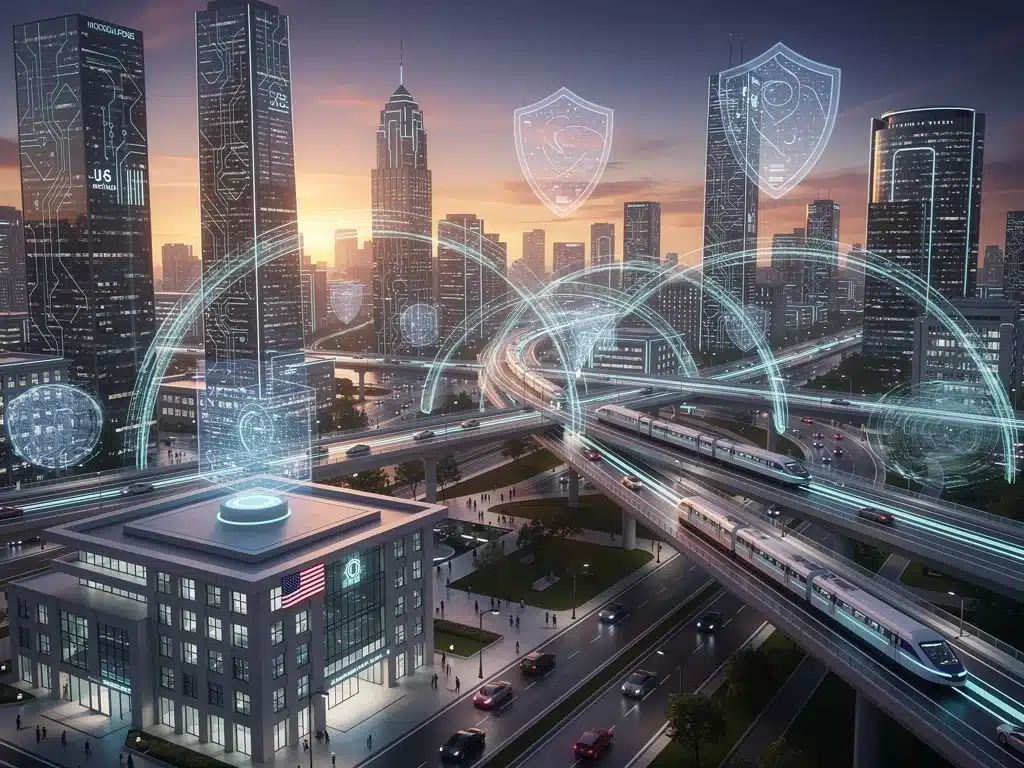
Five significant breakthroughs in quantum computing are on track to fundamentally transform key aspects of US infrastructure by 2030, from bolstering cybersecurity to optimizing complex logistical networks.
Advertisements
Are you ready for a future where the impossible becomes routine? The realm of quantum computing, once confined to theoretical physics, is now hurtling towards practical applications that promise to redefine our world. Specifically, the latest 5 breakthroughs in quantum computing that could reshape US infrastructure by 2030 are not just incremental improvements, but paradigm shifts poised to revolutionize how our nation operates. From ultra-secure communication to unprecedented optimization capabilities, these advancements are set to lay the foundation for a more resilient, efficient, and secure America. What do these innovations mean for our daily lives and the backbone of our society?
The Dawn of Quantum Cybersecurity: Unbreakable Encryption for Critical Systems
The digital landscape of US infrastructure is under constant threat, with cyberattacks growing in sophistication and scale. Traditional encryption methods, while robust, face an existential challenge from future quantum computers capable of breaking current cryptographic standards. This vulnerability necessitates a proactive shift towards quantum-resistant solutions. The development of quantum cybersecurity is not merely an upgrade; it’s a fundamental reimagining of how we protect our most vital digital assets.
One of the most significant breakthroughs in this area is the advancement of Quantum Key Distribution (QKD). This technology leverages the principles of quantum mechanics to create inherently secure communication channels, where any attempt at eavesdropping immediately alters the quantum state, alerting the communicating parties. The robust nature of QKD offers a level of security unattainable with classical cryptography, making it ideal for protecting sensitive government communications, financial transactions, and critical infrastructure control systems.
Post-Quantum Cryptography Algorithms
While QKD provides point-to-point secure communication, the broader challenge lies in securing data at rest and in transit across vast networks. This is where post-quantum cryptography (PQC) algorithms come into play. These are classical algorithms designed to resist attacks from quantum computers.
- Lattice-based cryptography: Offers strong security guarantees and is highly efficient.
- Code-based cryptography: Provides another promising avenue, though often with larger key sizes.
- Multivariate polynomial cryptography: Known for its speed in certain operations.
- Hash-based signatures: Simpler to implement and well-understood.
The National Institute of Standards and Technology (NIST) is actively standardizing several PQC algorithms, a crucial step towards their widespread adoption. Integrating these algorithms into existing infrastructure will be a monumental task, requiring significant investment and coordination, but the security dividends will be immense. By 2030, we can expect to see these quantum-resistant measures becoming standard practice across critical sectors, from energy grids to transportation networks, ensuring the integrity and confidentiality of our national infrastructure.
The progress in quantum cybersecurity is a race against time, but the breakthroughs in QKD and PQC are charting a clear path towards an unbreakable digital defense for US infrastructure. This proactive approach will be instrumental in safeguarding national security and economic stability in the quantum era.
Quantum Optimization: Revolutionizing Logistics and Supply Chains
The efficiency of US logistics and supply chains is paramount to its economic strength and national resilience. From the movement of goods across continents to the timely delivery of vital supplies during emergencies, these networks are incredibly complex. Traditional computational methods often struggle with the sheer scale of variables involved, leading to inefficiencies and bottlenecks. Quantum optimization offers a revolutionary approach to solving these intractable problems.
One of the most promising breakthroughs is the development of quantum annealing, a type of quantum computation particularly well-suited for optimization tasks. Quantum annealers can explore a vast number of potential solutions simultaneously, identifying optimal or near-optimal pathways far more rapidly than classical supercomputers. This capability has direct implications for streamlining transportation routes, managing inventory, and optimizing resource allocation across the entire supply chain.
Imagine a scenario where thousands of delivery trucks can have their routes optimized in real-time, accounting for traffic, weather, and demand fluctuations, minimizing fuel consumption and delivery times. Or consider the strategic placement of emergency supplies during a natural disaster, where quantum algorithms can determine the most effective distribution points and routes to reach affected populations with maximum speed. These are not distant fantasies but tangible applications being explored today.
Impact on Transportation Networks
The transportation sector, a cornerstone of US infrastructure, stands to benefit immensely from quantum optimization. From air traffic control to railway scheduling, complex algorithms govern every facet of movement.
- Airline route optimization: Minimizing delays and fuel costs by finding optimal flight paths and gate assignments.
- Traffic flow management: Reducing congestion in urban areas through real-time signal optimization.
- Freight logistics: Efficiently scheduling and routing cargo shipments across national networks.
By 2030, quantum-powered optimization tools could be embedded into the operational fabric of major logistics companies and governmental agencies. This will lead to significant cost savings, reduced environmental impact, and a more responsive and efficient national supply chain. The ability to quickly adapt to unforeseen disruptions, such as natural disasters or geopolitical events, will also be dramatically enhanced, bolstering the resilience of US infrastructure.
The breakthroughs in quantum optimization are poised to usher in an era of unprecedented efficiency for US logistics and supply chains, transforming how goods and services move across the nation and bolstering economic competitiveness and national security.
Quantum Sensors: Enhancing Precision in Navigation and Resource Management
Accurate sensing and measurement are fundamental to the operation and maintenance of modern infrastructure. From GPS systems guiding autonomous vehicles to monitoring the health of bridges and pipelines, precise data is critical. Traditional sensors, while effective, have inherent limitations in sensitivity and accuracy. Quantum sensors, leveraging the extreme sensitivity of quantum phenomena, represent a significant leap forward, offering unparalleled precision that could revolutionize various aspects of US infrastructure.
One key breakthrough lies in the development of quantum gravimeters and accelerometers. These devices can measure minute changes in gravity and acceleration with extraordinary accuracy, far surpassing their classical counterparts. For infrastructure, this means highly precise underground mapping for utility lines, early detection of geological shifts that could affect buildings or dams, and even improved navigation in environments where GPS signals are unreliable or unavailable, such as underwater or in urban canyons.
Another area of rapid advancement is quantum magnetometers. These sensors can detect extremely weak magnetic fields, enabling new capabilities in material inspection, medical diagnostics relevant to infrastructure worker health, and even secure communication by detecting subtle electromagnetic signatures. The ability to monitor the structural integrity of infrastructure components with unprecedented detail can prevent failures, extend lifespan, and reduce maintenance costs.
Revolutionizing Navigation Systems
The reliance on GPS for navigation across various sectors, including transportation and defense, presents a vulnerability. Quantum sensors offer a path to robust, independent navigation systems.
- Quantum inertial navigation: Providing highly accurate positioning without relying on external signals, crucial for defense and autonomous vehicles.
- Enhanced underground mapping: Precisely locating buried utilities and geological features, reducing construction risks.
- Structural health monitoring: Detecting subtle stress and defects in bridges, buildings, and pipelines before they become critical.
By 2030, integrated quantum sensor networks could provide real-time, high-fidelity data on the state of our infrastructure. This data will enable predictive maintenance, optimize resource allocation for repairs, and enhance the safety and reliability of critical systems. The enhanced situational awareness provided by these sensors will be invaluable for both routine operations and emergency response, making US infrastructure more resilient and responsive.
The advancements in quantum sensing promise a future where our infrastructure is not only more precisely monitored but also more intelligently managed, leading to greater safety, efficiency, and longevity across the board.
Quantum Computing for Energy Grid Optimization and Resilience
The US energy grid is a vast, complex, and interconnected system facing numerous challenges, including increasing demand, the integration of renewable energy sources, and the threat of cyberattacks or physical disruptions. Optimizing its operation and enhancing its resilience are critical national priorities. Traditional computational models struggle to manage the immense number of variables and dynamic interactions within the grid, making real-time optimization and rapid response challenging. Quantum computing offers a powerful new tool in this endeavor.
A significant breakthrough is the application of quantum algorithms to solve complex power flow optimization problems. These algorithms can more efficiently determine the optimal distribution of electricity, minimizing transmission losses and maximizing the integration of intermittent renewable sources like solar and wind power. This capability is crucial for creating a more sustainable and economically viable energy future. Furthermore, quantum computing can model the cascading effects of failures, allowing for proactive strategies to prevent widespread blackouts and enhance grid stability.
Beyond optimization, quantum computing holds promise for enhancing the grid’s resilience against both cyber and physical threats. By simulating complex attack scenarios with unparalleled speed, grid operators can develop more robust defense mechanisms and response protocols. The secure communication capabilities offered by quantum cryptography, as discussed earlier, will also play a vital role in protecting the control systems of the energy grid from malicious actors.
Smart Grid Management with Quantum Speed
The transition to a smart grid, characterized by two-way communication and real-time data, will be significantly accelerated and enhanced by quantum capabilities.
- Real-time demand response: Balancing energy supply and demand more effectively to prevent overloads and ensure stability.
- Renewable energy integration: Optimizing the dispatch and storage of renewable energy to ensure grid reliability.
- Predictive maintenance of grid components: Identifying potential equipment failures before they occur, reducing downtime.
By 2030, quantum-assisted energy management systems could be deployed at various levels of the grid, from regional control centers to local distribution networks. This will enable a more dynamic, efficient, and resilient energy infrastructure capable of meeting the demands of a growing economy while transitioning to cleaner energy sources. The ability to make data-driven decisions at quantum speeds will be transformative for national energy security.
The breakthroughs in quantum computing are poised to fundamentally reshape the US energy grid, making it smarter, more efficient, and significantly more resilient against the myriad challenges of the 21st century.
Quantum AI: Advanced Decision-Making for Predictive Infrastructure Management
Artificial intelligence (AI) is already playing a significant role in managing and maintaining US infrastructure, from traffic management systems to predictive maintenance for public utilities. However, the complexity of many infrastructure challenges often pushes the limits of classical AI. Quantum AI, which combines the power of quantum computing with artificial intelligence, offers a new frontier for advanced decision-making, enabling more sophisticated predictive capabilities and autonomous management systems.
A key breakthrough involves the development of quantum machine learning algorithms. These algorithms can process and analyze vast datasets with unprecedented speed and identify intricate patterns that might be invisible to classical AI. For infrastructure, this means more accurate predictions of equipment failure, better forecasting of demand fluctuations, and more intelligent resource allocation. Imagine AI systems that can not only predict when a bridge might need repair but also optimize the entire repair schedule across a regional network, considering all available resources and potential disruptions.
Furthermore, quantum AI can enhance the capabilities of autonomous systems responsible for infrastructure operations. This includes self-optimizing traffic lights that adapt to real-time flow, drones that autonomously inspect pipelines for damage, and robots that perform complex maintenance tasks. The ability of quantum AI to handle massive amounts of data and make optimal decisions in dynamic environments will significantly improve the efficiency, safety, and responsiveness of our infrastructure.
Applications in Smart Cities and Autonomous Systems
The synergy between quantum computing and AI will accelerate the development of truly smart cities and advanced autonomous infrastructure management.
- Intelligent traffic management: Real-time optimization of traffic flow to reduce congestion and emissions.
- Predictive maintenance for utilities: Preventing outages and failures in water, gas, and electricity networks.
- Autonomous infrastructure inspection: Drones and robots performing detailed assessments of large-scale structures more efficiently.
By 2030, quantum AI could be integrated into the core intelligence of smart city platforms and national infrastructure management systems. This will lead to a more proactive and adaptive infrastructure, capable of anticipating needs and responding to challenges with minimal human intervention. The enhanced analytical power of quantum AI will enable infrastructure managers to make more informed decisions, leading to a more sustainable and efficient urban and national environment.
The breakthroughs in quantum AI promise to elevate infrastructure management to new levels of intelligence and autonomy, creating systems that are not only responsive but truly predictive and self-optimizing.
Quantum Materials Science: Building Stronger, More Efficient Infrastructure
The physical components of US infrastructure, from roads and bridges to energy storage systems, are built from a diverse range of materials. The properties of these materials fundamentally determine the strength, durability, and efficiency of our infrastructure. Traditional materials science relies heavily on empirical testing and classical simulations, which can be time-consuming and computationally intensive. Quantum materials science, powered by quantum computing, offers a revolutionary approach to designing and discovering new materials with unprecedented properties.
A significant breakthrough is the ability of quantum computers to accurately simulate the behavior of molecules and materials at the atomic and subatomic level. This allows researchers to predict material properties, design novel compounds, and understand complex chemical reactions with a level of precision previously impossible. For infrastructure, this means the potential to develop materials that are stronger, lighter, more corrosion-resistant, and more energy-efficient.
Imagine concrete that can self-heal, alloys that are impervious to extreme temperatures, or superconducting materials that can transmit electricity with virtually no loss at ambient temperatures. While some of these concepts are still in early research stages, the accelerated pace of quantum materials discovery could bring them to fruition within the next decade. The ability to precisely tailor materials for specific infrastructure applications will lead to structures that are more resilient, require less maintenance, and have a longer lifespan.
Innovations in Infrastructure Materials
Quantum materials science holds the key to enhancing the fundamental building blocks of our nation’s physical assets.
- Advanced composites: Developing lighter yet stronger materials for aerospace and transportation.
- Self-healing concrete: Extending the lifespan of roads and bridges, reducing repair costs.
- High-efficiency energy storage: Creating next-generation batteries for grid stability and electric vehicles.
By 2030, the insights gained from quantum materials simulations could be directly influencing the development and selection of materials for major infrastructure projects. This will not only improve the physical integrity of our infrastructure but also contribute to sustainability goals by enabling more efficient energy use and reducing the need for frequent replacements. The revolution in materials science driven by quantum computing will literally build a stronger foundation for the future of the US.
The breakthroughs in quantum materials science are poised to provide the fundamental building blocks for a new generation of robust, efficient, and sustainable US infrastructure, transforming our physical world from the ground up.
| Breakthrough Area | Impact on US Infrastructure by 2030 |
|---|---|
| Quantum Cybersecurity | Unbreakable encryption for critical systems and data, safeguarding against cyber threats. |
| Quantum Optimization | Revolutionizing logistics, supply chains, and transportation efficiency across the nation. |
| Quantum AI | Advanced decision-making for predictive infrastructure management and smart cities. |
| Quantum Materials Science | Building stronger, more efficient infrastructure. |
Frequently asked questions about quantum computing and US infrastructure
Quantum computing uses quantum-mechanical phenomena like superposition and entanglement to solve complex problems intractable for classical computers. Its importance for US infrastructure lies in its potential to revolutionize cybersecurity, optimize logistics, enhance sensing capabilities, and improve AI-driven management, leading to more resilient and efficient national systems.
Quantum cybersecurity will protect US critical infrastructure through Quantum Key Distribution (QKD), which ensures unbreakable communication, and Post-Quantum Cryptography (PQC) algorithms, designed to resist attacks from future quantum computers. These measures will safeguard sensitive data, control systems, and national security assets from advanced cyber threats.
Yes, quantum optimization is expected to significantly improve US supply chains by 2030. Quantum annealers and other algorithms can rapidly solve complex logistical problems, optimizing transportation routes, inventory management, and resource allocation. This will lead to greater efficiency, reduced costs, faster delivery times, and enhanced resilience against disruptions.
Quantum sensors will play a crucial role by providing unprecedented precision in navigation, structural health monitoring, and resource management. Quantum gravimeters and magnetometers can enable highly accurate underground mapping, detect subtle defects in structures, and offer robust positioning independent of GPS, enhancing safety and operational efficiency across infrastructure sectors.
Quantum AI will contribute by enabling advanced decision-making for predictive infrastructure management. Quantum machine learning algorithms can analyze vast datasets to forecast demands, anticipate equipment failures, and optimize resource allocation in real-time. This will lead to more efficient traffic management, proactive maintenance, and highly responsive autonomous systems in smart cities.
Conclusion
The pace of innovation in quantum computing is accelerating, bringing with it a wave of transformative potential for US infrastructure. The five breakthroughs discussed—quantum cybersecurity, optimization, sensing, AI, and materials science—are not theoretical concepts but tangible advancements poised to reshape how our nation operates by 2030. From securing our digital frontier against advanced threats to optimizing the intricate networks of logistics and energy, these quantum leaps promise a future of unparalleled efficiency, resilience, and security. While challenges remain in development and implementation, the strategic integration of these technologies will be crucial for maintaining America’s competitive edge and ensuring a robust, forward-looking infrastructure capable of meeting the demands of the 21st century and beyond. The quantum era is not just coming; it’s already here, laying the groundwork for a truly revolutionary future.
