Advanced Sensor Technology: Driving Smart Cities in the U.S. by 2026
Advertisements
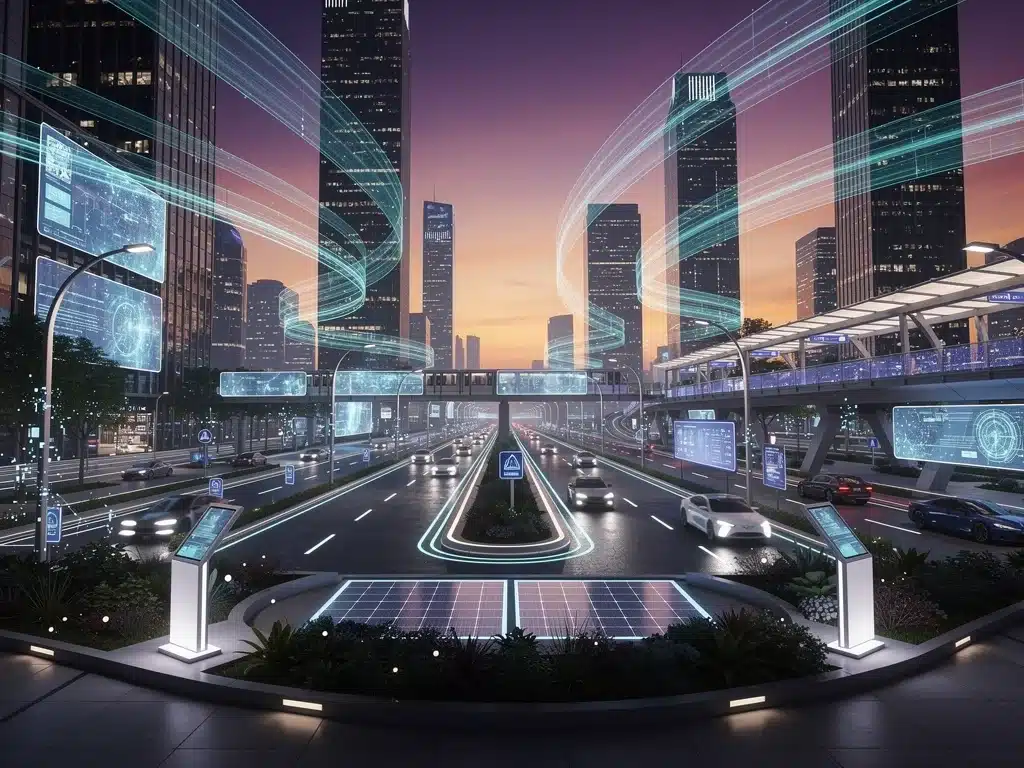
Advanced sensor technology is fundamentally transforming urban landscapes across the U.S., enabling smart city initiatives that enhance efficiency, sustainability, and quality of life for residents by 2026.
The urban centers of tomorrow are not just growing; they are evolving into intelligent ecosystems, intricately woven with data and connectivity. This transformation is largely powered by advanced sensor technology, a crucial component enabling smart city initiatives across the U.S. in 2026. From managing traffic flow to monitoring environmental conditions and optimizing resource allocation, sensors are the silent, omnipresent guardians collecting the vital information needed to build more responsive, efficient, and livable cities. This article delves into how these innovations are shaping the future of urban living, exploring the key advancements and their profound impact.
Advertisements
The Dawn of Hyper-Connected Urban Environments
The concept of a smart city hinges on the ability to gather, analyze, and act upon real-time data. This capability is almost entirely dependent on the proliferation and sophistication of sensor networks embedded throughout the urban fabric. These networks are no longer theoretical; they are becoming a tangible reality in American cities, facilitating unprecedented levels of insight into urban dynamics.
These hyper-connected environments are designed to anticipate needs, respond to incidents, and continuously improve services. Imagine a city where waste collection is optimized based on bin fill levels, where streetlights dim when no one is present, and where public safety is enhanced through intelligent surveillance. This vision is rapidly materializing, driven by innovations in sensor design, data processing, and communication protocols.
Evolution of Sensor Capabilities
Early sensors were often bulky and limited in their scope. Today, advancements have led to miniaturized, energy-efficient devices capable of multimodal sensing. These new generations of sensors can detect a wider array of phenomena with greater accuracy and reliability, providing a richer data stream for urban management.
- Miniaturization: Sensors are becoming smaller, enabling discreet integration into existing infrastructure.
- Energy Efficiency: Low-power consumption allows for longer operational lifespans and reduced maintenance.
- Multimodal Sensing: Single devices can now measure multiple parameters, such as temperature, humidity, air quality, and noise levels simultaneously.
- Enhanced Accuracy: Improved calibration and processing algorithms lead to more precise data collection.
The convergence of these capabilities means that cities can deploy vast networks of sensors without significant aesthetic or logistical challenges. This widespread deployment is fundamental to achieving comprehensive urban intelligence, moving beyond isolated data points to a holistic understanding of city operations.
In essence, the hyper-connected urban environment is about creating a nervous system for the city. This system allows for immediate feedback and adaptive responses, making urban management more proactive and less reactive. It’s a foundational shift in how cities function, promising a future where urban spaces are not just inhabited, but truly intelligent.
Environmental Monitoring and Sustainability Initiatives
One of the most critical applications of advanced sensor technology in smart cities is in environmental monitoring. As urban populations grow, so do concerns about air quality, water pollution, and energy consumption. Sensors provide the means to quantitatively understand these issues and implement targeted solutions, driving sustainability initiatives.
Cities across the U.S. are increasingly leveraging sensor networks to gather granular data on various environmental parameters. This data is then used to inform policy decisions, optimize resource use, and enhance public health. The tangible benefits range from improved air quality in densely populated areas to more efficient water management in drought-prone regions.
Real-time Air Quality Measurement
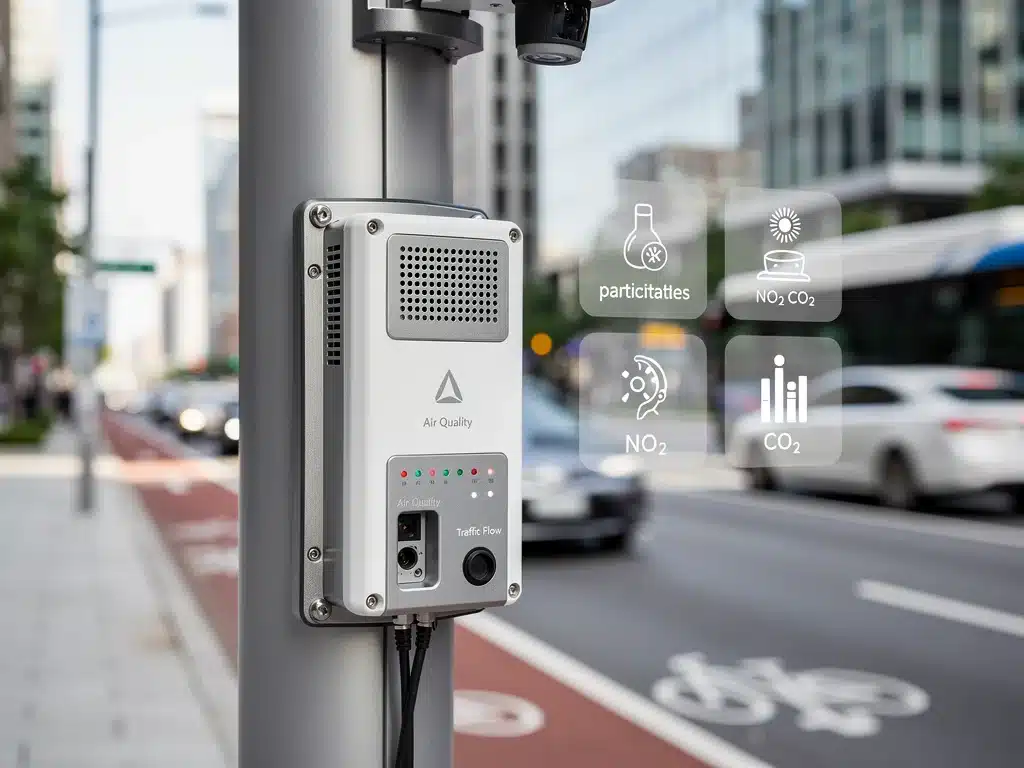
Air quality sensors, often integrated into smart streetlights or public transit infrastructure, provide continuous data on pollutants like particulate matter, ozone, and nitrogen dioxide. This real-time information allows city officials to identify pollution hotspots, issue public health alerts, and evaluate the effectiveness of mitigation strategies.
For example, cities can implement dynamic traffic management plans to divert vehicles from areas with poor air quality or adjust industrial emissions based on prevailing atmospheric conditions. This proactive approach significantly contributes to reducing respiratory illnesses and improving overall urban health.
Water Management and Conservation
Water sensors play a vital role in ensuring efficient water distribution and identifying leaks in aging infrastructure. Smart irrigation systems, for instance, use soil moisture sensors to water public parks and green spaces only when necessary, conserving significant amounts of water.
- Leak Detection: Acoustic and pressure sensors can pinpoint leaks in water pipes, preventing massive water loss.
- Water Quality Monitoring: Sensors in reservoirs and distribution networks detect contaminants, ensuring safe drinking water.
- Smart Irrigation: Soil moisture and weather sensors optimize watering schedules for urban landscapes.
These sensor-driven solutions are particularly crucial in regions facing water scarcity, allowing for more informed and sustainable water resource management. The economic and environmental benefits are substantial, making intelligent water systems a cornerstone of smart city development.
Ultimately, environmental monitoring through advanced sensor technology empowers cities to become more resilient and sustainable. By providing accurate, timely data, these systems enable evidence-based decision-making that protects both the environment and the well-being of urban residents.
Intelligent Transportation Systems and Traffic Management
Congestion, pollution, and inefficient public transportation are persistent challenges in urban areas. Advanced sensor technology offers transformative solutions for intelligent transportation systems (ITS), revolutionizing how people and goods move through cities. These innovations are designed to enhance safety, reduce travel times, and minimize environmental impact.
By 2026, many U.S. cities are expected to have sophisticated sensor networks embedded in their transportation infrastructure. These networks collect data on traffic volume, speed, road conditions, and pedestrian movement, providing a comprehensive picture of urban mobility. This information is then used to optimize traffic signals, guide autonomous vehicles, and inform commuters.
Optimizing Traffic Flow and Reducing Congestion
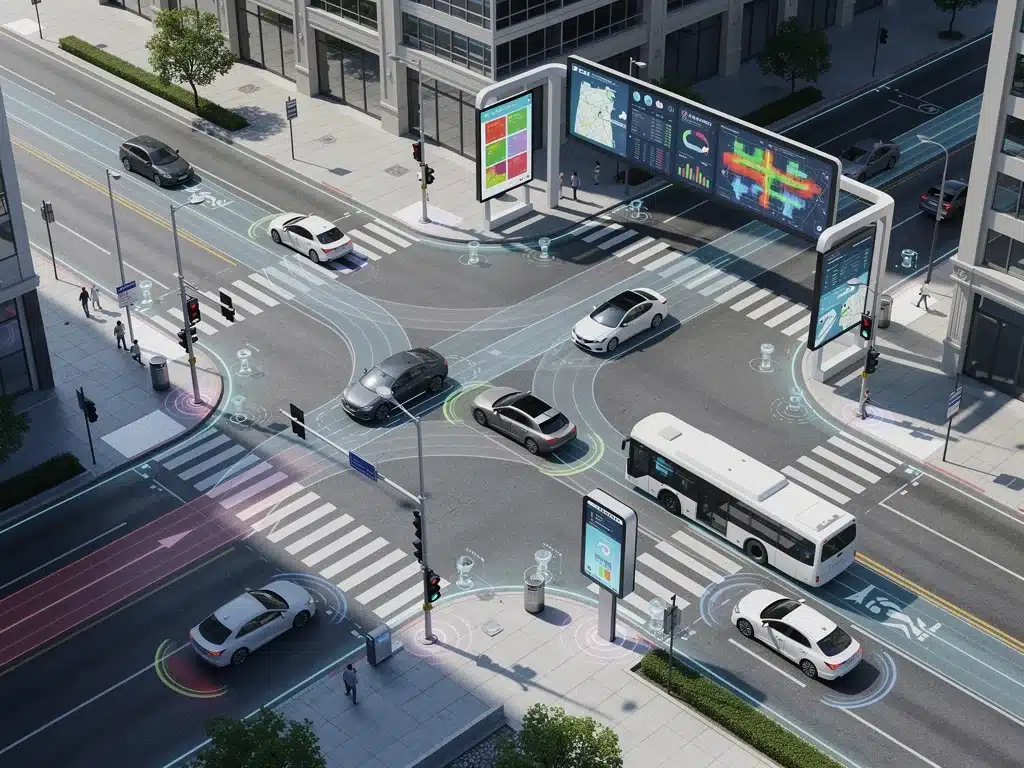
Traffic sensors, including inductive loops, radar, and cameras, are deployed at intersections and along major thoroughfares. The data collected by these sensors feeds into intelligent traffic management systems that can dynamically adjust signal timings in real-time to alleviate congestion. This adaptive approach is far more effective than static signal programming.
Furthermore, these systems can provide real-time navigation updates to drivers, suggesting alternative routes to avoid bottlenecks. The result is smoother traffic flow, reduced travel times, and a decrease in fuel consumption and emissions.
Public Transit Enhancement and Pedestrian Safety
Sensors are also improving public transit. GPS sensors on buses and trains provide real-time location data, allowing passengers to track their journeys and transit authorities to optimize schedules. Occupancy sensors can inform decisions about adding more vehicles during peak hours, improving passenger experience.
- Real-time Transit Tracking: GPS and other location sensors enable accurate tracking of public transport.
- Pedestrian Detection: Sensors at crosswalks can detect pedestrians and adjust signal timings to ensure their safety.
- Smart Parking: Sensors in parking spots indicate availability, reducing search times and congestion.
For pedestrian safety, advanced vision sensors and LiDAR systems can detect vulnerable road users at intersections, triggering warnings for drivers or adjusting traffic signals. This integration of sensor data creates a safer, more efficient, and more accessible urban transportation network for everyone.
The impact of intelligent transportation systems extends beyond mere convenience; it contributes to economic productivity, environmental protection, and a higher quality of life for urban residents. These systems are pivotal in shaping the future of urban mobility.
Smart Infrastructure and Predictive Maintenance
Aging infrastructure is a significant challenge for many U.S. cities, leading to costly repairs, service disruptions, and safety concerns. Advanced sensor technology is providing a proactive solution through smart infrastructure and predictive maintenance, allowing cities to monitor the health of their assets and intervene before failures occur.
By embedding sensors into bridges, roads, buildings, and utility networks, cities can continuously collect data on structural integrity, performance, and environmental stressors. This data, analyzed using AI and machine learning, enables predictive maintenance, shifting from reactive repairs to proactive asset management.
Structural Health Monitoring
Sensors such as strain gauges, accelerometers, and optical fibers are being integrated into critical infrastructure like bridges and tunnels. These sensors detect subtle changes in structural behavior, indicating potential weaknesses or damage caused by fatigue, corrosion, or seismic activity.
This continuous monitoring allows engineers to assess the structural health of assets in real-time, identify potential issues early, and schedule maintenance before a catastrophic failure occurs. This approach not only enhances public safety but also extends the lifespan of expensive infrastructure.
Utility Network Optimization
Sensors are also transforming the management of utility networks, including electricity grids, gas pipelines, and wastewater systems. Smart meters provide real-time consumption data, enabling utilities to optimize distribution and identify anomalies that could indicate leaks or inefficiencies.
- Grid Monitoring: Sensors detect power outages, voltage fluctuations, and potential equipment failures in electricity grids.
- Pipeline Integrity: Pressure and acoustic sensors monitor gas and water pipelines for leaks and structural degradation.
- Wastewater Management: Flow and level sensors prevent overflows and optimize treatment processes.
By providing detailed insights into the performance and condition of utility infrastructure, sensors help cities prevent service disruptions, reduce operational costs, and ensure the reliable delivery of essential services. This proactive approach is essential for maintaining robust and resilient urban systems.
In conclusion, smart infrastructure, powered by advanced sensor technology, represents a paradigm shift in how cities manage their physical assets. It moves urban management from a reactive stance to a predictive one, leading to safer, more efficient, and more sustainable urban environments.
Public Safety and Emergency Response Enhancements
Ensuring public safety is a paramount concern for any city. Advanced sensor technology is significantly enhancing urban security and improving emergency response capabilities, creating safer environments for residents and visitors alike. These systems provide real-time situational awareness, enabling faster and more effective interventions.
From intelligent surveillance to gunshot detection and environmental hazard monitoring, sensors are becoming integral tools for law enforcement and emergency services. By 2026, U.S. cities are expected to leverage these technologies to create integrated public safety networks that are more responsive and preventative.
Intelligent Surveillance and Anomaly Detection
While privacy concerns are paramount and must be addressed, smart cameras equipped with AI-powered analytics can detect unusual activity, recognize objects, and monitor crowd density. These systems can alert authorities to potential threats, missing persons, or unsafe conditions, allowing for rapid response.
Such surveillance goes beyond basic recording, offering proactive anomaly detection. For instance, if a package is left unattended in a public space for an extended period, the system can flag it as suspicious, triggering an alert for security personnel. This is not about constant monitoring of individuals, but rather about identifying patterns that indicate potential risks to public order.
Emergency Response Optimization
Sensors also play a crucial role in optimizing emergency response. Acoustic sensors can detect gunshots or explosions, pinpointing the exact location of an incident and dispatching emergency services automatically. Environmental sensors can detect hazardous gas leaks or chemical spills, providing early warnings and guiding evacuation efforts.
- Gunshot Detection: Acoustic sensors rapidly identify and locate firearm discharges, reducing response times.
- Hazardous Material Detection: Chemical and radiation sensors provide early warnings for environmental threats.
- Smart Lighting for Safety: Adaptive street lighting can illuminate areas of concern or guide emergency vehicles.
Furthermore, integration with traffic management systems allows for dynamic signal priority for emergency vehicles, clearing routes and significantly reducing response times. In disaster scenarios, networks of sensors can provide critical information on structural damage or environmental conditions, aiding rescue efforts and minimizing risks to first responders.
The deployment of these advanced sensor technologies in public safety is transforming how cities protect their citizens. By providing immediate, actionable intelligence, these systems enable authorities to respond more effectively to emergencies and potentially prevent incidents, making urban areas safer and more secure.
Challenges and the Path Forward for Smart Cities
While the promise of advanced sensor technology in smart cities is immense, its implementation is not without challenges. These include issues related to data privacy, cybersecurity, funding, and public acceptance. Addressing these concerns is crucial for the successful and ethical deployment of smart city initiatives across the U.S. by 2026.
Cities must navigate a complex landscape of technological possibilities, regulatory frameworks, and public expectations. The path forward requires a multi-faceted approach that prioritizes transparency, security, and citizen engagement to build trust and ensure equitable benefits.
Addressing Data Privacy and Cybersecurity
The vast amounts of data collected by sensor networks raise significant privacy concerns. Cities must implement robust data governance policies, including anonymization, encryption, and strict access controls, to protect sensitive information. Clear guidelines on data collection, storage, and usage are essential to maintain public trust.
Cybersecurity is another critical aspect. Smart city infrastructure, being highly interconnected, presents a large attack surface for malicious actors. Implementing resilient cybersecurity measures, including regular audits, threat detection systems, and secure communication protocols, is vital to prevent data breaches and system disruptions.
- Robust Data Governance: Establish clear policies for data collection, usage, and retention.
- Encryption and Anonymization: Protect sensitive data through advanced security techniques.
- Cybersecurity Protocols: Implement strong defenses against cyber threats and attacks.
Engaging citizens in discussions about data privacy and the benefits of smart city technologies can help foster acceptance and build confidence in these initiatives. Transparency about how data is used is key to overcoming potential resistance.
Funding Models and Public-Private Partnerships
The deployment of advanced sensor technology and smart city infrastructure requires substantial investment. Cities often face budget constraints, making innovative funding models and public-private partnerships essential. These collaborations can pool resources, expertise, and technology to accelerate smart city development.
Private companies can bring specialized knowledge and capital, while public entities provide regulatory oversight and ensure that projects align with community needs. Exploring grants, bond issues, and performance-based contracts can also help finance these ambitious undertakings. The long-term economic benefits and improved quality of life can justify the initial investments, but careful financial planning is crucial.
The journey towards fully integrated smart cities is an ongoing one, requiring continuous adaptation and innovation. By proactively addressing the challenges of privacy, security, and funding, U.S. cities can harness the full potential of advanced sensor technology to create truly intelligent, sustainable, and livable urban environments for their residents.
The Future Impact of Sensor-Driven Urbanization
As we look towards 2026 and beyond, the profound impact of advanced sensor technology on urbanization in the U.S. cannot be overstated. These innovations are not merely incremental improvements; they represent a fundamental shift in how cities are designed, managed, and experienced. The trajectory points towards increasingly autonomous, responsive, and citizen-centric urban landscapes.
The integration of diverse sensor data, coupled with artificial intelligence and machine learning, will unlock new levels of urban intelligence. This will lead to predictive capabilities that allow cities to anticipate problems before they arise, from traffic jams to infrastructure failures, and even potential public health crises. The goal is to move from reactive management to proactive governance.
Personalized Urban Experiences
Beyond broad city-wide applications, sensor technology also promises to deliver more personalized urban experiences. Imagine public spaces that adapt to your presence, informing you of available services or guiding you to less crowded areas. Or public transportation that dynamically adjusts routes based on real-time demand, offering more efficient and convenient travel options.
While raising privacy considerations, these advancements could also enhance accessibility for individuals with disabilities, provide tailored information for tourists, and create more engaging public environments. The key lies in designing these systems with user consent and ethical considerations at their core.
Resilience Against Climate Change and Disasters
Sensor networks will also play an increasingly vital role in making cities more resilient to the impacts of climate change and natural disasters. Early warning systems for floods, wildfires, and extreme weather events, powered by environmental sensors, will provide critical time for evacuation and mitigation efforts.
- Early Warning Systems: Sensors detect environmental anomalies signaling impending disasters.
- Resource Optimization: Adaptive systems reduce energy and water consumption, lowering environmental impact.
- Infrastructure Adaptability: Real-time monitoring allows for dynamic responses to climate stressors.
Furthermore, by optimizing energy consumption and promoting sustainable resource management, smart sensor technology contributes directly to climate change mitigation. This dual role of adaptation and mitigation positions sensors as indispensable tools in building future-proof cities.
Ultimately, the future of urban living in the U.S. will be inextricably linked to the continued evolution and thoughtful deployment of advanced sensor technology. These innovations are paving the way for cities that are not only smarter but also more sustainable, equitable, and enjoyable for everyone who calls them home.
| Key Innovation | Impact on Smart Cities |
|---|---|
| Environmental Monitoring | Real-time air/water quality data for sustainability and public health. |
| Intelligent Transportation | Optimizes traffic flow, enhances public transit, and improves road safety. |
| Smart Infrastructure | Predictive maintenance, structural health monitoring, and utility optimization. |
| Public Safety Enhancements | Improves emergency response, intelligent surveillance, and hazard detection. |
Frequently Asked Questions About Smart City Sensors
Advanced sensor technology refers to sophisticated devices embedded in urban environments that collect real-time data on various parameters like air quality, traffic, and infrastructure integrity. This data powers smart city initiatives, improving urban efficiency and livability.
Sensors monitor air and water quality, noise levels, and energy consumption. This real-time data allows cities to identify pollution sources, optimize resource use, and implement targeted strategies to enhance environmental sustainability and public health.
Sensors collect data on traffic flow, vehicle speed, and road conditions. This information is used to optimize traffic signals, guide navigation, and enhance public transit, leading to reduced congestion, faster travel, and improved safety for commuters.
Absolutely. Sensors embedded in bridges, roads, and utility networks monitor structural health and performance. This enables predictive maintenance, allowing cities to identify and address potential issues before they become critical failures, saving costs and enhancing safety.
Key challenges include ensuring data privacy and cybersecurity, securing adequate funding, and gaining public acceptance. Transparent data governance, robust security measures, and strong public-private partnerships are crucial for successful implementation.
Conclusion
The journey towards smarter cities in the U.S. is undeniably being charted by the rapid advancements in advanced sensor technology. These innovations are the bedrock upon which future urban environments will be built, fostering unprecedented levels of efficiency, sustainability, and safety. By providing real-time intelligence across critical urban domains—from environmental monitoring and transportation to infrastructure maintenance and public safety—sensors are empowering cities to become more responsive and resilient. While challenges such as data privacy and funding remain, a collaborative and transparent approach promises to unlock the full potential of these technologies, ultimately creating more livable and enjoyable urban spaces for all residents by 2026 and beyond.
