BCI 2026: Revolutionizing US Medical Rehabilitation
Advertisements
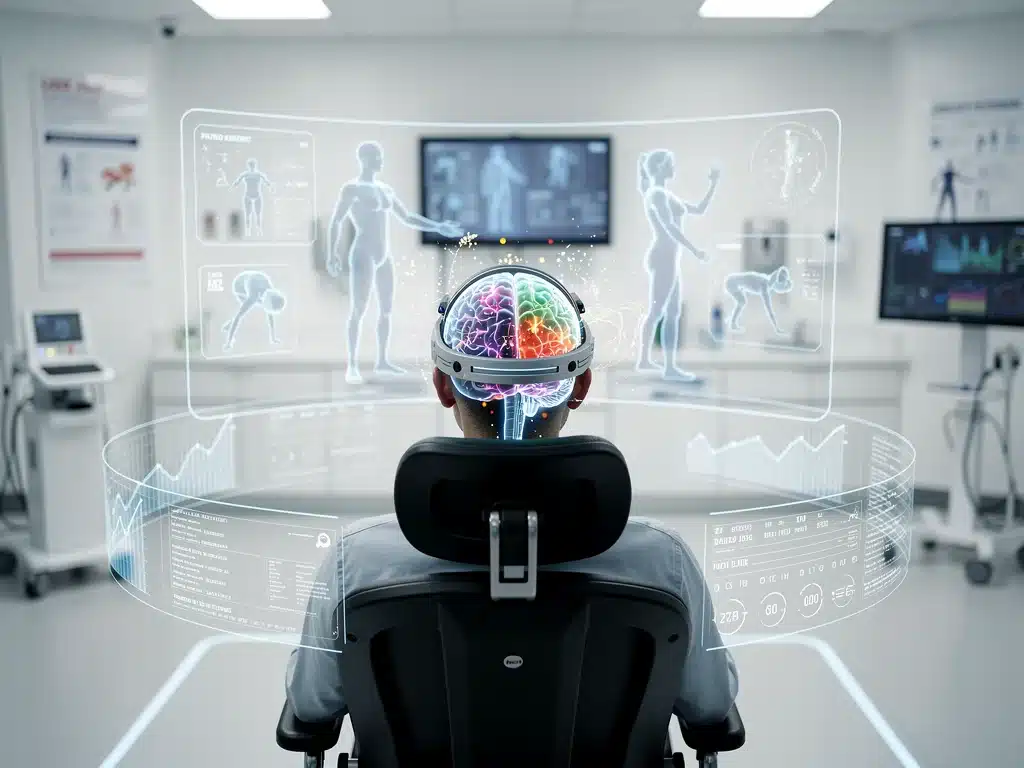
Brain-Computer Interfaces (BCI) are set to revolutionize medical rehabilitation in the U.S. by 2026, offering unprecedented opportunities for restoring function and improving the lives of individuals with severe disabilities and neurological conditions.
Imagine a future where thought alone can restore movement, control prosthetics with precision, or even communicate without speech. This future is rapidly approaching, and by 2026, Brain-Computer Interfaces (BCI): 2026 Developments and Their Potential for U.S. Medical Rehabilitation will be at the forefront of this revolution, transforming lives across the United States. Prepare to delve into the cutting-edge innovations poised to redefine recovery and independence.
Advertisements
The Dawn of BCI in U.S. Medical Rehabilitation
The landscape of medical rehabilitation in the United States is on the cusp of a profound transformation, driven by advancements in Brain-Computer Interface (BCI) technology. These innovative systems enable direct communication pathways between the brain and an external device, bypassing damaged neural pathways. This capability holds immense promise for individuals suffering from a wide range of debilitating conditions, from spinal cord injuries to neurodegenerative diseases.
By 2026, BCI applications are expected to move beyond experimental stages into more widespread clinical use, offering new avenues for restoring motor function, communication, and overall independence. The integration of BCI with sophisticated robotics and artificial intelligence is creating a synergy that was once thought to be science fiction, but is now becoming a tangible reality for patients.
Understanding BCI Fundamentals
At its core, BCI technology involves recording brain signals, interpreting them, and translating them into commands for external devices. This process can be achieved through various methods, each with its own advantages and limitations, depending on the specific medical application and patient needs. The underlying principle is to leverage the brain’s inherent plasticity and its ability to learn and adapt.
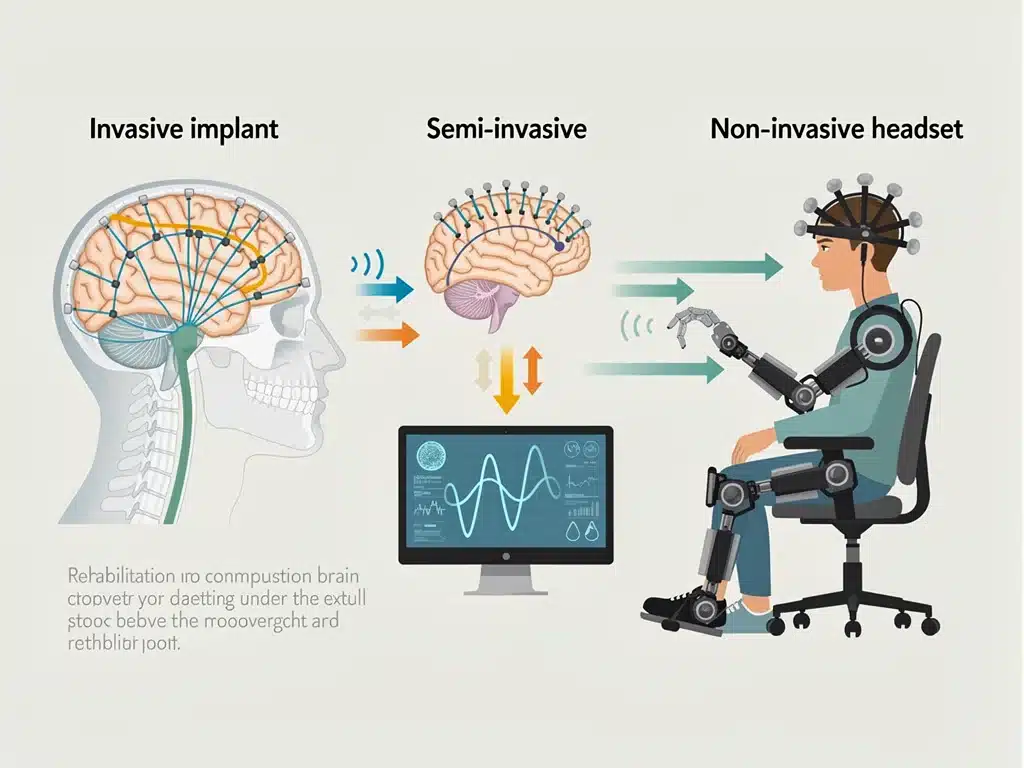
- Signal Acquisition: This involves capturing electrical activity from the brain, either invasively (e.g., electrodes implanted directly into the brain) or non-invasively (e.g., EEG caps on the scalp).
- Signal Processing: Raw brain signals are complex and noisy. Advanced algorithms are used to filter, clean, and extract meaningful patterns from these signals, identifying specific neural correlates of intended actions.
- Translation to Commands: The processed signals are then converted into control commands for external devices, such as robotic limbs, wheelchairs, or communication aids, enabling patients to interact with their environment.
The evolution of BCI is not just about technological sophistication; it’s also about making these devices more user-friendly, reliable, and accessible. The goal is to empower patients, giving them a renewed sense of agency and control over their bodies and their lives. This shift represents a paradigm change in how rehabilitation is approached, moving from compensatory strategies to restorative ones.
As we look towards 2026, the U.S. medical rehabilitation sector is actively preparing for the integration of BCI technologies. This preparation involves not only technological development but also training medical professionals, establishing ethical guidelines, and ensuring equitable access to these life-changing innovations. The potential for BCI to redefine what’s possible in rehabilitation is truly immense, offering a beacon of hope for countless individuals.
Advancements in Non-Invasive BCI Technologies
While invasive BCIs offer high signal fidelity, non-invasive methods are gaining significant traction due to their lower risk profile and ease of application. By 2026, non-invasive Brain-Computer Interfaces are expected to see substantial improvements, making them more practical and effective for a wider range of rehabilitation scenarios in the U.S. These advancements focus on enhancing signal clarity and refining algorithms to interpret brain activity without surgical intervention.
Electroencephalography (EEG) based BCIs, for instance, are becoming more sophisticated, with better electrode designs and more powerful signal processing techniques. This allows for more precise control of prosthetic devices, improved communication for locked-in patients, and enhanced neurofeedback training for conditions like stroke recovery.
Enhanced EEG and fNIRS Applications
The development of high-density EEG systems and the integration of functional Near-Infrared Spectroscopy (fNIRS) are pivotal. fNIRS measures changes in blood oxygenation, providing complementary information to electrical brain activity, thus improving the robustness of BCI systems. These combined approaches offer a more comprehensive understanding of brain states and intentions.
- Improved Signal-to-Noise Ratio: New electrode materials and dry electrode technologies reduce signal interference, making non-invasive BCIs more reliable in everyday settings.
- Portable and Wearable Designs: The trend towards miniaturization and comfort means that non-invasive BCI devices will become increasingly discreet and integrated into daily life, facilitating continuous rehabilitation and assistive use.
- User Calibration and Adaptation: Advanced machine learning algorithms enable BCIs to adapt quickly to individual user’s brain patterns, reducing the training time required for effective control.
These technological leaps are crucial for expanding the reach of BCI rehabilitation. Non-invasive options are particularly appealing for outpatient settings and home-based therapy, where surgical procedures are impractical or undesirable. The focus is on creating solutions that are not only technologically advanced but also user-centric, empowering individuals to regain control and participate more fully in their lives.
In conclusion, the evolution of non-invasive BCI technologies by 2026 promises to democratize access to these powerful rehabilitation tools. Their enhanced accuracy, portability, and user-friendliness will significantly impact the lives of many in the U.S., offering practical and effective alternatives to more invasive procedures.
Invasive BCI: Precision and Direct Neural Control
While non-invasive BCIs offer accessibility, invasive Brain-Computer Interfaces continue to push the boundaries of precision and direct neural control. By 2026, significant advancements in surgical techniques, biocompatible materials, and electrode design will further solidify the role of invasive BCIs in U.S. medical rehabilitation, particularly for severe neurological impairments where high-fidelity signal acquisition is paramount. These systems often involve direct implantation of microelectrode arrays into specific brain regions, allowing for the capture of individual neuron activity.
The unparalleled signal quality from invasive BCIs enables highly nuanced control over complex prosthetic limbs, robotic exoskeletons, and sophisticated communication devices. This level of control can dramatically improve the functional independence of individuals with conditions such as tetraplegia, severe stroke, or amyotrophic lateral sclerosis (ALS).
Miniaturization and Longevity of Implants
Ongoing research is focused on reducing the size of implants and increasing their longevity within the brain. Smaller, more flexible electrode arrays minimize tissue damage and improve long-term signal stability. The development of advanced coatings and materials also plays a crucial role in preventing immune responses and ensuring the sustained functionality of the devices over many years.
- High-Density Electrode Arrays: Newer implants feature hundreds or even thousands of microelectrodes, capable of recording from a vast number of neurons simultaneously, leading to more detailed and accurate command signals.
- Wireless Power and Data Transmission: The elimination of transcutaneous wires reduces infection risk and improves patient comfort and mobility, making invasive BCIs more practical for daily use.
- Adaptive Algorithms: Machine learning algorithms are continuously refined to better interpret complex neural patterns, allowing for more intuitive and natural control of external devices, even as brain signals may subtly change over time.
The ethical considerations surrounding invasive procedures remain a key area of discussion, but the profound benefits for patients with severe disabilities often outweigh the risks. Regulatory bodies in the U.S. are working to establish clear guidelines for the safe and effective deployment of these advanced technologies.
In summary, invasive BCI technologies are poised to offer unprecedented levels of functional restoration by 2026, providing a direct and powerful link between thought and action. The continuous innovation in implant design and signal processing promises to unlock new possibilities for individuals facing the most challenging medical conditions, pushing the frontiers of what medical rehabilitation can achieve.
BCI Integration with Robotics and AI for Enhanced Mobility
The true power of Brain-Computer Interfaces in medical rehabilitation is fully realized when combined with advancements in robotics and artificial intelligence. By 2026, this synergistic integration will lead to highly sophisticated assistive devices that respond almost instinctively to a user’s intentions, offering unprecedented levels of mobility and functional restoration in the U.S. This combination creates intelligent systems that not only interpret brain signals but also learn and adapt to the user’s needs and preferences over time.
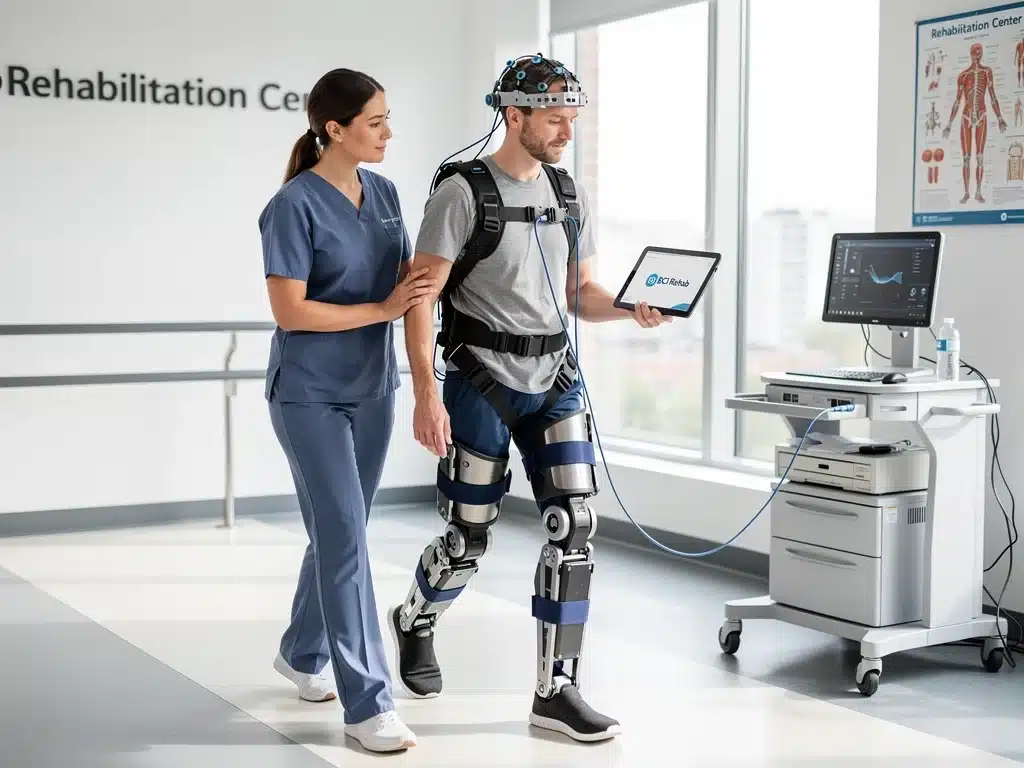
Robotic exoskeletons, for instance, are no longer just pre-programmed machines; they become extensions of the user’s will, controlled directly by neural commands. This allows individuals with severe paralysis to regain the ability to stand, walk, and perform complex movements with greater fluidity and less effort.
Intelligent Prosthetics and Exoskeletons
The next generation of prosthetics and exoskeletons will feature embedded AI that can anticipate movements, adjust to environmental changes, and even provide sensory feedback, making the experience of using them feel more natural and integrated. This level of intelligence is critical for seamless interaction and reducing cognitive load on the user.
- Predictive Control: AI algorithms can learn user intentions from subtle neural cues, allowing robotic devices to initiate movements even before conscious thought is fully formed, reducing lag and improving responsiveness.
- Adaptive Gait and Balance: For exoskeletons, AI can dynamically adjust gait patterns and balance to navigate uneven terrain or unexpected obstacles, enhancing safety and stability for the user.
- Sensory Feedback: Researchers are developing ways to provide tactile and proprioceptive feedback to the user, either through direct neural stimulation or haptic feedback in the device, restoring a sense of touch and limb position.
The convergence of BCI, robotics, and AI is creating a new frontier in assistive technology, moving beyond simple control to enabling a truly intuitive and empowering experience. This not only aids physical rehabilitation but also has significant psychological benefits, fostering a sense of autonomy and independence that can profoundly impact a patient’s quality of life.
As 2026 approaches, the U.S. medical rehabilitation landscape will increasingly feature these integrated systems, offering tailored solutions that are more effective, personalized, and responsive than ever before. This fusion of technologies represents a monumental step forward in restoring function and improving the overall well-being of individuals with mobility impairments.
BCI for Communication and Neurorehabilitation
Beyond motor control, Brain-Computer Interfaces are poised to revolutionize communication and cognitive neurorehabilitation. By 2026, BCI technologies will offer advanced solutions for individuals with severe communication disorders, enabling them to express thoughts and needs with unprecedented clarity. This is particularly vital for patients suffering from conditions like locked-in syndrome, severe stroke, or advanced neurodegenerative diseases where verbal communication is severely impaired or impossible.
These systems interpret brain signals associated with intended speech, text generation, or even direct selection of words and phrases from a digital interface. The goal is to restore a fundamental human right: the ability to communicate and connect with the world.
Restoring Voice and Cognitive Function
The advancements in BCI for communication extend to deciphering complex brain activity related to language processing and thought. This opens doors for not only direct communication but also for cognitive training and rehabilitation, helping patients recover or maintain mental acuity.
- Neural Speech Synthesis: Researchers are developing BCIs that can directly decode brain signals associated with speech motor intentions, synthesizing spoken words and phrases in real-time, effectively restoring a ‘digital voice.’
- Advanced Text Input: For those who can’t speak, BCI-controlled virtual keyboards or selection interfaces allow for rapid and accurate text generation, significantly improving communication speed compared to traditional eye-tracking or switch-based systems.
- Cognitive Training and Assessment: BCI can be used in neurofeedback protocols to help patients improve attention, memory, and other cognitive functions, particularly in stroke recovery or traumatic brain injury rehabilitation.
The impact of these communication BCIs cannot be overstated. For individuals who have been isolated by their inability to communicate, these technologies offer a lifeline, restoring their ability to participate in conversations, make decisions, and express their personalities. This has profound implications for mental health and social integration.
By 2026, the U.S. medical rehabilitation community will increasingly adopt these BCI-driven communication and neurorehabilitation tools. They represent a critical step towards comprehensive care that addresses not only physical limitations but also the vital need for human connection and cognitive well-being.
Ethical Considerations and Accessibility Challenges
As Brain-Computer Interfaces become more sophisticated and integrated into U.S. medical rehabilitation by 2026, it is imperative to address the complex ethical considerations and accessibility challenges that arise. While the potential benefits are immense, ensuring responsible development and equitable access is crucial for these transformative technologies to truly serve all who need them.
Discussions around data privacy, autonomy, and the potential for misuse of BCI technology are paramount. The ability to directly access and interpret brain activity raises fundamental questions about personal identity and mental privacy, requiring robust ethical frameworks and regulatory oversight.
Navigating the Ethical Landscape
The ethical implications of BCI extend beyond privacy to include issues of agency and enhancement. Who controls the BCI? What happens if a BCI malfunctions? How do we ensure that these technologies enhance rather than diminish human autonomy? These are questions that require careful deliberation from clinicians, ethicists, policymakers, and the public.
- Data Security and Privacy: Protecting highly sensitive neural data from unauthorized access or misuse is a top priority, necessitating advanced encryption and data governance protocols.
- Informed Consent: Ensuring that patients fully understand the risks and benefits of BCI, especially invasive procedures, is critical, particularly given the novelty and complexity of the technology.
- Bias in Algorithm Design: Care must be taken to prevent algorithmic biases that could disadvantage certain demographic groups or lead to suboptimal performance for diverse users.
Beyond ethics, accessibility poses a significant hurdle. The high cost of BCI research, development, and implementation could create a disparity in who can benefit from these life-changing technologies. Ensuring that BCI is not just a luxury for the privileged but a widely available tool for rehabilitation is a key challenge.
Strategies to address accessibility include advocating for insurance coverage, exploring public-private partnerships for funding, and developing more affordable BCI solutions. The U.S. healthcare system will need to adapt to integrate these advanced technologies in a way that is both patient-centric and economically sustainable.
In conclusion, while the promise of BCI in medical rehabilitation is undeniable, the ethical and accessibility challenges must be proactively addressed. By fostering open dialogue, establishing clear regulations, and committing to equitable distribution, the U.S. can ensure that the BCI revolution benefits everyone who stands to gain from it, paving the way for a more inclusive and technologically advanced future in healthcare.
The Future Outlook: BCI in U.S. Healthcare Beyond 2026
Looking beyond 2026, the trajectory of Brain-Computer Interfaces in U.S. medical rehabilitation points towards even more profound integration and expanded applications. The foundational developments occurring now are merely the stepping stones to a future where BCI becomes a standard component of care for a myriad of neurological and physical conditions. The continuous evolution of neurotechnology promises a future where the lines between human and machine become increasingly blurred, in the most beneficial ways for patient recovery.
Expect to see BCI systems becoming more compact, more intelligent, and seamlessly integrated into daily life, moving from clinical settings into homes and communities. This shift will empower individuals to manage their conditions and participate in rehabilitation exercises with greater autonomy and convenience, fostering a truly patient-led recovery process.
Personalized BCI Therapies and Neuroplasticity
A key area of future development is personalized BCI therapies. Tailoring BCI systems to individual brain characteristics and specific rehabilitation goals will maximize efficacy and accelerate recovery. This involves leveraging advanced AI to create highly adaptive and responsive interfaces.
- Closed-Loop BCI Systems: These systems will not only interpret brain signals but also provide real-time feedback to the brain, directly influencing neuroplasticity and promoting neural reorganization to restore function.
- Integration with Virtual and Augmented Reality: BCI-controlled VR/AR environments will offer immersive and engaging rehabilitation experiences, making therapy more motivating and effective by simulating real-world scenarios.
- Cognitive Enhancement and Restoration: Beyond motor and communication, BCI will increasingly be used for cognitive enhancement, helping individuals with memory loss, attention deficits, or other cognitive impairments to improve brain function.
The long-term vision for BCI in U.S. healthcare extends to preventative measures and wellness applications, such as stress reduction, improved focus, and sleep optimization. While these are currently nascent areas, the underlying technology has the potential to move beyond rehabilitation into broader aspects of health and well-being.
In conclusion, the future of BCI in U.S. medical rehabilitation is bright and expansive. The innovations witnessed by 2026 will lay the groundwork for a future where brain-computer interfaces are not just assistive devices but integral tools that profoundly enhance human capabilities, restore lost functions, and contribute to a higher quality of life for millions, redefining the very essence of human potential and recovery.
| Key Aspect | 2026 Outlook in U.S. Rehabilitation |
|---|---|
| Non-Invasive BCI | Enhanced EEG and fNIRS for broader, safer patient access and improved signal clarity without surgery. |
| Invasive BCI | Greater precision and direct neural control for severe impairments, with smaller, longer-lasting implants. |
| Robotics & AI Integration | Intuitive control of exoskeletons and prosthetics, offering advanced mobility and adaptive assistance. |
| Communication & Neurorehab | Restoring speech and facilitating cognitive training for individuals with severe communication disorders. |
Frequently Asked Questions About BCI in Rehabilitation
By 2026, the primary goal of BCI in U.S. medical rehabilitation is to restore motor function, communication capabilities, and independence for individuals with severe neurological impairments or physical disabilities, significantly improving their quality of life.
While invasive BCIs generally offer higher signal fidelity and precision for complex control, non-invasive BCIs are rapidly improving. By 2026, they will provide effective and safer alternatives for many rehabilitation scenarios, especially for broader accessibility and home use.
AI will enhance BCI systems by providing predictive control, adaptive learning, and intelligent decision-making for robotic prosthetics and exoskeletons. This will lead to more intuitive, responsive, and personalized rehabilitation experiences for users.
Ethical challenges include data privacy and security of neural information, ensuring informed consent for invasive procedures, and preventing algorithmic bias. These concerns require careful consideration and robust regulatory frameworks for responsible deployment.
While BCI adoption will increase by 2026, widespread accessibility remains a challenge due to high costs. Efforts are underway to secure insurance coverage and develop more affordable solutions to ensure equitable access across the U.S. healthcare system.
Conclusion
The rapid evolution of Brain-Computer Interfaces heralds a truly transformative era for medical rehabilitation in the United States. By 2026, the convergence of advanced BCI technologies with robotics and artificial intelligence promises to deliver unprecedented opportunities for individuals living with severe disabilities, offering renewed hope for restoring lost functions, improving communication, and enhancing overall independence. While ethical considerations and accessibility challenges remain important discussion points, the commitment to responsible innovation and equitable access will ensure that BCI fulfills its immense potential to redefine human potential and elevate the standard of care in rehabilitation, fostering a future where the power of thought unlocks limitless possibilities for recovery and quality of life.
