Micro-LED technology and its adoption in the US by 2026
Advertisements
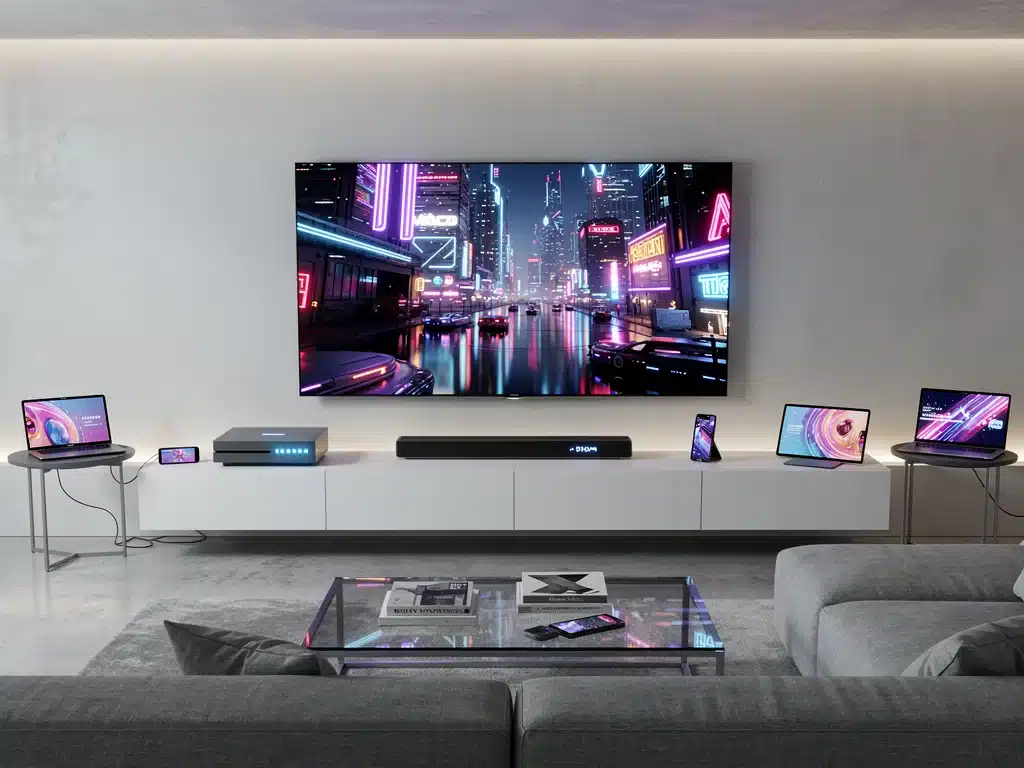
Micro-LED technology is set to transform display experiences, promising unparalleled visual fidelity and efficiency, with its adoption rate in the U.S. consumer market expected to accelerate considerably by 2026, marking a new era for screens across various devices.
The display industry stands on the precipice of a monumental shift, driven by emerging technologies that promise to redefine our visual experiences. Among these, Micro-LED Technology Adoption is capturing significant attention, particularly concerning its potential impact and projected adoption rate in the U.S. consumer market by 2026. This isn’t merely an incremental upgrade; it represents a fundamental rethinking of how screens are built and what they can achieve, offering a glimpse into a future where displays are brighter, more vibrant, and more energy-efficient than ever before.
Advertisements
Understanding Micro-LED Technology: A Paradigm Shift in Displays
Micro-LED technology represents a significant leap forward from conventional display technologies like LCD and OLED. It utilizes arrays of microscopic LEDs, each acting as an individual pixel, to produce light and color directly. This fundamental difference eliminates the need for backlights and color filters, leading to displays with unparalleled brightness, contrast ratios, and color accuracy.
Unlike OLED, which uses organic compounds that can degrade over time, Micro-LEDs are made from inorganic gallium nitride, offering superior longevity and resistance to burn-in. This inherent durability, combined with their incredible efficiency, positions Micro-LED as a strong contender for the next generation of high-end displays across various applications.
The core principles of Micro-LED operation
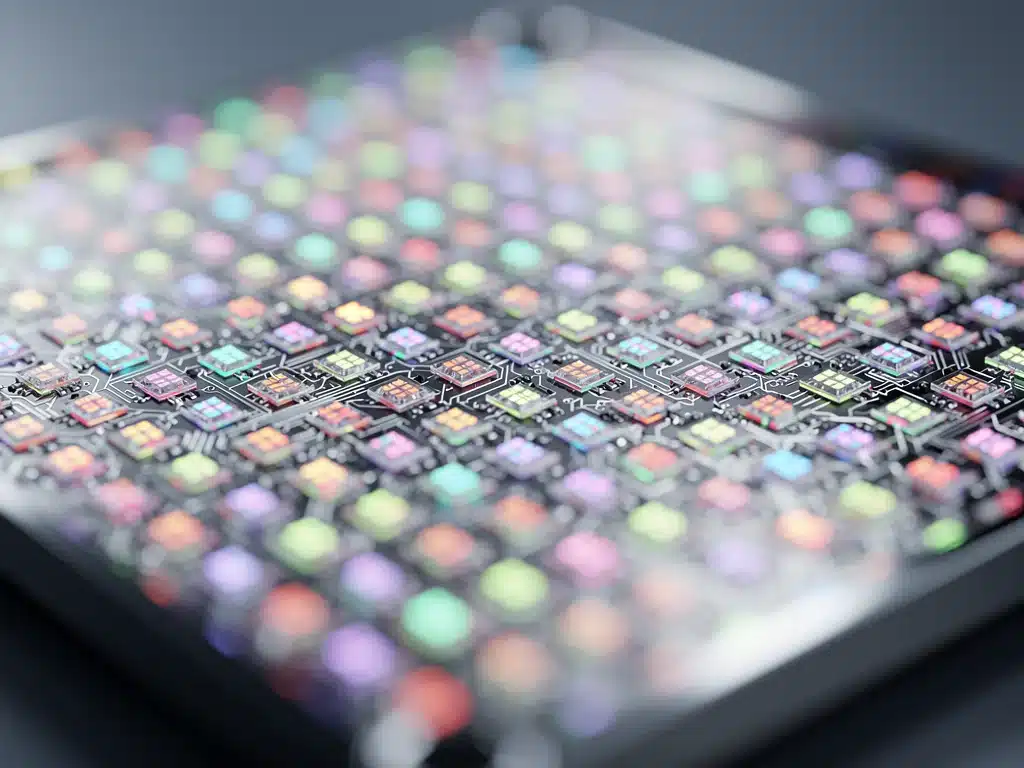
At its heart, Micro-LED technology involves placing millions of individual, self-emissive sub-micron sized LED chips onto a display substrate. Each tiny LED can be individually controlled, allowing for pixel-level illumination and complete black levels when a pixel is turned off. This precision control is what gives Micro-LED its impressive performance characteristics.
- Self-emissive pixels: Each pixel generates its own light, eliminating the need for a backlight.
- Inorganic materials: Ensures longer lifespan and prevents burn-in issues common in OLEDs.
- Modular design: Allows for seamless assembly of displays of almost any size and shape.
Key advantages over current display technologies
The benefits of Micro-LED are extensive and target some of the primary limitations of existing display technologies. Its superior brightness makes it ideal for outdoor applications and bright environments, while its perfect black levels contribute to an infinite contrast ratio, delivering stunning visual depth. Furthermore, the energy efficiency of Micro-LEDs can lead to longer battery life in portable devices and reduced power consumption for larger screens.
The modular nature of Micro-LED displays also opens up new possibilities for form factors and applications. Manufacturers can essentially tile together smaller Micro-LED panels to create massive, seamless displays without visible bezels, which is particularly appealing for commercial installations and ultra-large home cinema screens. This flexibility in design and scalability is a game-changer, breaking free from the size constraints often associated with traditional panel manufacturing.
In conclusion, Micro-LED technology is not just an evolution but a revolution in display science. Its foundational principles deliver unmatched visual performance, durability, and energy efficiency, setting the stage for its eventual widespread adoption across the consumer electronics landscape. The ability to create truly custom and scalable displays further solidifies its position as a transformative force in the market.
Current state of Micro-LED in the U.S. market (2024-2025)
As of late 2024 and heading into 2025, the presence of Micro-LED technology in the U.S. consumer market is still largely nascent, primarily confined to ultra-premium, large-format televisions. These early offerings serve as a showcase for the technology’s capabilities, demonstrating its breathtaking visual quality but also highlighting the significant cost barriers that currently limit broader adoption.
The initial market penetration is focused on a niche segment of affluent consumers and commercial applications where budget is less of a concern than cutting-edge performance and prestige. This strategic entry allows manufacturers to refine production processes and gradually scale up, paving the way for more accessible products in the future.
Early adopters and initial product offerings
The first wave of Micro-LED products in the U.S. has been dominated by massive, high-end TVs, often exceeding 100 inches in diagonal. These are not your everyday consumer electronics; they are luxury items representing the pinnacle of home entertainment technology. Brands like Samsung have been at the forefront, showcasing their ‘The Wall’ series, which exemplifies the modularity and scale possible with Micro-LED.
- Ultra-large screens: Primarily 100+ inch televisions for luxury homes and bespoke installations.
- High-net-worth individuals: The primary target demographic due to premium pricing.
- Commercial applications: Digital signage and control room displays leveraging durability and brightness.
Manufacturing challenges and cost implications
The biggest hurdle for widespread Micro-LED Technology Adoption remains the complexity and cost of manufacturing. Producing millions of microscopic LEDs and precisely placing them onto a substrate with high yield rates is an incredibly intricate process. This ‘mass transfer’ challenge is a key area of research and development for companies in the space.
The precision required for mass transfer, coupled with the high cost of the specialized equipment and materials, directly translates into the exorbitant prices seen in current Micro-LED products. Until these manufacturing processes are streamlined and economies of scale are achieved, Micro-LED will remain a premium technology. However, significant investments are being made to overcome these challenges, with researchers continually innovating to reduce production costs.
Despite the current limitations, the early market presence of Micro-LED is crucial. It allows manufacturers to gather valuable data, refine their technologies, and build brand recognition for a display type that promises to reshape the industry. The lessons learned from these initial deployments will be instrumental in guiding future product development and market strategies, slowly bringing Micro-LED closer to mainstream accessibility.
Drivers of Micro-LED adoption in the U.S. consumer market
Several compelling factors are poised to accelerate the adoption of Micro-LED technology in the U.S. consumer market as we approach 2026. These drivers encompass not only the inherent technological superiority of Micro-LED but also evolving consumer demands and strategic industry developments aimed at making the technology more accessible and appealing.
The pursuit of ultimate visual quality remains a powerful motivator for consumers, and Micro-LED delivers on this promise like no other display technology. As manufacturing processes mature and costs inevitably decrease, the allure of perfect blacks, incredible brightness, and vivid colors will become increasingly irresistible to a broader audience.
Technological advancements and falling costs
The most significant driver for increased adoption will be the continuous progress in manufacturing efficiency. Companies are investing heavily in research and development to improve the speed and accuracy of mass transfer techniques, which are crucial for reducing production costs. As these processes become more refined, the unit cost of Micro-LED panels will gradually decline, making the technology more competitive with high-end OLED and LCD offerings.
- Improved mass transfer: Faster and more precise placement of microscopic LEDs.
- Economies of scale: Increased production volumes lead to lower per-unit costs.
- New material science: Innovations in substrates and LED materials to boost efficiency.
Growing consumer demand for premium visual experiences
U.S. consumers are increasingly sophisticated in their expectations for display quality. They seek devices that offer immersive experiences, whether for gaming, streaming high-definition content, or professional creative work. The superior performance characteristics of Micro-LED directly address this demand, offering a visual fidelity that surpasses current benchmarks.
As awareness of Micro-LED’s benefits grows, fueled by industry marketing and early adopter reviews, more consumers will be willing to invest in devices that provide a truly premium viewing experience. This demand will create a positive feedback loop, encouraging manufacturers to accelerate their Micro-LED development and production efforts.
Furthermore, the trend towards larger display sizes in homes, particularly for televisions, naturally favors Micro-LED’s modularity. The ability to create virtually seamless, large-format screens without compromise on picture quality is a unique selling proposition that resonates strongly with consumers looking to create ultimate home entertainment setups. This synergy between technological capability and consumer desire will be a potent force driving Micro-LED adoption.
Projected adoption rate by 2026 in the U.S.
Forecasting the exact adoption rate of any emerging technology is challenging, but by 2026, analysts predict a noticeable acceleration in Micro-LED Technology Adoption within the U.S. consumer market. While it won’t yet achieve mainstream ubiquity, its presence will expand significantly beyond the ultra-luxury segment, making inroads into more accessible premium categories.
The period between now and 2026 is critical for overcoming current manufacturing hurdles and achieving cost reductions that will enable a wider range of Micro-LED products. This expansion will likely be observed across several key consumer electronic segments, rather than being confined solely to large-screen TVs.
Segment-specific penetration forecasts
By 2026, large-screen televisions will continue to be the primary showcase for Micro-LED, but with more competitive pricing for models in the 75-inch to 98-inch range. This makes them attainable for a broader segment of high-end consumers. Beyond TVs, we can expect to see Micro-LED appearing in:
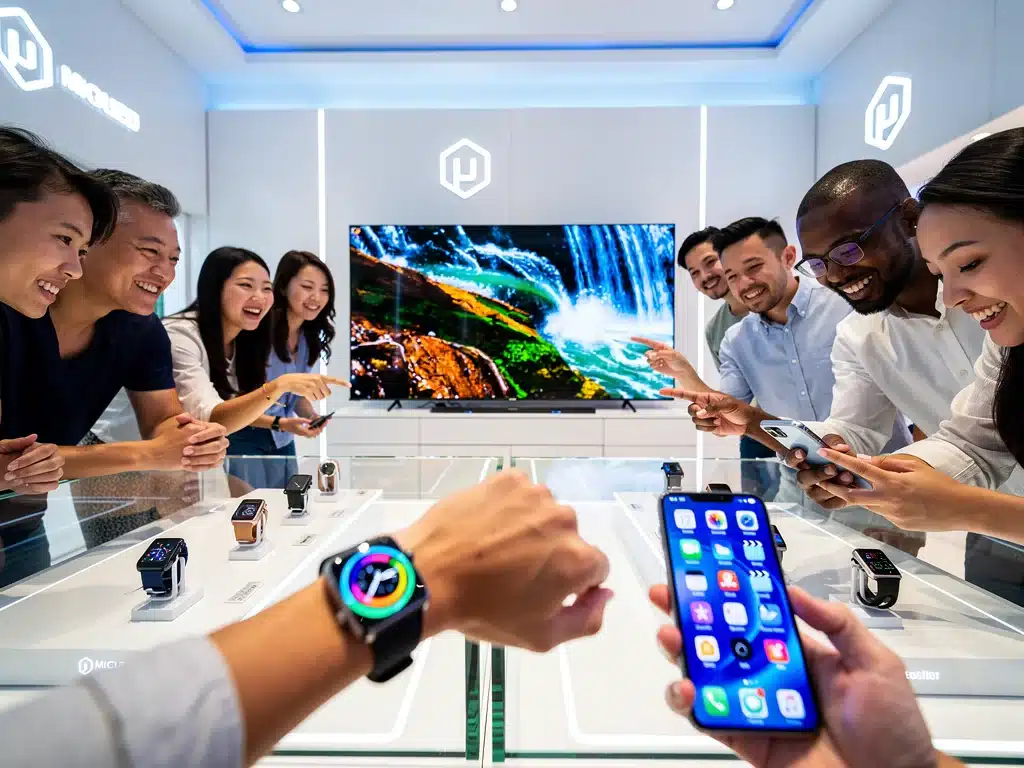
- Smartwatches and wearables: Small, high-brightness, and energy-efficient displays are ideal for these devices, offering superior readability outdoors.
- Augmented Reality (AR) and Virtual Reality (VR) headsets: The high pixel density and fast response times of Micro-LED are crucial for creating immersive and comfortable AR/VR experiences, minimizing motion sickness.
- Automotive displays: Robustness, brightness for various lighting conditions, and customizability make Micro-LED attractive for car infotainment systems and heads-up displays.
Analyst predictions and market growth indicators
Industry analysts project a compound annual growth rate (CAGR) for the Micro-LED market that, while starting from a small base, will show substantial acceleration towards 2026. Reports often highlight the decreasing cost per square inch of Micro-LED panels as a key indicator of increasing market viability.
For instance, some market research firms anticipate that by 2026, Micro-LED will capture a notable percentage of the premium display market, moving from less than 1% currently to potentially 5-10% in specific high-value segments. This growth will be fueled by both technological maturity and aggressive market strategies from major display manufacturers keen to establish leadership in this next-generation technology.
The expansion into smaller form factors like wearables and AR/VR devices is particularly significant. These applications benefit immensely from Micro-LED’s unique properties, and their relatively smaller display areas make the technology more cost-effective to implement earlier than in larger screens. This diversification across product categories will be a crucial element in solidifying Micro-LED’s foothold in the U.S. consumer market by 2026.
Challenges and hurdles for widespread adoption
Despite its undeniable technological advantages and promising future, Micro-LED Technology Adoption faces several significant challenges that could impede its widespread integration into the U.S. consumer market by 2026. These hurdles are primarily rooted in manufacturing complexities, cost, and the competitive landscape of established display technologies.
Overcoming these obstacles will require sustained investment in research and development, innovative engineering solutions, and strategic partnerships across the supply chain. The pace at which these challenges are addressed will largely determine how quickly Micro-LED moves from a niche luxury item to a more broadly accessible premium product.
Manufacturing complexities and yield rates
The most formidable challenge remains the mass transfer process. The act of precisely placing millions of microscopic LEDs onto a substrate with high efficiency and without defects is extremely difficult. Current yield rates, while improving, are still lower than those for mature display technologies, which directly contributes to higher production costs and limits scalability.
- High defect rates: Even a few non-functional sub-pixels can render a large panel unusable.
- Precision engineering: Requires extremely sophisticated and expensive equipment.
- Scaling production: Difficult to ramp up volume while maintaining quality and reducing cost.
High production costs and pricing strategies
The inherent complexity of Micro-LED manufacturing translates directly into very high production costs. These costs are then passed on to consumers, positioning Micro-LED products firmly in the ultra-premium segment. For widespread adoption, prices need to become competitive with high-end OLEDs, which currently offer excellent performance at a lower price point.
Manufacturers are exploring various strategies to bring costs down, including developing smaller Micro-LED chips, optimizing mass transfer equipment, and exploring alternative substrate materials. However, these efforts take time and substantial capital investment, meaning significant price reductions will be gradual rather than sudden.
Another challenge lies in the established market presence of OLED and advanced LCD technologies. These displays have benefited from decades of refinement and economies of scale, offering compelling performance at price points that Micro-LED cannot yet match. Micro-LED must demonstrate a sufficiently superior value proposition to justify its premium price tag and convince consumers to switch from proven alternatives. The next few years will be crucial in demonstrating how well the industry can navigate these complex technical and economic waters.
Impact on various consumer electronic segments
The eventual widespread adoption of Micro-LED technology will not be confined to a single product category; rather, it promises to revolutionize visual experiences across a broad spectrum of consumer electronic segments. Its unique attributes make it particularly well-suited for diverse applications, from the smallest wearables to the largest home entertainment systems.
The transformative potential of Micro-LED extends beyond mere picture quality, influencing design, energy consumption, and the very capabilities of future devices. This widespread impact will redefine what consumers expect from their screens in virtually every aspect of their digital lives.
Televisions and large-format displays
This is arguably where Micro-LED will make its most visually stunning impact. The ability to create truly seamless, modular displays of virtually any size, combined with perfect black levels and incredible brightness, means Micro-LED TVs will offer an unparalleled cinematic experience. By 2026, while still premium, we can expect a broader range of sizes and potentially slightly more accessible price points in the high-end TV market.
- Home cinema: Unmatched brightness and contrast for immersive viewing.
- Commercial signage: Durable, bright, and highly customizable displays for public spaces.
- Luxury market: Continues to push boundaries with bespoke, ultra-large installations.
Wearables and mobile devices
Micro-LED’s energy efficiency and high brightness are game-changers for wearables like smartwatches and fitness trackers. These devices often struggle with outdoor visibility and battery life, issues that Micro-LED can significantly mitigate. For smartphones, Micro-LED could offer even brighter, more vibrant screens than current OLEDs, potentially extending battery life and improving outdoor readability, although cost remains a significant barrier here.
For augmented reality (AR) and virtual reality (VR) headsets, Micro-LED is particularly exciting. Its high pixel density, fast response time, and compact form factor are essential for creating convincing and comfortable virtual environments. The ability to produce incredibly bright and sharp images without the ‘screen door effect’ is crucial for truly immersive AR/VR experiences, pushing the boundaries of what these devices can achieve.
Automotive and specialized displays
The automotive industry is another prime candidate for Micro-LED integration. Its robustness, wide operating temperature range, and excellent visibility in varying light conditions make it ideal for in-car infotainment systems, digital dashboards, and heads-up displays. Micro-LED’s ability to be formed into custom shapes and sizes also allows for innovative interior designs.
Beyond these, specialized applications such as medical imaging, professional monitoring, and even transparent displays could leverage Micro-LED’s unique properties. The versatility and superior performance across diverse environments underscore Micro-LED’s potential to become a cornerstone display technology for the next decade and beyond.
The competitive landscape: Micro-LED versus OLED and LCD
The future of displays is a fiercely competitive arena, with Micro-LED entering a market dominated by well-established technologies like OLED and advanced LCD (Liquid Crystal Display). Understanding this competitive landscape is crucial when assessing the potential for Micro-LED Technology Adoption in the U.S. consumer market by 2026. Each technology has its strengths and weaknesses, and Micro-LED aims to carve out its niche by offering a superior combination of performance attributes.
While OLED has captivated the premium market with its perfect blacks and vibrant colors, and LCD continues to offer excellent value across a wide range, Micro-LED seeks to surpass both in key areas, albeit with a higher initial cost. The battle for market share will largely depend on how quickly Micro-LED can close the cost gap while maintaining its performance lead.
OLED’s strengths and limitations
OLED displays are renowned for their self-emissive pixels, which allow for perfect blacks and infinite contrast ratios, similar to Micro-LED. They also offer excellent color reproduction and wide viewing angles. This has made them the go-to choice for high-end televisions and smartphones for several years.
- Strengths: Perfect blacks, infinite contrast, excellent color, wide viewing angles.
- Limitations: Susceptibility to burn-in, lower peak brightness compared to LCD/Micro-LED, organic materials lead to shorter lifespan in some applications.
LCD’s enduring market presence
LCD technology, particularly with advancements like Mini-LED backlighting and Quantum Dot enhancement (QLED), continues to hold the largest share of the display market. It offers good brightness, increasingly impressive contrast (especially with local dimming), and is very cost-effective to produce across a wide range of sizes. Its primary limitation is the reliance on a backlight, which prevents true black levels and can lead to blooming effects.
Micro-LED aims to combine the best aspects of both: the self-emissive perfection of OLED with the brightness and longevity of inorganic materials, surpassing LCD in every performance metric. The challenge is to do so at a price point that makes it viable for mass consumption. By 2026, Micro-LED will likely compete most directly with high-end OLEDs in the premium segment, pushing both technologies to innovate further. The ultimate winner will be the consumer, benefiting from increasingly advanced and diverse display options.
The road ahead: Innovations and future outlook beyond 2026
Looking beyond 2026, the trajectory for Micro-LED technology is one of continuous innovation and expanding applications. While the initial years will focus on refining manufacturing and reducing costs for current product categories, the long-term vision for Micro-LED extends to entirely new display paradigms and integration into novel environments. The potential for this technology to transform how we interact with visual information is immense, promising a future where displays are ubiquitous, seamless, and virtually indistinguishable from reality.
The journey from a niche, ultra-premium technology to a mainstream staple will be marked by breakthroughs that address current limitations and unlock new possibilities. This forward momentum will solidify Micro-LED’s position as a foundational technology for the next generation of consumer electronics and beyond.
Emerging applications and form factors
Beyond traditional screens, Micro-LED’s inherent modularity and small size open doors to truly revolutionary applications. Imagine transparent displays integrated into windows, flexible screens that can be rolled up, or even displays embedded directly into contact lenses for augmented reality experiences. The ability to create displays of almost any shape and size, without bezels or visible seams, will enable designers to reimagine product aesthetics and functionality.
- Transparent displays: Integrating screens into glass surfaces for dynamic information overlays.
- Flexible and rollable screens: Enabling new form factors for mobile devices and larger displays.
- Micro-projectors: Ultra-small, high-brightness projection systems for AR glasses.
- Digital surfaces: Embedding displays into furniture, walls, and other everyday objects.
Long-term impact on consumer behavior and expectations
As Micro-LED Technology Adoption increases and its capabilities become more widely available, it will fundamentally alter consumer expectations for display quality. The bar for brightness, contrast, and color accuracy will be significantly raised. This will, in turn, drive further innovation across the entire display industry, pushing competitors to enhance their offerings.
The seamless integration of high-quality displays into more aspects of daily life, from smart home devices to automotive interiors, will create a more visually rich and interactive environment. Consumers will come to expect exceptional visual performance in every device they own, fostering a demand for continuous improvement and pushing manufacturers to deliver increasingly sophisticated display solutions. The long-term outlook for Micro-LED is not just about better screens, but about a more immersive and visually intelligent world.
| Key Point | Brief Description |
|---|---|
| Superior Performance | Offers unmatched brightness, contrast, color accuracy, and longevity over OLED and LCD. |
| Current Market Status | Currently limited to ultra-premium, large-format TVs due to high manufacturing costs. |
| 2026 Adoption Forecast | Expected to expand to premium TVs, wearables, AR/VR, and automotive displays. |
| Key Challenges | High production costs and complex mass transfer processes are main hurdles for widespread adoption. |
Frequently asked questions about Micro-LED
Micro-LED offers superior brightness, higher contrast ratios, perfect blacks, and better energy efficiency. Unlike OLED, it uses inorganic materials, making it more durable and resistant to burn-in, while surpassing LCD’s backlight limitations.
The main barrier is the high manufacturing cost, primarily due to the complex and precise mass transfer process of placing millions of microscopic LEDs onto a substrate. This results in premium pricing for current products.
By 2026, Micro-LED is expected to expand beyond ultra-large TVs to include high-end smartwatches, augmented/virtual reality (AR/VR) headsets, and automotive displays, leveraging its unique performance benefits for these specific applications.
Not completely by 2026. While Micro-LED offers superior performance, its high cost will limit it to premium segments. OLED and LCD will continue to dominate mainstream and budget markets, with Micro-LED pushing innovation at the high end.
Micro-LED will significantly enhance AR/VR by providing higher pixel density, faster response times, and increased brightness, crucial for realistic and comfortable immersive experiences. It will help reduce motion sickness and improve visual fidelity.
Conclusion
The journey of Micro-LED technology from a laboratory marvel to a tangible consumer product is an exciting testament to ongoing innovation in the display industry. While currently navigating the challenges of mass production and cost reduction, its unparalleled visual performance, durability, and energy efficiency position it as a truly transformative force. By 2026, we anticipate a significant acceleration in Micro-LED Technology Adoption within the U.S. consumer market, extending its reach beyond ultra-luxury televisions to impact a diverse range of devices, including wearables, AR/VR headsets, and automotive displays. This shift will not only redefine our expectations for display quality but also pave the way for entirely new forms of visual interaction and integration into our daily lives, heralding a future where screens are brighter, more vivid, and seamlessly integrated into our world.
