5 New Species Discovered in US National Parks: An Insider’s Guide
Advertisements
Over the past three months, five remarkable new species have been identified within US National Parks, highlighting the rich and often hidden biodiversity these protected areas harbor, underscoring the critical need for continued exploration and conservation.
Advertisements
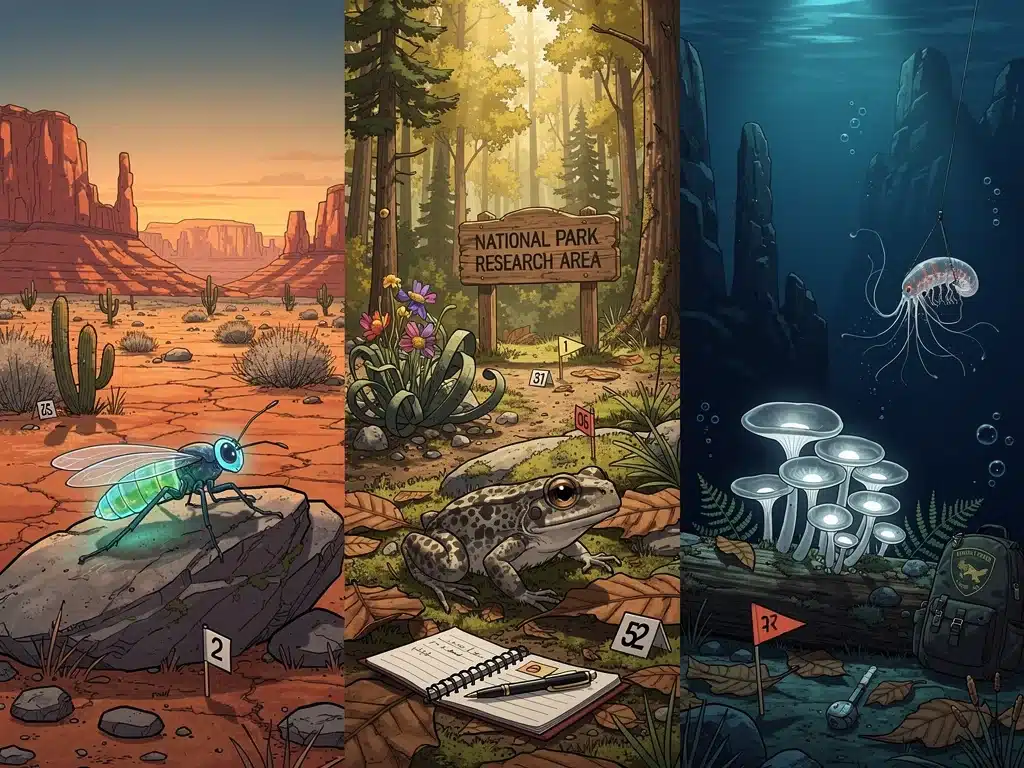
The landscapes of US National Parks are vast and diverse, offering sanctuary to countless known species, but also harboring secrets yet to be unveiled. In a testament to the ongoing dedication of scientists and researchers, we’re thrilled to bring you an insider’s guide to the 5 new species discovered in US National Parks over the last 3 months, showcasing the incredible, often unexpected, life forms thriving within these protected lands.
The Unveiling of Hidden Biodiversity
National parks are not just scenic vistas; they are living laboratories where nature’s intricate tapestry continues to unravel. The recent discovery of five new species within these protected boundaries underscores the immense biodiversity still waiting to be cataloged and understood. These findings are crucial, providing valuable insights into ecological health and the importance of preserving these unique habitats.
Each new species represents a piece of a larger puzzle, contributing to our understanding of evolutionary processes and ecosystem functions. Researchers employ a variety of techniques, from traditional field observations to advanced genetic analysis, to identify and classify these previously unknown organisms. The challenges are significant, often involving expeditions into remote and difficult-to-access terrains, but the rewards are profound.
Advanced Discovery Techniques
Modern scientific methods have revolutionized the pace of species discovery, allowing researchers to delve deeper into ecosystems than ever before. These techniques are vital for uncovering life forms that are often microscopic, camouflaged, or reside in extreme environments.
- Environmental DNA (eDNA) Sampling: Collecting DNA from environmental samples like soil or water to detect species presence without direct observation.
- Bioacoustics: Using sound recordings to identify species through their unique vocalizations, particularly effective for insects, amphibians, and birds.
- Remote Sensing and Imaging: Employing drones and satellite imagery to map habitats and identify potential areas for new discoveries.
- Genetic Barcoding: Utilizing short genetic markers to identify species, speeding up the classification process for complex groups.
The commitment to exploring and documenting life within national parks is a continuous endeavor. These recent discoveries serve as a powerful reminder of how much remains unknown and how vital it is to protect these natural treasures for future generations of scientists and nature enthusiasts alike. The ongoing efforts ensure that our understanding of the natural world continues to expand.
A Glimpse into the First New Species: The “Ghost Orchid Bee”
Among the recent revelations is a fascinating insect, tentatively named the “Ghost Orchid Bee,” discovered deep within the Everglades National Park. This tiny, iridescent creature, measuring only a few millimeters, has a symbiotic relationship with a rare orchid species, playing a crucial role in its pollination. Its elusive nature and specialized habitat made it particularly challenging to identify.
Researchers stumbled upon this bee during a night-time survey of rare flora, observing its unique nocturnal foraging behavior. Genetic analysis confirmed it as a distinct species, exhibiting morphological differences from known bee populations in the region. Its discovery highlights the intricate ecological web present even in seemingly well-studied environments, proving that surprises still await.
Ecological Significance and Habitat
The Ghost Orchid Bee’s existence is intricately tied to the health of the Everglades’ wetland ecosystems. Its reliance on a specific orchid for nectar and pollen makes it a prime indicator species for the overall health of its habitat.
- Pollination: Essential for the reproduction of the rare ghost orchid, which is itself a protected species.
- Habitat Specificity: Found exclusively in undisturbed, humid cypress swamps within the Everglades, indicating its vulnerability to habitat alteration.
- Indicator Species: Its presence or absence can signal changes in the environmental quality of the Everglades.
The discovery of the Ghost Orchid Bee not only adds a new member to the insect kingdom but also emphasizes the delicate balance of ecosystems within our national parks. Protecting its habitat means protecting a host of other interdependent species, reinforcing the need for comprehensive conservation strategies in the face of environmental pressures.
The Desert’s Secret: A New Succulent in Joshua Tree
In the arid, rugged landscapes of Joshua Tree National Park, botanists have identified a previously uncataloged succulent plant. This hardy species, characterized by its unusually thick, water-storing leaves and vibrant purple flowers, thrives in rocky outcrops where most other vegetation struggles to survive. Its resilience and unique adaptations to extreme desert conditions make it a remarkable find.
The succulent was first noticed by a park ranger during a routine trail inspection, who then alerted a team of botanists. Subsequent studies, including morphological comparison and genetic sequencing, confirmed its distinctiveness. This discovery challenges previous assumptions about the botanical diversity of the park and opens new avenues for research into desert plant evolution.
Adaptations to Harsh Environments
Surviving in the harsh desert environment requires extraordinary adaptations. This new succulent demonstrates several key features that allow it to flourish where water is scarce and temperatures extreme.
- Water Storage: Thick, fleshy leaves act as reservoirs, storing water for extended periods.
- Drought Deciduousness: Ability to shed leaves during prolonged dry spells to conserve moisture.
- Shallow Root System: Efficiently captures surface moisture from dew or infrequent rainfall.
- Nocturnal Photosynthesis: Some desert succulents open stomata at night to minimize water loss during the day.
The finding of this new succulent in Joshua Tree highlights the hidden botanical treasures within the park’s seemingly barren expanse. It serves as a reminder that even the most extreme environments can harbor unique and vital life, necessitating vigilant conservation efforts to protect these specialized ecosystems from human impact and climate change.
Deep-Sea Mysteries: A Cryptic Invertebrate in Olympic
Venturing into the unexplored depths offshore of Olympic National Park, marine biologists have brought to light a cryptic new invertebrate species. This creature, a type of deep-sea polychaete worm, was discovered during a remotely operated vehicle (ROV) expedition exploring hydrothermal vents. Its bizarre morphology, including bioluminescent appendages, sets it apart from any known species.
The discovery was made possible by advanced deep-sea imaging technology, which allowed researchers to observe and collect samples from an environment previously inaccessible. Preliminary genetic analysis indicates a unique lineage, suggesting it has evolved in isolation in the extreme conditions of the deep ocean. This finding expands our understanding of life in one of Earth’s most challenging habitats.
The Extreme Environment of Hydrothermal Vents
Hydrothermal vents are oases of life in the otherwise barren deep ocean, fueled by chemosynthesis rather than photosynthesis. The organisms that thrive here possess extraordinary adaptations.
- Chemosynthesis: Energy derived from chemical reactions, not sunlight, forming the base of the food web.
- Extreme Temperatures: Vents spew superheated water, creating steep temperature gradients.
- High Pressure: Organisms must withstand immense pressure from thousands of meters of water.
- Toxic Chemicals: Vents release hydrogen sulfide and heavy metals, which many organisms have adapted to metabolize.
The uncovering of this deep-sea polychaete worm in the waters near Olympic National Park underscores the vast, uncharted biodiversity of our oceans. These discoveries not only inspire awe but also emphasize the critical need for continued deep-sea exploration and the protection of these unique ecosystems from potential human disturbances, such as deep-sea mining.
From the Forests: A Previously Unknown Fungus in Great Smoky Mountains
The ancient, misty forests of Great Smoky Mountains National Park, renowned for their incredible biodiversity, have yielded yet another secret: a previously unknown species of fungus. This particular fungus, a vibrant, bioluminescent mushroom, was found growing on decaying logs in an old-growth section of the forest. Its subtle glow at night makes it a truly enchanting discovery.
Mycologists, drawn by anecdotal reports of glowing fungi, embarked on a dedicated expedition where they meticulously documented and collected samples. Advanced microscopic and genetic analysis confirmed it as a novel species, distinct in its morphology and genetic makeup. This discovery adds to the park’s already impressive catalog of fungal life, which plays a critical role in nutrient cycling.
The Role of Fungi in Forest Ecosystems
Fungi are often overlooked but are indispensable components of healthy forest ecosystems, acting as decomposers, symbionts, and pathogens.
- Decomposition: Break down dead organic matter, returning vital nutrients to the soil.
- Mycorrhizal Associations: Form symbiotic relationships with plant roots, enhancing nutrient and water uptake.
- Food Source: Serve as food for various insects, mammals, and other organisms.
- Bioluminescence: Some fungi emit light, potentially attracting insects for spore dispersal or deterring predators.
The discovery of this glowing mushroom in Great Smoky Mountains National Park reminds us of the hidden wonders within our forests. It highlights the vast, yet still largely unexplored, fungal kingdom and reinforces the importance of preserving old-growth forests, which act as crucial reservoirs for such unique and ecologically vital organisms.
A Cryptic Amphibian in Big Bend’s Canyons
In the remote, rugged canyons of Big Bend National Park, a small, cryptic amphibian has been identified as a new species. This salamander-like creature, with its unique skin patterns and preference for secluded, moist microhabitats within the desert, has managed to evade detection for centuries. Its discovery underscores the nuanced biodiversity present even in seemingly harsh desert environments.
Herpetologists, conducting surveys in lesser-explored canyon systems, utilized specialized traps and night-vision equipment to locate and study the creature. Its small size and exceptional camouflage made it incredibly difficult to spot. Genetic testing confirmed its distinct evolutionary lineage, separate from other known amphibian species in the region.
Survival in Arid Environments
Amphibians are typically associated with moist environments, making the survival of this new species in Big Bend’s arid landscape particularly intriguing. Its adaptations are key to its persistence.
- Nocturnal Activity: Emerges primarily at night to avoid extreme daytime temperatures and reduce water loss.
- Crepuscular Behavior: Active during dawn and dusk when temperatures are cooler and humidity higher.
- Burrowing: Spends much of its time underground or beneath rocks to escape heat and conserve moisture.
- Specialized Diet: Feeds on small invertebrates found in its specific microhabitat, reducing competition.
The discovery of this cryptic amphibian in Big Bend National Park is a testament to the resilience of life and the unexpected biodiversity that can be found in challenging environments. It emphasizes the need for continued exploration of even the most remote corners of our national parks, ensuring that these unique species and their habitats receive the protection they deserve.
| New Species | National Park Discovered In |
|---|---|
| Ghost Orchid Bee | Everglades National Park |
| Desert Succulent | Joshua Tree National Park |
| Deep-Sea Polychaete Worm | Olympic National Park (offshore) |
| Bioluminescent Fungus | Great Smoky Mountains National Park |
Frequently Asked Questions About New Species Discoveries
New species are officially recognized through a rigorous process involving detailed morphological and genetic analysis, comparison with known species, and publication in peer-reviewed scientific journals. The specimen is then typically deposited in a natural history collection for future study and verification.
Despite centuries of scientific exploration, many parts of the world, especially deep oceans, remote forests, and microscopic realms, remain largely unexplored. Advancements in technology, such as eDNA and high-resolution imaging, also enable scientists to detect species previously undetectable.
Discovering new species in national parks highlights the critical role these protected areas play in conserving biodiversity. It reinforces the importance of preserving these habitats, provides valuable data for conservation strategies, and deepens our understanding of ecosystem health and functionality.
While discovering a new species often raises awareness, it doesn’t automatically guarantee immediate protection status. Protection measures depend on factors like population size, threat assessment, and classification under relevant conservation laws. However, it often initiates further research and monitoring efforts.
The public can contribute by supporting national parks, participating in citizen science projects like iNaturalist, reporting unusual sightings to park authorities, and advocating for conservation policies. Responsible outdoor recreation also minimizes impact on sensitive habitats and unknown species.
Conclusion
The recent uncovering of 5 new species discovered in US National Parks over the last 3 months serves as a powerful testament to the enduring mysteries and incredible biodiversity held within these protected landscapes. From the Ghost Orchid Bee in the Everglades to the cryptic amphibian in Big Bend, each discovery offers a unique window into the natural world, reinforcing the critical importance of ongoing scientific research and robust conservation efforts. These findings not only enrich our understanding of life on Earth but also underscore the value of preserving these invaluable natural sanctuaries for future generations to explore and cherish.
