Personalized Medicine 2026: Genomic Sequencing & US Healthcare Savings

Advertisements
Personalized medicine, powered by advanced genomic sequencing, is set to transform U.S. healthcare by 2026, enabling precise treatments, preventing diseases, and generating significant cost savings, fundamentally reshaping patient care and medical outcomes nationwide.
By 2026, Personalized Medicine in 2026: Genomic Sequencing and Its Impact on U.S. Healthcare, Saving Millions is poised to revolutionize how we approach health and wellness. This isn’t just about tailoring treatments; it’s about fundamentally reshaping the entire healthcare ecosystem, offering unprecedented precision and efficiency that could lead to monumental savings and significantly improved patient outcomes across the United States.
Advertisements
the dawn of a new era: genomic sequencing in healthcare
The landscape of healthcare is perpetually evolving, but few advancements hold as much promise as genomic sequencing. This technology, once a costly and time-consuming endeavor, has rapidly become more accessible and affordable, paving the way for its widespread integration into routine medical practice. By 2026, its impact will be felt across every facet of U.S. healthcare.
Genomic sequencing involves mapping an individual’s entire genetic code, revealing unique predispositions, disease risks, and responses to medications. This deep dive into our biological blueprint offers a level of insight previously unimaginable, moving us away from a one-size-fits-all approach to medicine. The implications for diagnostics, prevention, and treatment are profound, promising a future where healthcare is truly tailored to the individual.
understanding the science behind genomic sequencing
- DNA Unveiling: Genomic sequencing deciphers the precise order of nucleotides within an individual’s DNA, providing a complete genetic blueprint.
- Risk Assessment: It identifies genetic markers linked to various diseases, such as cancer, heart disease, and neurodegenerative disorders, allowing for early intervention.
- Pharmacogenomics: This field uses genomic data to predict how individuals will respond to specific drugs, optimizing dosages and minimizing adverse reactions.
- Inherited Conditions: Sequencing can detect genetic mutations responsible for inherited conditions, offering crucial information for family planning and early diagnosis.
The ability to analyze an individual’s genetic makeup at such a granular level means that healthcare providers can make more informed decisions, leading to more effective treatments and better patient experiences. This scientific leap is not merely theoretical; it is already beginning to manifest in clinical settings, promising a truly transformational shift.
Ultimately, the widespread adoption of genomic sequencing represents a paradigm shift from reactive treatment to proactive prevention and highly targeted interventions. This foundational change is expected to drive significant improvements in public health and economic efficiency.
economic impact: saving millions through precision medicine
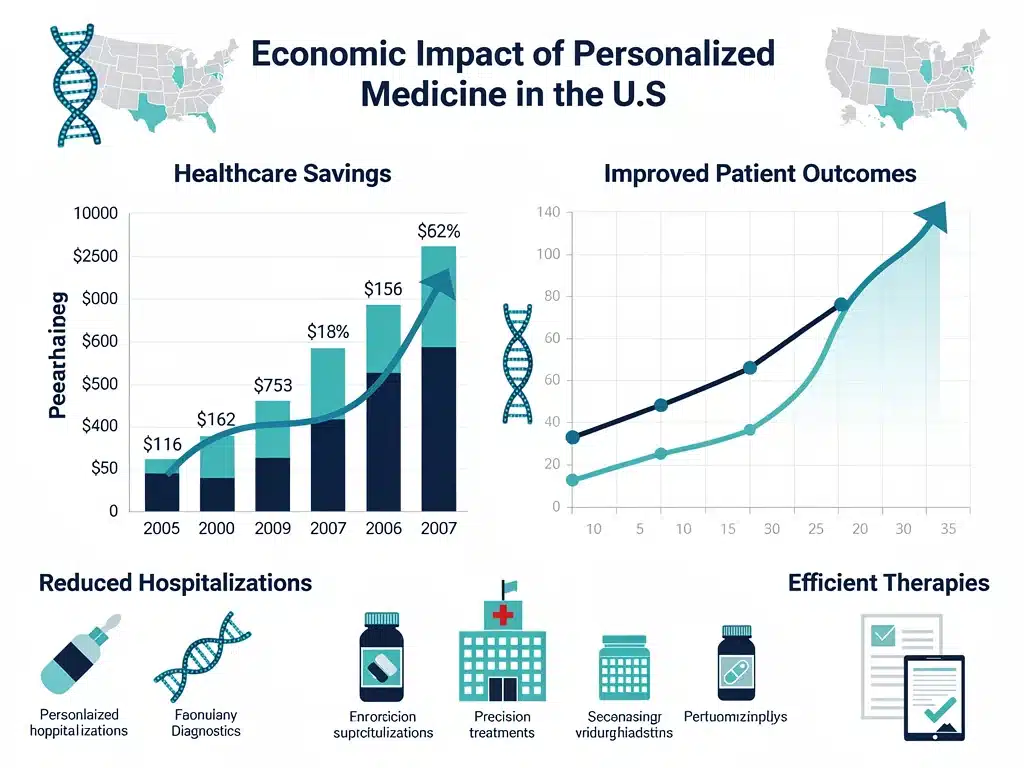
Beyond the scientific marvel, the economic advantages of personalized medicine, particularly those driven by genomic sequencing, are staggering. The U.S. healthcare system, grappling with escalating costs, stands to save millions, if not billions, by adopting these precision-based approaches. Wasteful spending on ineffective treatments, trial-and-error prescribing, and prolonged hospital stays can be dramatically reduced.
Consider the current model: a patient often undergoes a series of treatments, some of which may prove ineffective or even harmful, before finding one that works. This process is not only emotionally taxing for the patient but also incredibly expensive. Personalized medicine, guided by genomic data, bypasses much of this inefficiency, leading directly to cost savings through optimized treatment pathways and reduced adverse events.
how personalized medicine drives cost reduction
- Reduced Adverse Drug Reactions: Pharmacogenomics helps avoid medications that are ineffective or cause severe side effects, saving costs associated with managing complications.
- Early Disease Detection: Identifying genetic predispositions allows for proactive prevention and early intervention, often at a lower cost than treating advanced disease.
- Targeted Therapies: Genetic insights direct patients to therapies most likely to succeed, preventing expenditure on treatments that would be futile.
- Optimized Clinical Trials: Genomic data can streamline drug development by identifying specific patient populations, reducing the time and cost of clinical trials.
The economic benefits extend beyond direct treatment costs. Reduced absenteeism from work due to illness, improved quality of life for patients, and a healthier, more productive workforce all contribute to broader societal gains. This financial upside makes genomic sequencing not just a medical advancement, but a crucial investment in national well-being.
The financial implications are a powerful motivator for healthcare systems and policymakers to accelerate the adoption of personalized medicine. The promise of saving millions, coupled with improved patient outcomes, creates a compelling case for this transformative approach.
transforming disease prevention and early detection
One of the most significant promises of personalized medicine lies in its capacity to transform disease prevention and early detection. Instead of waiting for symptoms to appear, genomic sequencing allows us to identify individuals at high risk for certain conditions long before they manifest. This proactive stance fundamentally shifts the paradigm from reactive treatment to preventive care, a far more effective and less costly approach.
Imagine a future where a simple genomic test can alert you to a heightened risk of specific cancers, cardiovascular diseases, or even neurological disorders years in advance. This foreknowledge empowers individuals and their healthcare providers to implement targeted preventative measures, such as lifestyle modifications, regular screenings, or prophylactic treatments, significantly reducing the likelihood of disease onset or mitigating its severity.
proactive health management through genomics
Genomic insights enable personalized prevention strategies that are far more effective than generic public health recommendations. For example, an individual with a genetic predisposition to type 2 diabetes can receive tailored dietary and exercise guidance, along with early monitoring, to prevent or delay the disease.
Similarly, for hereditary cancers, genomic sequencing can guide decisions on more frequent screenings or preventive surgeries, dramatically improving survival rates. This level of personalized risk assessment is a game-changer, moving us towards a future where health is maintained rather than just restored.
The ability to detect genetic markers for disease susceptibility empowers individuals to take a more active role in their health management. This proactive engagement, guided by precise genomic information, is a cornerstone of the personalized medicine revolution and a key driver of future healthcare savings.

precision treatment: tailoring therapies to individual genetics
The core of personalized medicine is the ability to tailor treatments based on an individual’s unique genetic makeup. This is particularly evident in fields like oncology, where genomic sequencing is already guiding treatment decisions, leading to more effective therapies and fewer adverse side effects. By 2026, this precision will become more commonplace across a wider range of medical conditions.
No two individuals respond to medication or disease in exactly the same way, yet traditional medicine often treats patients with similar diagnoses uniformly. Genomic sequencing eradicates this broad-brush approach, providing the data necessary to select the most efficacious drug at the optimal dosage for each patient. This means less trial-and-error, faster recovery times, and ultimately, better patient outcomes.
advancements in targeted drug development
- Oncology Breakthroughs: Genomic profiling of tumors identifies specific mutations that can be targeted by precision drugs, revolutionizing cancer treatment.
- Rare Disease Diagnosis: For patients with rare genetic disorders, sequencing can provide a definitive diagnosis, opening doors to targeted therapies where none existed before.
- Infectious Disease Management: Understanding host genetics can inform treatment strategies for infectious diseases, predicting susceptibility and response to antiviral or antibiotic agents.
- Personalized Mental Health Care: Pharmacogenomics holds promise for mental health, guiding the selection of antidepressants and antipsychotics to improve efficacy and reduce side effects.
The development of targeted therapies based on genomic insights is rapidly accelerating. Pharmaceutical companies are increasingly focusing on drugs designed to interact with specific genetic pathways, leading to a new generation of highly effective and safer medications. This shift represents a significant move towards truly personalized and impactful medical interventions.
This level of precision not only saves lives but also significantly reduces the overall cost of care by minimizing the time and resources spent on ineffective treatments. It represents a powerful confluence of scientific advancement and economic responsibility.
overcoming challenges: data security, ethics, and accessibility
While the potential of personalized medicine and genomic sequencing is immense, its widespread adoption is not without challenges. Issues of data security, ethical considerations, and ensuring equitable access remain critical hurdles that must be addressed as we move towards 2026. The sensitive nature of genetic information demands robust protective measures and careful ethical frameworks.
The sheer volume of genomic data generated raises significant privacy concerns. Protecting this information from breaches and misuse is paramount to maintaining public trust. Additionally, ethical questions surrounding genetic discrimination, informed consent, and the implications of knowing one’s genetic future require thoughtful societal discourse and clear regulatory guidelines.
navigating the complexities of genomic integration
Ensuring that personalized medicine is accessible to all, regardless of socioeconomic status, is another formidable challenge. The benefits of genomic sequencing should not be confined to a privileged few. Policies must be developed to prevent disparities in access and ensure that everyone can benefit from these life-changing advancements.
Furthermore, the integration of complex genomic data into routine clinical practice requires significant investment in infrastructure, training for healthcare professionals, and the development of user-friendly decision-support tools. Without these foundational elements, the full potential of personalized medicine cannot be realized.
- Data Privacy: Establishing stringent regulations and secure platforms to protect sensitive genomic information from unauthorized access.
- Ethical Guidelines: Developing clear ethical frameworks for genetic testing, counseling, and the use of genomic data in research and clinical practice.
- Equitable Access: Implementing policies and funding mechanisms to ensure that personalized medicine is affordable and available to diverse populations.
- Healthcare Professional Training: Educating doctors, nurses, and other healthcare providers on how to interpret and apply genomic information effectively in patient care.
Addressing these challenges proactively is essential for building a robust and trustworthy personalized medicine ecosystem. Collaborative efforts between scientists, policymakers, healthcare providers, and the public will be crucial in navigating these complex issues and harnessing the full potential of genomic sequencing for the benefit of all.
the future landscape: policy, research, and public health
As we look towards 2026 and beyond, the future landscape of personalized medicine will be shaped by evolving policy, continued research, and its integration into public health initiatives. The U.S. government and various health organizations are increasingly recognizing the transformative potential of genomic sequencing, leading to strategic investments and regulatory adaptations.
Policy frameworks will need to keep pace with scientific advancements, addressing issues such as reimbursement for genomic tests, data sharing protocols, and the ethical oversight of new genetic technologies. A supportive regulatory environment is crucial for fostering innovation while safeguarding patient interests and ensuring responsible implementation.
driving innovation and integration
Ongoing research will continue to uncover new genetic insights, refine sequencing technologies, and develop novel personalized therapies. Investment in basic and translational research is vital for expanding our understanding of the human genome and translating discoveries into clinical applications. Collaboration between academic institutions, industry, and government will accelerate these efforts.
Public health initiatives will increasingly leverage genomic data for population-level health management. This could include early screening programs for genetic predispositions in specific communities, personalized vaccination strategies, and more effective outbreak response. The integration of genomic information into public health offers unprecedented opportunities for improving overall population health and reducing disease burden.
- Policy Adaptation: Crafting dynamic regulations that support innovation in personalized medicine while ensuring patient safety and ethical guidelines.
- Research Funding: Continued investment in genomic research to unlock new discoveries and develop advanced diagnostic and therapeutic tools.
- Public Health Integration: Incorporating genomic insights into population health strategies for disease prevention, surveillance, and health promotion.
- International Collaboration: Fostering global partnerships to share genomic data, research findings, and best practices in personalized medicine.
The journey towards a fully personalized healthcare system is complex, but the trajectory is clear. With strategic foresight in policy, sustained research efforts, and a commitment to integrating these advancements into public health, personalized medicine in 2026 promises a healthier, more efficient, and more equitable future for U.S. healthcare.
| Key Aspect | Brief Description |
|---|---|
| Genomic Sequencing Advancement | Rapidly becoming affordable and accessible, enabling widespread integration into U.S. healthcare by 2026. |
| Economic Savings | Precision medicine reduces wasteful spending, optimizes treatments, and prevents costly adverse reactions, saving millions. |
| Disease Prevention | Early identification of genetic risks allows for proactive, tailored preventative measures, shifting from reactive care. |
| Challenges & Solutions | Addressing data security, ethics, and equitable access is crucial for successful and responsible implementation. |
frequently asked questions about personalized medicine in 2026
Personalized medicine tailors healthcare decisions and treatments to the individual patient, considering their unique genetic makeup. Genomic sequencing provides the detailed genetic information necessary to create these personalized plans, optimizing drug choices and disease prevention strategies.
It saves millions by reducing ineffective treatments, minimizing adverse drug reactions through pharmacogenomics, enabling earlier and cheaper disease detection, and streamlining clinical trials. This efficiency leads to fewer hospitalizations and better resource allocation.
Key ethical concerns include data privacy and security of sensitive genetic information, potential for genetic discrimination in employment or insurance, and the complexities of informed consent for broad genetic testing. Careful regulation is essential.
Ensuring equitable access is a significant challenge. While technology advances, policies and funding initiatives are critical to prevent disparities and ensure that personalized medicine benefits all populations, regardless of socioeconomic status or geographic location.
It will revolutionize prevention by identifying individual genetic predispositions to diseases years in advance. This allows for highly targeted preventative measures, such as specific lifestyle changes, tailored screenings, or early interventions, significantly reducing disease incidence.
conclusion
The trajectory of personalized medicine, meticulously guided by advancements in genomic sequencing, points towards a future where U.S. healthcare is not merely responsive but profoundly predictive and preventive. By 2026, the integration of these sophisticated technologies promises a healthcare system that is not only more effective and patient-centric but also significantly more economically efficient. The journey involves navigating complex ethical and accessibility challenges, yet the potential for saving millions, improving countless lives, and fostering a healthier nation makes this evolution an imperative. Personalized medicine represents a monumental leap, redefining what’s possible in medical care and setting a new standard for health and well-being across the United States.
