Did You Know: US Internet Speed Soars to 250 Mbps Nationally?
Advertisements
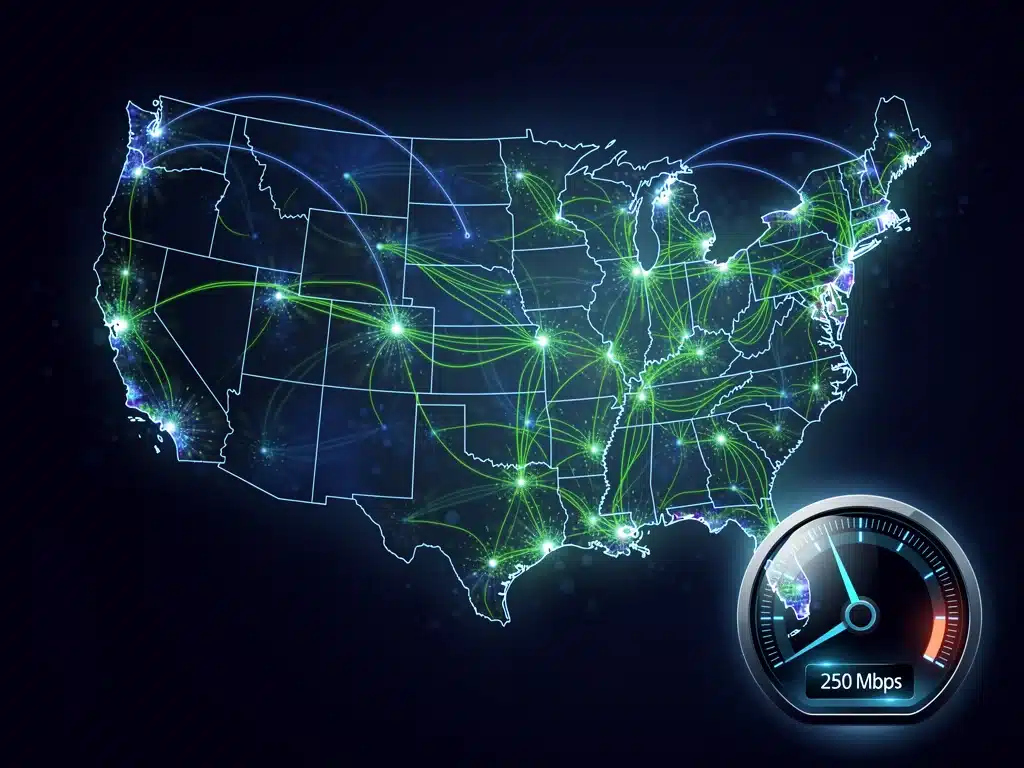
The average US internet speed has seen a significant boost, climbing by 50 Mbps in the last year to reach 250 Mbps nationally, transforming how Americans connect and interact with the digital world.
Did you know that the average US internet speed has surged by an impressive 50 Mbps in just the past year, now reaching a national average of 250 Mbps? This remarkable leap is not just a number; it represents a profound shift in how we work, learn, and connect, impacting nearly every aspect of American life and setting new benchmarks for digital engagement.
Advertisements
The Accelerating Pace of US Internet Connectivity
The landscape of internet connectivity in the United States is undergoing a rapid transformation. For years, discussions about internet speed often revolved around the perceived lagging performance compared to other developed nations. However, recent data paints a much brighter picture, showcasing a significant acceleration in average download speeds across the country.
This surge isn’t merely an incremental improvement; it signifies a robust investment in infrastructure and a growing demand for higher bandwidth. From urban centers to increasingly connected rural areas, the availability of faster internet is reshaping consumer expectations and enabling new digital experiences that were once considered futuristic.
Understanding the Metrics Behind the Boost
When we talk about internet speed, we typically refer to megabits per second (Mbps), which measures the rate at which data travels. The 50 Mbps increase year-over-year, culminating in a 250 Mbps national average, is a substantial jump. This average is calculated from millions of speed tests conducted by users across various internet service providers (ISPs) and regions.
- Download Speed: Primarily impacts streaming, browsing, and downloading files.
- Upload Speed: Crucial for video conferencing, online gaming, and cloud backups.
- Latency: Measures the delay before a transfer of data begins, important for real-time applications.
These metrics collectively contribute to the overall user experience, and improvements in one often positively influence the others. The consistent rise in average speeds indicates a systemic enhancement rather than isolated improvements in specific areas.
The consistent upward trend in average internet speeds across the US reflects a dynamic environment where technological advancements, competitive market forces, and evolving consumer needs are all playing critical roles. This improvement is not uniform across all regions, but the national average clearly signals a significant step forward in digital infrastructure.
Driving Forces Behind the Speed Surge
Several key factors have converged to propel the average US internet speed to new heights. Understanding these drivers is essential to appreciating the complexity and scale of the transformation occurring within the nation’s digital infrastructure.
One of the most significant contributors is the widespread deployment of fiber optic networks. Fiber internet offers vastly superior speeds and reliability compared to traditional copper-based connections, and its expansion has been a priority for many ISPs and government initiatives. This shift represents a fundamental upgrade in the physical backbone of the internet.
Technological Advancements and Infrastructure Investment
The continuous evolution of internet technology plays a crucial role. From advancements in Wi-Fi standards to more efficient data compression techniques, innovations are constantly pushing the boundaries of what’s possible. Furthermore, substantial investment by internet service providers has been instrumental.
- Fiber Optic Expansion: Direct fiber-to-the-home (FTTH) deployments are increasing.
- 5G Wireless Networks: Offering competitive speeds, especially in mobile and fixed wireless access.
- DOCSIS 3.1 and 4.0: Upgrades to cable internet infrastructure allowing for multi-gigabit speeds.
These technological upgrades are not inexpensive; they require billions of dollars in capital expenditure. However, the long-term benefits in terms of economic growth and societal connectivity are proving to be powerful motivators for these investments.
Government initiatives and funding programs have also provided a significant boost, especially in underserved rural areas. Programs aimed at bridging the digital divide have stimulated infrastructure development where market forces alone might not have been sufficient. This concerted effort from both public and private sectors is accelerating the pace of change.

The Impact on Daily Life and the Digital Economy
The increase in US internet speed is more than just a technical achievement; it has tangible, far-reaching impacts on the daily lives of Americans and the broader digital economy. Faster, more reliable internet connectivity is fundamentally altering how people interact with technology and each other.
From seamless streaming of high-definition content to robust support for remote work and education, the benefits are pervasive. This enhanced connectivity empowers individuals and businesses alike, fostering innovation and creating new opportunities in a rapidly digitizing world.
Transforming Work, Education, and Entertainment
The shift to remote work, accelerated by recent global events, would not have been possible without improved internet infrastructure. High-speed connections facilitate smooth video conferencing, cloud-based collaboration, and efficient data transfer, enabling productivity outside traditional office settings.
- Remote Work: Enhanced video conferencing and cloud application performance.
- Online Education: Smoother access to virtual classrooms and educational resources.
- Entertainment: Flawless 4K streaming, immersive online gaming, and virtual reality experiences.
In education, students and educators benefit from quicker access to online learning platforms and multimedia resources, making remote learning more effective and engaging. Similarly, the entertainment industry has been revolutionized, with streaming services and online gaming thriving on faster connections.
The digital economy also sees significant gains. E-commerce platforms operate more smoothly, cloud services become more responsive, and new digital businesses can emerge that rely on high-bandwidth interactions. This creates a virtuous cycle where better infrastructure supports economic growth, which in turn fuels further investment in technology.
Regional Disparities and Bridging the Digital Divide
While the national average for US internet speed has shown impressive growth, it’s crucial to acknowledge that these improvements are not uniformly distributed across all regions. Significant disparities persist, particularly between urban and rural areas, highlighting the ongoing challenge of the digital divide.
Rural communities, often characterized by lower population densities and more challenging terrain, have historically lagged in broadband access and speed. Extending high-speed fiber optic networks to these areas is more expensive and complex, leading to a gap in service quality and availability.
Addressing Unequal Access and Speed
Government programs and private initiatives are actively working to mitigate these disparities. The goal is not just to provide basic internet access but to ensure that all Americans have access to speeds that support modern digital demands, whether for work, education, or healthcare.
- Federal Funding Programs: Initiatives like the BEAD Program (Broadband Equity, Access, and Deployment) allocate billions for infrastructure.
- Local Community Networks: Some towns and cities are building their own municipal broadband networks.
- Fixed Wireless Access (FWA): Utilizing 5G technology to deliver broadband to homes in areas where fiber is costly.
These efforts often involve a combination of subsidies, grants, and regulatory incentives to encourage ISPs to expand their footprint. The aim is to ensure that geographical location does not dictate the quality of internet connectivity, promoting equitable opportunities for all citizens.
Bridging the digital divide is not just about technology; it’s about social equity and economic opportunity. Access to high-speed internet is increasingly viewed as a fundamental utility, essential for participation in modern society. Continued focus on these underserved areas will be critical to sustaining the national growth trend.
The Future of US Internet Speed: What’s Next?
As the average US internet speed continues its upward trajectory, the question naturally arises: what does the future hold for internet connectivity in the United States? The trends suggest a continued push towards even higher speeds, greater reliability, and broader access.
The drive for multi-gigabit connections is already underway, with some providers offering symmetrical 5 Gbps or even 10 Gbps services in select markets. While these speeds are currently niche, they represent the leading edge of what will eventually become more commonplace.
Emerging Technologies and Shifting Demands
Innovation in networking technology shows no signs of slowing down. Researchers and engineers are constantly developing new methods to transmit data faster and more efficiently. These advancements will be crucial as user demands continue to escalate.
- Quantum Networking: Though still in early stages, promises ultra-secure and fast communication.
- Satellite Internet (LEO): Providers like Starlink are expanding high-speed internet to remote regions.
- AI-Driven Network Optimization: Using artificial intelligence to manage traffic and improve performance.
The demand side is also evolving. The proliferation of smart home devices, the growth of virtual and augmented reality applications, and increasingly data-intensive cloud services will all require more bandwidth. The internet infrastructure must continuously adapt to these emerging needs.
The future of US internet speed will likely be characterized by a blend of fiber optic dominance, advanced wireless technologies, and intelligent network management. The goal will be to create an internet that is not only fast but also ubiquitous, resilient, and capable of supporting the next generation of digital innovation.
Comparing US Speeds Globally and Economic Implications
Understanding the context of the recent increase in US internet speed also requires a look at its position on the global stage. While the US has made significant strides, comparing its average speeds to other developed nations provides valuable insight into areas of continued progress and global competitiveness.
Historically, countries in Asia and parts of Europe have often led in average internet speeds, largely due to early and aggressive investments in fiber infrastructure. However, the US’s recent surge is rapidly closing this gap, demonstrating a strong commitment to enhancing its digital capabilities.
International Benchmarks and Economic Growth
Global speed tests and reports often rank countries based on their average internet performance. While the US may not consistently hold the top spot, its consistent improvement signifies a positive trend in its global standing. This improvement has direct economic implications, affecting everything from international trade to attracting foreign investment.
- Global Competitiveness: Faster internet supports innovation and global market participation.
- Foreign Investment: Robust infrastructure is attractive to international businesses.
- Digital Trade: Facilitates cross-border e-commerce and digital service exports.
A high-speed internet infrastructure is a cornerstone of a modern, competitive economy. It enables businesses to operate more efficiently, connect with global markets, and foster a skilled workforce capable of leveraging advanced digital tools. The economic benefits extend beyond just the tech sector, permeating almost every industry.
Furthermore, robust internet infrastructure contributes to national security and resilience, ensuring that critical services can function effectively during times of crisis. The ongoing investment in and improvement of US internet speeds are therefore not just about convenience but also about strategic national priorities and maintaining a leading edge in the global economy.

Navigating the Evolving Internet Landscape in the US
The continuous evolution of internet speed in the United States presents both exciting opportunities and ongoing challenges. As we acknowledge the impressive leap to a 250 Mbps national average, it’s important to consider how users can best navigate this dynamic landscape and what further developments might shape their experiences.
For consumers, understanding their internet needs and the offerings available from various providers becomes more crucial than ever. With a wider array of speed tiers and technologies, making an informed choice can significantly enhance their digital quality of life.
Tips for Optimizing Your Home Internet Experience
Even with faster national averages, individual experiences can vary. Several factors within a household can influence actual speeds and performance. Optimizing your home network can ensure you’re getting the most out of your high-speed connection.
- Router Placement: Central location, away from obstructions, for optimal Wi-Fi signal.
- Device Compatibility: Ensure your devices support the latest Wi-Fi standards (e.g., Wi-Fi 6) for best performance.
- Wired Connections: Use Ethernet cables for devices requiring the most stable and fastest connection (e.g., gaming PCs, smart TVs).
- Regular Updates: Keep router firmware and device software up-to-date.
Beyond individual optimization, awareness of future technologies like 6G, further advancements in satellite internet, and the increasing role of edge computing will help users anticipate and adapt to upcoming changes. The internet is a constantly moving target, and staying informed is key.
Ultimately, the journey of US internet speed is a testament to technological progress and sustained investment. While challenges remain, particularly in ensuring equitable access, the trajectory is clear: a faster, more connected, and more capable digital future for all Americans.
| Key Aspect | Brief Description |
|---|---|
| Speed Increase | Average US internet speed increased by 50 Mbps in the past year, reaching 250 Mbps nationally. |
| Driving Factors | Fiber optic expansion, 5G deployment, and significant infrastructure investments by ISPs. |
| Impact on Life | Transforms remote work, online education, entertainment, and fuels the digital economy. |
| Digital Divide | Efforts continue to bridge speed disparities between urban and rural areas through funding and new technologies. |
Frequently Asked Questions About US Internet Speed
▼
The current average internet speed in the United States has reached 250 Mbps nationally. This represents a significant increase of 50 Mbps over the past year, reflecting widespread improvements in broadband infrastructure and service availability across various regions.
▼
Key factors include the aggressive expansion of fiber optic networks, the deployment of 5G wireless technology, and substantial investments by internet service providers in upgrading their existing infrastructure, such as DOCSIS 3.1 and 4.0 for cable internet. Government initiatives also played a role.
▼
Faster internet speeds profoundly impact daily life by enabling smoother remote work and online education, enhancing streaming and gaming experiences, and fostering growth in the digital economy. It supports more data-intensive applications and improves overall digital engagement for users.
▼
No, despite the national average increase, significant disparities in internet speed and access still exist, particularly between urban and rural areas. Efforts are ongoing through federal funding and private initiatives to bridge this digital divide and ensure equitable access to high-speed internet.
▼
The future likely holds continued increases in speed, with a push towards multi-gigabit connections becoming more common. Emerging technologies like advanced satellite internet, AI-driven network optimization, and even quantum networking are expected to further enhance connectivity and reliability.
Conclusion
The remarkable increase in the average US internet speed to 250 Mbps nationally, driven by technological innovations and significant infrastructure investments, marks a pivotal moment in the nation’s digital evolution. This surge is not merely a statistical achievement but a transformative force, reshaping how Americans live, work, learn, and connect. While challenges like the digital divide persist, the concerted efforts from both public and private sectors are steadfastly working towards a future of ubiquitous, high-speed connectivity. As we look ahead, the trajectory promises even greater speeds and more robust networks, solidifying the United States’ position in the global digital landscape and unlocking new frontiers for innovation and economic growth.
