Botanical Breakthroughs: 5 New US Plant Species 2026
Advertisements
Since early 2026, five previously unknown plant species have been identified across the United States, underscoring the continuous potential for botanical discoveries and the critical importance of ongoing biodiversity research in American ecosystems.
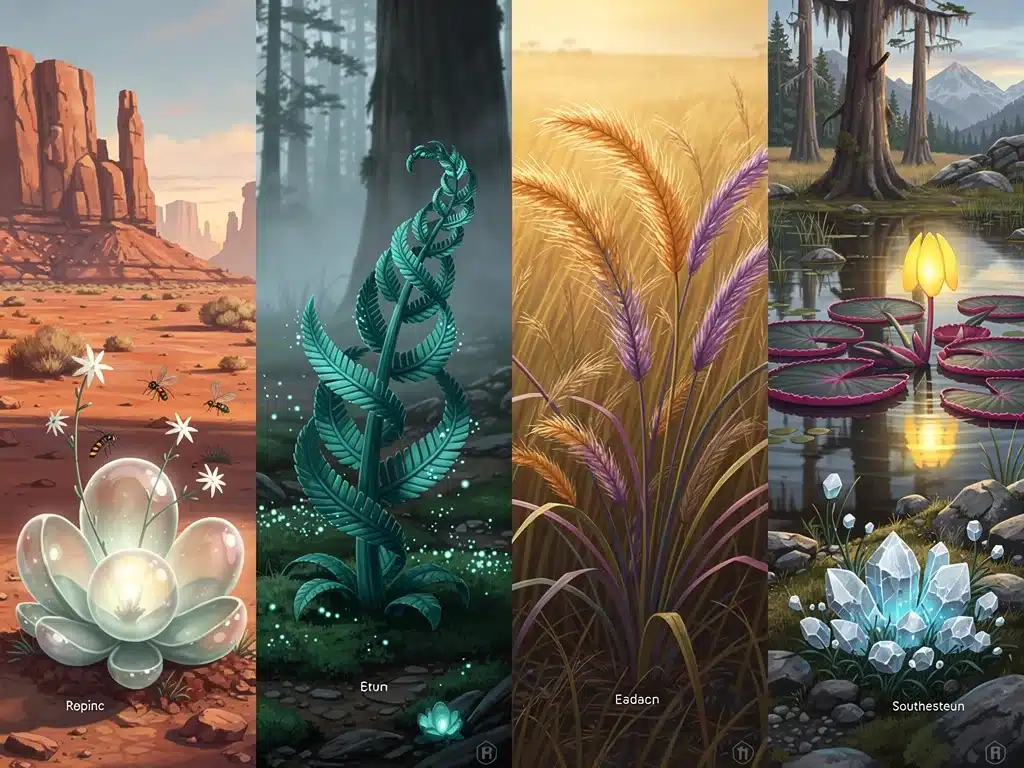
The botanical world is constantly revealing its secrets, and the United States, despite extensive research, remains a vibrant frontier for discovery. Recent years have brought exciting news, with Botanical Breakthroughs: 5 Previously Unknown Plant Species Identified in the US Since Early 2026, highlighting the persistent wonders hidden within our diverse ecosystems.
Advertisements
The Unseen World: Why New Discoveries Persist
Even in an era of advanced technology and extensive exploration, the discovery of new plant species continues to surprise and delight botanists. This phenomenon is not merely a testament to the vastness of nature, but also to the intricate and often overlooked niches that harbor unique life forms. The US, with its incredibly varied climates and topographies, from arid deserts to lush rainforests and high mountain ranges, provides countless such habitats.
Many factors contribute to these ongoing discoveries. Remote areas remain largely uncharted, and even well-studied regions can conceal species that are either rare, camouflaged, or have very specific, short-lived blooming periods. Furthermore, advancements in genetic analysis now allow scientists to differentiate between species that once appeared morphologically similar, revealing hidden diversity.
The dedication of field botanists, often working in challenging conditions, is paramount. They spend countless hours meticulously cataloging flora, sometimes stumbling upon a plant that simply doesn’t fit any known description. These moments are the culmination of patient observation and deep scientific knowledge, driving forward our understanding of the natural world.
Challenges in Botanical Identification
Identifying a new species is far from straightforward. It involves a rigorous process of collection, preservation, morphological analysis, and increasingly, genetic sequencing.
- Morphological Comparison: Detailed examination of physical characteristics against known species.
- Genetic Analysis: DNA sequencing to confirm genetic distinctiveness.
- Habitat Specificity: Understanding the unique environmental conditions where the plant thrives.
- Peer Review: Scientific validation by the broader botanical community before official publication.
This painstaking work ensures that every new designation is accurate and contributes meaningfully to the scientific record. The persistence of these discoveries underscores the fact that our planet’s biodiversity is far from fully cataloged, presenting a continuous challenge and opportunity for researchers.
Species 1: The Mojave Ghost Orchid (Phantasma mohavensis)
Among the most captivating of the recent findings is the Mojave Ghost Orchid, scientifically named Phantasma mohavensis. This ethereal plant was first documented in a secluded canyon within Death Valley National Park in early 2026, an area renowned for its extreme environmental conditions yet surprisingly diverse flora. Its discovery challenges previous assumptions about the types of orchids that can thrive in such arid, harsh landscapes.
The Mojave Ghost Orchid is characterized by its translucent, almost colorless petals, giving it a spectral appearance that blends seamlessly with the pale desert rocks and sparse vegetation. It’s a leafless, mycoheterotrophic orchid, meaning it lacks chlorophyll and relies entirely on fungi for its nutrients, a common trait among ghost orchids but remarkable for a species found in this specific desert environment. Its underground rhizomes form a complex symbiotic relationship with desert fungi, allowing it to draw sustenance from the soil without performing photosynthesis.
Botanists suspect its rarity and elusive nature contributed to its late discovery. It blooms for only a few weeks in late spring, often after significant rainfall, making it incredibly difficult to spot. Its delicate flowers, which emit a subtle, sweet fragrance, are believed to be pollinated by nocturnal desert moths, further emphasizing its adaptation to a unique ecological niche. The conservation implications are significant, as its specific habitat requirements make it particularly vulnerable to climate change and human disturbance.
Conservation Status and Ecological Role
The Mojave Ghost Orchid, due to its specialized needs and limited range, is immediately being considered for protected status. Its presence indicates a healthy, undisturbed desert ecosystem, as the intricate fungal networks it depends on are sensitive to environmental shifts.
- Extreme Habitat: Thrives in the harsh, arid conditions of the Mojave Desert.
- Mycoheterotrophic: Relies on fungi for nutrients, lacking chlorophyll.
- Elusive Bloom: Flowers for a short period in late spring, making it hard to detect.
- Ecological Indicator: Its health reflects the stability of its unique desert microhabitat.
Understanding its full lifecycle and dependencies is crucial for future conservation efforts. This discovery highlights the urgent need to protect even seemingly barren landscapes, as they can harbor extraordinary and highly specialized biodiversity.
Species 2: The Appalachian Sky-Moss (Aerobryum montanum)
Journeying from the desert to the eastern highlands, the Appalachian Sky-Moss, or Aerobryum montanum, represents another fascinating discovery. This unique bryophyte was identified on the highest peaks of the Great Smoky Mountains, specifically on exposed rock faces above the tree line, a habitat previously thought to be too harsh for such complex moss structures. Its discovery in mid-2026 expands our understanding of plant adaptability in extreme alpine environments within the eastern US.
What sets Aerobryum montanum apart is its remarkable ability to absorb moisture directly from the mist and clouds that frequently shroud the mountain peaks. Unlike many other mosses that cling to rocks and derive nutrients from runoff, the Sky-Moss appears to be almost entirely aerial, forming dense, cushion-like mats that act as natural sponges. Its leaves are incredibly fine, almost hair-like, maximizing surface area for water absorption and minimizing desiccation from strong winds.
Researchers believe its resilience stems from a combination of specialized cellular structures that prevent freezing at high altitudes and an efficient nutrient cycling system within its dense colonies. Its slow growth rate and dependence on specific atmospheric conditions suggest it is a relict species, having survived glacial periods by adapting to these isolated, high-elevation refugia. The discovery underscores the ecological importance of high-altitude ecosystems, often overlooked in biodiversity surveys.
Adaptations to High-Altitude Life
The Appalachian Sky-Moss possesses several key adaptations that allow it to thrive where other plants cannot. These include mechanisms for water retention and protection against UV radiation.
- Mist Absorption: Unique ability to draw water directly from atmospheric moisture.
- UV Resistance: Specialized pigments protect against intense solar radiation at high altitudes.
- Freeze Tolerance: Cellular compounds prevent ice crystal formation in tissues during winter.
- Slow Growth: Conserves energy in a nutrient-poor and harsh environment.
The Sky-Moss offers valuable insights into plant survival strategies under extreme conditions, potentially informing future research into climate change resilience and ecological restoration in vulnerable mountain regions.
Species 3: The Gulf Coast Tidal Lily (Nymphaea aestuaria)
Further south, along the dynamic estuaries of the Louisiana Gulf Coast, the Gulf Coast Tidal Lily, Nymphaea aestuaria, was officially recognized in late 2026. This aquatic plant thrives in brackish waters, a challenging environment where salinity levels fluctuate with the tides and freshwater inflow. Its discovery highlights the incredible biodiversity still being cataloged in the vulnerable wetland ecosystems of the US.
Unlike common freshwater water lilies, Nymphaea aestuaria has evolved specialized glands on its leaves that excrete excess salt, allowing it to maintain osmotic balance in its fluctuating habitat. Its large, fragrant white flowers open at dusk, attracting specific nocturnal pollinators, likely a type of moth or beetle adapted to the coastal environment. The lily’s roots are firmly anchored in the soft, silty bottom, providing stability against tidal currents, while its flexible stems allow its leaves and flowers to float gracefully on the water’s surface.
Its existence points to a long evolutionary history of adaptation to the unique pressures of estuarine life. The discovery of this lily is particularly poignant given the ongoing environmental challenges facing the Gulf Coast, including habitat loss, pollution, and rising sea levels. It serves as a powerful reminder of the hidden ecological treasures that remain at risk.
Ecological Significance and Threats
The Gulf Coast Tidal Lily plays an important role in its ecosystem, providing habitat and food for aquatic insects and small fish. However, its existence is precarious.
- Salt Tolerance: Possesses specialized glands for salt excretion, crucial for survival in brackish water.
- Unique Pollination: Flowers open at dusk, attracting specific nocturnal insect pollinators.
- Habitat Indicator: Its presence suggests a relatively healthy, though vulnerable, estuarine environment.
- Conservation Concern: Highly susceptible to coastal development, oil spills, and climate change impacts.
Protecting the Gulf Coast Tidal Lily means protecting the broader estuarine habitats that support a wealth of other species, emphasizing the interconnectedness of these fragile ecosystems.
Species 4: The California Serpentinite Poppy (Papaver serpenticola)
Venturing to the West Coast, the California Serpentinite Poppy, or Papaver serpenticola, was identified in early 2027 in the unique geological formations of California’s Coast Ranges. This striking poppy is a specialist, found exclusively on serpentine soils – soils derived from serpentinite rock, which are notoriously low in essential nutrients like calcium and high in heavy metals such as nickel and chromium. Such soils are toxic to most plants, making the survival of this poppy a marvel of adaptation.
Papaver serpenticola is a small, vibrant orange-flowered annual, standing out against the often-barren serpentine landscapes. Its ability to tolerate and even thrive in these harsh conditions is due to a suite of physiological adaptations, including mechanisms to sequester or exclude heavy metals from its tissues, and an efficient nutrient uptake system that allows it to exploit the scarce resources available. Its seeds are thought to have a specific germination requirement, perhaps linked to seasonal rainfall patterns unique to its serpentine habitat.
The discovery of the Serpentinite Poppy adds to California’s already impressive list of endemic species, particularly those adapted to serpentine soils, which are recognized as biodiversity hotspots. These specialized plants are often relict populations, having evolved in isolation on these chemically distinct substrates. Their existence highlights the importance of preserving these unusual geological areas for their unique flora.
Specialized Adaptations to Toxic Soils
The survival of the California Serpentinite Poppy on serpentine soils is a remarkable example of evolutionary specialization. Its adaptations are critical for coping with the soil’s chemical composition.
- Heavy Metal Tolerance: Physiological mechanisms to neutralize or store toxic metals.
- Nutrient Scavenging: Highly efficient uptake of limited essential nutrients.
- Endemic to Serpentine: Found only on these specific, chemically distinct soils.
- Biodiversity Indicator: Its presence signifies a unique and isolated ecological niche.
The Serpentinite Poppy serves as a living laboratory for understanding plant resilience and bioremediation, offering potential insights into how plants can cope with contaminated environments.
Species 5: The Hawaiian Lava Fern (Pteris volcanica)
Our final recent discovery takes us to the youngest land on Earth, the volcanic slopes of Hawaii. The Hawaiian Lava Fern, Pteris volcanica, was identified in mid-2027, colonizing recent lava flows on the Big Island. This remarkable fern is a pioneer species, one of the first complex plants to establish itself on newly formed, nutrient-poor volcanic rock, showcasing nature’s incredible ability to reclaim and reforest barren landscapes.
Pteris volcanica is distinguished by its robust, leathery fronds, which are surprisingly resistant to the volatile conditions of active volcanic areas, including high temperatures and mineral-rich, yet nutrient-deficient, substrates. It appears to form a symbiotic relationship with specific pioneering microorganisms that help break down the volcanic rock, making nutrients available for its growth. Its spores are lightweight and easily dispersed by wind, allowing it to rapidly colonize new lava fields as they cool.
The discovery of this fern is significant for understanding ecological succession on volcanic islands, processes that contribute to the formation of new ecosystems. It also underscores the ongoing evolutionary processes occurring in Hawaii, a global hotspot for biodiversity and endemism. Its ability to thrive in such an extreme, dynamic environment makes it a key species in the early stages of ecosystem development on lava flows.
Pioneer Species on Volcanic Landscapes
The Hawaiian Lava Fern exemplifies the traits of a pioneer species, capable of initiating life in the harshest environments. Its role in ecological succession is vital.
- Lava Colonizer: One of the first vascular plants to establish on new volcanic rock.
- Extreme Resilience: Tolerates high temperatures and nutrient-poor lava substrates.
- Symbiotic Relationships: Likely partners with microorganisms to break down rock and acquire nutrients.
- Ecological Succession: Plays a crucial role in the development of new ecosystems on lava flows.
The Lava Fern provides a living example of how life adapts and flourishes in environments constantly reshaped by geological forces, offering valuable lessons in resilience and ecological restoration.
The Future of Botanical Exploration in the US
The identification of these five previously unknown plant species since early 2026 is a vivid reminder that the botanical exploration of the United States is far from complete. Each discovery not only adds a new entry to our scientific catalogs but also offers profound insights into the intricate web of life, the resilience of nature, and the specific adaptations that allow plants to thrive in diverse and often challenging environments. These findings underscore the critical importance of continued funding for botanical research, field surveys, and conservation efforts.
As climate change accelerates and habitats face increasing pressure, the urgency to document and understand our planet’s biodiversity grows. Many species, particularly those in isolated or specialized niches, may vanish before they are even known to science. These recent breakthroughs serve as a beacon of hope and a call to action, demonstrating that even in well-explored regions, nature still holds countless secrets waiting to be unveiled. Protecting these newly found species and their habitats is not just about preserving individual plants; it’s about safeguarding the health and stability of entire ecosystems, and ultimately, our own future.
Further research into the genetic makeup, ecological roles, and potential medicinal or agricultural applications of these new species will undoubtedly yield even more valuable information. The story of botanical discovery is an ongoing narrative, one that continually enriches our understanding of life on Earth and reinforces the profound connection between humanity and the natural world.
| Key Discovery | Brief Description |
|---|---|
| Mojave Ghost Orchid | Leafless, mycoheterotrophic orchid found in Death Valley, adapted to extreme arid conditions. |
| Appalachian Sky-Moss | Bryophyte found on high Appalachian peaks, absorbs moisture from mist and clouds. |
| Gulf Coast Tidal Lily | Aquatic lily thriving in brackish Gulf Coast estuaries, excretes excess salt. |
| Hawaiian Lava Fern | Pioneer fern colonizing recent lava flows in Hawaii, resilient to harsh volcanic conditions. |
Frequently Asked Questions About New Plant Discoveries
New species are identified through meticulous field surveys in remote or specific niches, advanced genetic analysis distinguishing morphologically similar plants, and dedicated botanical research. Sometimes, plants are simply rare or have very brief blooming periods, making them difficult to spot.
The Mojave Ghost Orchid is unique for its mycoheterotrophic nature, meaning it lacks chlorophyll and relies on fungi for nutrients. Its ability to thrive in the extreme arid conditions of Death Valley, with translucent petals, is particularly remarkable.
Its discovery is crucial because it highlights the specialized biodiversity within vulnerable Gulf Coast estuaries. This lily’s survival in brackish water indicates a healthy, yet threatened, ecosystem that requires protection from pollution, habitat loss, and climate change impacts.
The Hawaiian Lava Fern is a vital pioneer species. It colonizes recent lava flows, initiating ecological succession by helping to break down volcanic rock and create conditions for other plants to establish. It’s crucial for the development of new ecosystems.
The California Serpentinite Poppy adapts to toxic serpentine soils through specialized physiological mechanisms. These include the ability to sequester or exclude heavy metals from its tissues and efficiently scavenge limited essential nutrients, allowing it to thrive where most plants cannot.
Conclusion
The recent wave of Botanical Breakthroughs: 5 Previously Unknown Plant Species Identified in the US Since Early 2026 offers compelling evidence that our natural world continues to hold profound secrets. From the arid expanses of the Mojave Desert to the misty peaks of the Appalachians, the dynamic estuaries of the Gulf Coast, the chemically challenging serpentine soils of California, and the fiery volcanic landscapes of Hawaii, each new species represents a unique evolutionary story and a testament to nature’s enduring adaptability. These discoveries not only enrich our scientific knowledge but also underscore the urgent and ongoing need for robust conservation strategies. As we face global environmental changes, understanding and protecting these newly revealed forms of life becomes more critical than ever, reminding us that every corner of our planet, no matter how familiar, still harbors untold wonders waiting to be appreciated and preserved for future generations.
Further research into the genetic makeup, ecological roles, and potential medicinal or agricultural applications of these new species will undoubtedly yield even more valuable information. The story of botanical discovery is an ongoing narrative, one that continually enriches our understanding of life on Earth and reinforces the profound connection between humanity and the natural world.
| Key Discovery | Brief Description |
|---|---|
| Mojave Ghost Orchid | Leafless, mycoheterotrophic orchid found in Death Valley, adapted to extreme arid conditions. |
| Appalachian Sky-Moss | Bryophyte found on high Appalachian peaks, absorbs moisture from mist and clouds. |
| Gulf Coast Tidal Lily | Aquatic lily thriving in brackish Gulf Coast estuaries, excretes excess salt. |
| Hawaiian Lava Fern | Pioneer fern colonizing recent lava flows in Hawaii, resilient to harsh volcanic conditions. |
Frequently Asked Questions About New Plant Discoveries
New species are identified through meticulous field surveys in remote or specific niches, advanced genetic analysis distinguishing morphologically similar plants, and dedicated botanical research. Sometimes, plants are simply rare or have very brief blooming periods, making them difficult to spot.
The Mojave Ghost Orchid is unique for its mycoheterotrophic nature, meaning it lacks chlorophyll and relies on fungi for nutrients. Its ability to thrive in the extreme arid conditions of Death Valley, with translucent petals, is particularly remarkable.
Its discovery is crucial because it highlights the specialized biodiversity within vulnerable Gulf Coast estuaries. This lily’s survival in brackish water indicates a healthy, yet threatened, ecosystem that requires protection from pollution, habitat loss, and climate change impacts.
The Hawaiian Lava Fern is a vital pioneer species. It colonizes recent lava flows, initiating ecological succession by helping to break down volcanic rock and create conditions for other plants to establish. It’s crucial for the development of new ecosystems.
The California Serpentinite Poppy adapts to toxic serpentine soils through specialized physiological mechanisms. These include the ability to sequester or exclude heavy metals from its tissues and efficiently scavenge limited essential nutrients, allowing it to thrive where most plants cannot.
Conclusion
The recent wave of Botanical Breakthroughs: 5 Previously Unknown Plant Species Identified in the US Since Early 2026 offers compelling evidence that our natural world continues to hold profound secrets. From the arid expanses of the Mojave Desert to the misty peaks of the Appalachians, the dynamic estuaries of the Gulf Coast, the chemically challenging serpentine soils of California, and the fiery volcanic landscapes of Hawaii, each new species represents a unique evolutionary story and a testament to nature’s enduring adaptability. These discoveries not only enrich our scientific knowledge but also underscore the urgent and ongoing need for robust conservation strategies. As we face global environmental changes, understanding and protecting these newly revealed forms of life becomes more critical than ever, reminding us that every corner of our planet, no matter how familiar, still harbors untold wonders waiting to be appreciated and preserved for future generations.
Further research into the genetic makeup, ecological roles, and potential medicinal or agricultural applications of these new species will undoubtedly yield even more valuable information. The story of botanical discovery is an ongoing narrative, one that continually enriches our understanding of life on Earth and reinforces the profound connection between humanity and the natural world.
